
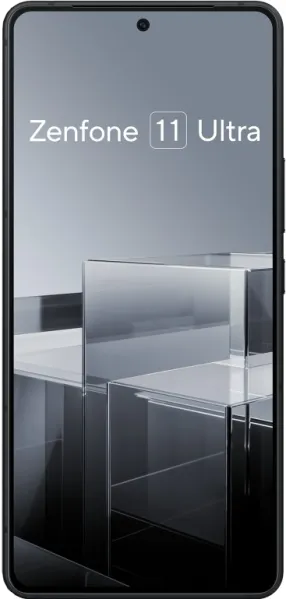
1. Specifications Comparison
| Feature | Xiaomi 14 | Asus Zenfone 11 Ultra | Practical Impact |
|---|---|---|---|
| Design | |||
| Dimensions | 152.8 x 71.5 x 8.2 mm | 163.8 x 76.8 x 8.9 mm | Xiaomi 14 is significantly smaller and thinner, making it more pocketable and easier to handle one-handed. |
| Weight | 188g | 224g | The Xiaomi 14 is noticeably lighter, reducing hand fatigue during extended use. |
| Display | |||
| Size | 6.36" | 6.78" | The Zenfone 11 Ultra offers a larger screen for more immersive media consumption and multitasking, but may be less comfortable for one-handed use. |
| Type | LTPO OLED | LTPO AMOLED | Both offer excellent color accuracy and power efficiency. |
| Resolution | 1200 x 2670 | 1080 x 2400 | The Xiaomi 14 has a sharper display (460 ppi vs 388 ppi), resulting in crisper text and images. |
| Refresh Rate | 120Hz | 144Hz | The Zenfone 11 Ultra's higher refresh rate provides smoother animations and scrolling, especially noticeable in gaming and fast-paced content. |
| Peak Brightness | 3000 nits | 2500 nits | The Xiaomi 14 can achieve significantly higher brightness, ensuring better visibility in direct sunlight. |
| Performance | |||
| Chipset | Snapdragon 8 Gen 3 | Snapdragon 8 Gen 3 | Both phones offer top-tier performance with the same powerful chipset. |
| CPU | Octa-core (1x3.3 GHz Cortex-X4 & 3x3.2 GHz Cortex-A720 & 2x3.0 GHz Cortex-A720 & 2x2.3 GHz Cortex-A520) | Octa-core (1x3.3 GHz Cortex-X4 & 3x3.2 GHz Cortex-A720 & 2x3.0 GHz Cortex-A720 & 2x2.3 GHz Cortex-A520) | Identical CPUs should result in similar processing power. |
| GPU | Adreno 750 | Adreno 750 | Identical GPUs will provide similar graphics performance. |
| RAM | 12GB | 16GB | The Zenfone 11 Ultra offers more RAM, enabling better multitasking and potentially smoother performance with demanding applications. |
| Battery | |||
| Capacity | 4610 mAh | 5500 mAh | The Zenfone 11 Ultra boasts a significantly larger battery, likely translating to longer battery life. |
| Other | |||
| OS Max Version | 18 | 16 | The Xiaomi 14 is expected to receive longer software updates, ensuring security and feature updates for a longer period. |
| Video Capabilities | More comprehensive including 960fps slow-motion | Less comprehensive slow-motion limited to 480fps | Xiaomi 14 offers significantly more advanced slow-motion video recording options. |
2. Key Differences Analysis
Xiaomi 14 Advantages:
- More compact and lighter: Easier to handle and carry.
- Sharper display: Crisper visuals for text, images, and videos.
- Brighter display: Superior outdoor visibility.
- Longer software support: More future-proof with extended security and feature updates.
- Superior slow-motion video: More creative options for video recording.
Asus Zenfone 11 Ultra Advantages:
- Larger display: More immersive experience for media and multitasking.
- Higher refresh rate: Smoother animations and scrolling.
- Larger battery: Potentially significantly longer battery life.
- More RAM: Better multitasking and handling of demanding apps.
3. User Profiles & Recommendations
Xiaomi 14: Users who prioritize portability, a sharp and bright display, and long-term software updates. Ideal for one-handed use, content consumption on the go, and those who value software longevity.
Asus Zenfone 11 Ultra: Users who prioritize a large display, smooth performance, long battery life, and extensive multitasking capabilities. Ideal for media consumption, gaming, productivity tasks, and power users.
4. Decision Framework
Key Questions for Buyers:
- How important is portability and one-handed use?
- Do you prioritize display sharpness and brightness or size and refresh rate?
- How heavily do you multitask and rely on long battery life?
Scenario-Based Recommendations:
- Frequent traveler: Xiaomi 14 for its portability and bright display.
- Mobile gamer: Asus Zenfone 11 Ultra for its larger display, higher refresh rate, and larger battery.
- Power user: Asus Zenfone 11 Ultra for its RAM, larger battery, and multitasking capabilities.
My Choice: Xiaomi 14
While the Zenfone 11 Ultra offers compelling features like a larger battery and higher refresh rate display, I would choose the Xiaomi 14. The more compact form factor, lighter weight, sharper and brighter display, and longer software support are more important to me personally. I value portability and a premium feel in hand, and the Xiaomi 14 delivers in those areas. The superior slow-motion video capabilities are also a significant advantage for my usage. While battery life is important, I'm willing to compromise slightly for the overall more compact and premium experience offered by the Xiaomi 14. The assurance of longer software updates also provides peace of mind regarding long-term security and features.
