1. Specifications Comparison
| Feature | Xiaomi Redmi Note 12S | Honor X7b | Practical Impact |
|---|---|---|---|
| Design | |||
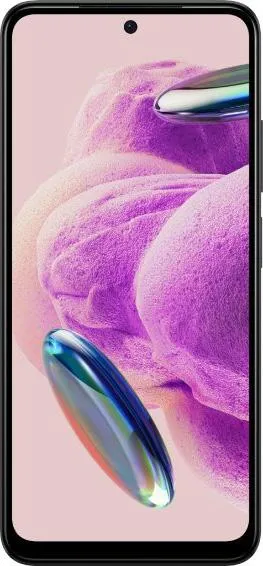
| Dimensions (mm) | 159.9 x 73.9 x 8.1 | 166.7 x 76.5 x 8.2 | The Redmi Note 12S is noticeably smaller and more pocketable. |
| Weight (g) | 176 | 199 | The Redmi Note 12S is lighter, reducing hand fatigue during extended use. |
| Display | |||
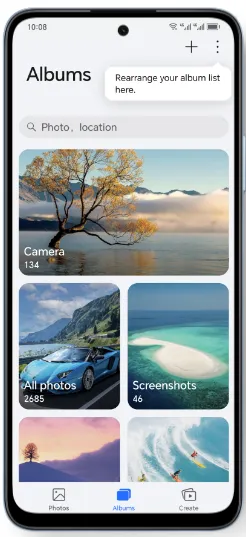
| Display Type | AMOLED, 90Hz | IPS LCD, 90Hz | The AMOLED display on the Redmi Note 12S offers more vibrant colors, deeper blacks, and better power efficiency. |
| Display Size (inches) | 6.43 | 6.8 | The Honor X7b offers a larger screen for media consumption but might be less comfortable for one-handed use. |
| Resolution | 1080 x 2400 | 1080 x 2412 | Both offer similar sharpness, though the Redmi Note 12S has a slightly higher pixel density due to the smaller screen size. |
| Peak Brightness (nits) | 1000 | 850 (unspecified if typical or peak) | The Redmi Note 12S should offer better visibility in direct sunlight. It's unclear if 850 nits is the typical or peak brightness for the Honor X7b. |
| Performance | |||
| Chipset | Mediatek Helio G96 (12nm) | Qualcomm Snapdragon 680 4G (6nm) | The Snapdragon 680 in the Honor X7b is built on a more efficient 6nm process, potentially leading to better battery life and slightly improved performance in some tasks despite lower clock speeds on the CPU. The Helio G96 may offer better gaming performance due to its slightly faster CPU cores. |
| CPU | Octa-core (2x2.05 GHz Cortex-A76 & 6x2.0 GHz Cortex-A55) | Octa-core (4x2.4 GHz Kryo 265 Gold & 4x1.9 GHz Kryo 265 Silver) | See above - different architectures make direct comparison challenging. |
| GPU | Mali-G57 MC2 | Adreno 610 | Difficult to compare directly without benchmarks, but both are aimed at mid-range performance. |
| RAM | 6GB | 6GB/8GB | The Honor X7b offers an 8GB RAM option, potentially enabling smoother multitasking. |
| Camera | |||
| Main Camera | 108MP | 108MP | Both have high-resolution sensors, but image quality depends on factors beyond megapixels (e.g., sensor size, processing). More detailed camera specs are needed for deeper analysis. |
| Selfie Camera | 16MP | 8MP | The Redmi Note 12S has a higher resolution front-facing camera, potentially resulting in better selfie quality. |
| Battery | |||
| Capacity | 5000 mAh | 5330 mAh | The Honor X7b has a slightly larger battery capacity, which might translate to longer battery life. However, real-world usage will vary. |
2. Key Differences Analysis
Xiaomi Redmi Note 12S Advantages:
- More compact and lighter design: Better for one-handed use and portability.
- AMOLED display: Superior color accuracy, contrast, and power efficiency.
- Brighter display: Easier to see outdoors.
- Higher resolution selfie camera: Better for video calls and self-portraits.
Honor X7b Advantages:
- Larger display: More immersive experience for media consumption.
- Slightly larger battery: Potential for longer battery life.
- More efficient processor: Potential for better battery life and thermal management.
- 8GB RAM option: Smoother multitasking for demanding users.
Trade-offs:
- Redmi Note 12S: Smaller battery vs. superior display quality.
- Honor X7b: Larger size and LCD display vs. potentially longer battery life and more RAM.
3. User Profiles & Recommendations
Xiaomi Redmi Note 12S: Users who prioritize a compact and lightweight phone with a vibrant display. Suitable for everyday tasks, social media, and casual gaming.
Honor X7b: Users who prioritize battery life and a large screen for media consumption. Suitable for users who consume a lot of video content or need a phone that can last all day on a single charge.
4. Decision Framework
Key Questions for Buyers:
- Display quality vs. Battery Life: Is a vibrant display or longer battery life more important?
- Size and portability: Do you prefer a compact phone or a larger screen?
- Performance needs: Are you a heavy multitasker or gamer?
Scenario-Based Recommendations:
- Heavy media consumer: Honor X7b for its larger display and battery.
- One-handed use and portability: Redmi Note 12S for its compact design and vibrant display.
- Balanced user: Either phone could be suitable, depending on individual priorities regarding display, battery, and size. The Redmi Note 12S might be a safer bet due to the AMOLED display.
My Choice: Xiaomi Redmi Note 12S
While the Honor X7b offers a larger battery and more efficient processor, the Xiaomi Redmi Note 12S's AMOLED display is a significant advantage for me. I prioritize screen quality and vibrant colors for media consumption and everyday use. The more compact form factor is also appealing. While battery life is important, I'm willing to sacrifice a bit of capacity for a superior visual experience. The slightly faster CPU cores in the Redmi Note 12S might also provide a performance edge in certain applications.
