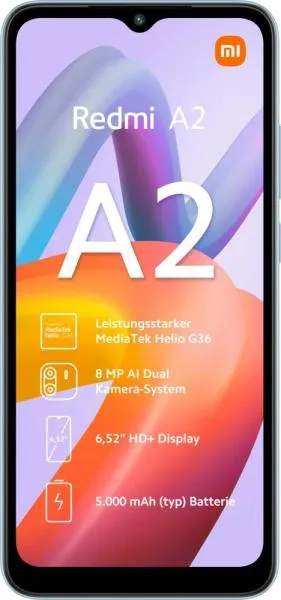

1. Specifications Comparison
| Feature | Xiaomi Redmi A2+ | vivo V40 | Practical Impact |
|---|---|---|---|
| Design | |||
| Dimensions (mm) | 164.9 x 76.8 x 9.1 | 164.2 x 75 x 7.6 | The vivo V40 is noticeably thinner and slightly narrower. |
| Weight (g) | 192 | 190 | Negligible weight difference. |
| Build Materials | Not specified | Not specified | Unable to compare build quality and durability. |
| Display | |||
| Display Type | IPS LCD | AMOLED | Vivo V40 offers significantly better contrast, deeper blacks, and potentially brighter colors. |
| Display Size (inches) | 6.52 | 6.78 | Vivo V40 has a larger screen, providing more immersive content consumption. |
| Resolution | 720 x 1600 | 1260 x 2800 | Vivo V40 has a much sharper display with significantly higher pixel density (453 ppi vs 269 ppi), resulting in crisper text and images. |
| Refresh Rate | Not specified | 120Hz | Vivo V40's 120Hz refresh rate delivers smoother animations and scrolling compared to the Redmi A2+'s unspecified refresh rate (likely 60Hz). |
| HDR | No | HDR10+ | Vivo V40 supports HDR10+ for enhanced dynamic range in compatible content. |
| Performance | |||
| Chipset | Mediatek Helio G36 (12 nm) | Qualcomm Snapdragon 7 Gen 3 (4 nm) | Vivo V40 boasts a significantly more powerful and efficient processor, resulting in much faster performance, smoother multitasking, and better gaming capabilities. |
| CPU | Octa-core (4x2.2 GHz Cortex-A53 & 4x1.7 GHz Cortex-A53) | Octa-core (1x2.63 GHz Cortex-A715 & 3x2.4 GHz Cortex-A715 & 4x1.8 GHz Cortex-A510) | The Vivo V40 utilizes more modern and powerful CPU cores, leading to a substantial performance advantage. |
| RAM | 2GB/3GB | 12GB | Massively more RAM in the Vivo V40 allows for significantly more apps to run in the background without reloading and improved multitasking performance. |
| Storage | 32GB/64GB | 512GB | Vivo V40 offers significantly more storage for apps, photos, videos, and other files. |
| Camera | |||
| Rear Camera | 8MP + 0.3MP | 50MP + 50MP | Vivo V40 has significantly higher resolution sensors, potentially capturing more detail and offering better low-light performance. Specific sensor quality is unknown for both, limiting detailed comparison. |
| Front Camera | 5MP | 50MP | Vivo V40 has a much higher resolution front camera for better quality selfies. |
| Video Recording | 1080p@30fps | 4K@30fps | Vivo V40 offers higher resolution video recording. |
| Battery | |||
| Capacity | 5000 mAh | 5500 mAh | Vivo V40 has a slightly larger battery capacity. |
| Fast Charging | 10W | 80W | Vivo V40 supports significantly faster charging, drastically reducing charging times. |
2. Key Differences Analysis
Xiaomi Redmi A2+ Advantages:
- Lower Price: Significantly more affordable.
vivo V40 Advantages:
- Superior Performance: Significantly faster processor, more RAM, and ample storage.
- Better Display: Higher resolution, AMOLED technology, 120Hz refresh rate, HDR10+ support.
- Faster Charging: 80W fast charging for quicker charging times.
- More Advanced Camera System: Higher resolution sensors, 4K video recording.
- Larger Display: More immersive content viewing.
- NFC: Enables contactless payments and other NFC functionalities.
3. User Profiles & Recommendations
Xiaomi Redmi A2+: Budget-conscious users who prioritize basic communication and light usage. Ideal for:
- Basic phone calls and texting.
- Casual social media browsing.
- Light web browsing.
vivo V40: Users who demand high performance, a premium display, and advanced camera features. Ideal for:
- Demanding mobile gaming.
- High-quality media consumption (videos, photos).
- Multitasking and productivity.
- Photography enthusiasts.
4. Decision Framework
Key Questions for Buyers:
- What is your budget? The Redmi A2+ is significantly cheaper.
- What are your primary use cases? Basic tasks vs. demanding applications and multimedia consumption.
- How important is display quality and performance? The Vivo V40 excels in these areas.
My Choice: vivo V40
While the Xiaomi Redmi A2+ offers an incredibly budget-friendly option, the vivo V40 is the superior device overall. Its significantly faster processor, vastly improved display, faster charging, and more capable camera system make it a much more compelling option for most users. The price difference is substantial, but the V40 offers a significant jump in performance and features that justify the cost for users who value a smoother, more powerful, and feature-rich smartphone experience. The Redmi A2+ only makes sense for extremely budget-constrained users who prioritize basic functionality above all else. The jump in quality of life features with the V40, particularly the display and performance, make it worth the extra cost for a device that will likely be used for several years.
