1. Specifications Comparison
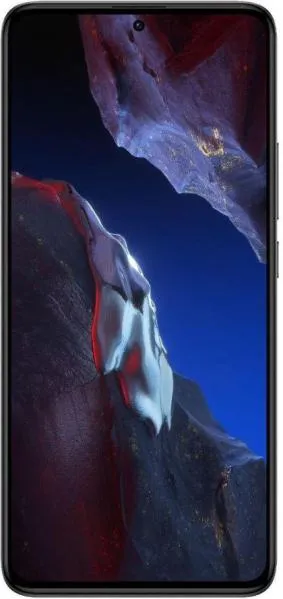
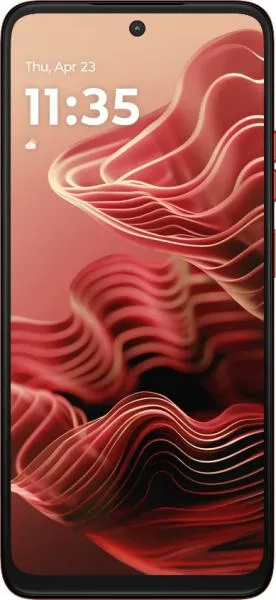
| Feature | Xiaomi Poco F5 Pro | Motorola Moto G35 | Practical Impact |
|---|---|---|---|
| Design | |||
| Dimensions (mm) | 162.8 x 75.4 x 8.6 | 166.3 x 76 x 7.8 | Poco F5 Pro is slightly smaller and thinner. |
| Weight (g) | 204 | 188 | Moto G35 is noticeably lighter. |
| Build | Missing | Missing | Build quality and materials cannot be compared. |
| Fingerprint Sensor | Under display | Side-mounted | Preference-dependent; under-display feels more modern. |
| Display | |||
| Display Type | AMOLED | IPS LCD | Poco F5 Pro offers deeper blacks, vibrant colors, and potentially better power efficiency. |
| Display Size (inches) | 6.67 | 6.72 | Negligible size difference. |
| Resolution | 1440 x 3200 | 1080 x 2400 | Poco F5 Pro has a significantly sharper display (526 ppi vs 392 ppi), resulting in crisper text and images. |
| Refresh Rate (Hz) | 120 | 120 | Both offer smooth scrolling and animations. |
| HDR | Dolby Vision, HDR10+ | HDR10 | Poco F5 Pro supports wider HDR standards for better video playback quality. |
| Peak Brightness (nits) | 1400 | 1000 | Poco F5 Pro will be more visible in direct sunlight. |
| Performance | |||
| Chipset | Snapdragon 8+ Gen 1 | Unisoc T760 | Poco F5 Pro boasts a flagship-level processor, significantly outperforming the Moto G35 in demanding tasks and gaming. |
| CPU | Octa-core (1x3.0 GHz Cortex-X2 & 3x2.5 GHz Cortex-A710 & 4x1.80 GHz Cortex-A510) | Octa-core (1x2.2 GHz Cortex-A76 & 3x Cortex-A76 & 4x Cortex-A55) | Poco F5 Pro's CPU architecture and higher clock speeds provide superior processing power. |
| GPU | Adreno 730 | Mali-G57 | Poco F5 Pro's GPU provides a significant advantage in graphics performance for gaming and visually demanding applications. |
| RAM | 8/12GB | 4/8GB | Poco F5 Pro offers more RAM for smoother multitasking and better performance with demanding applications. |
| Camera | |||
| Main Camera (MP) | 64 | 50 | Poco F5 Pro may offer slightly better detail, though sensor size and processing play a bigger role. |
| Ultrawide (MP) | 8 | 8 | Similar ultrawide capabilities. |
| Macro (MP) | 2 | None | Poco F5 Pro offers a dedicated macro lens, although its practical use can be limited. |
| Video Recording | Up to 8K@24fps | Up to 4K@30fps | Poco F5 Pro supports higher resolution video recording. |
| Battery | |||
| Capacity (mAh) | 5160 | 5000 | Similar battery capacities, though real-world battery life depends on optimization and usage. |
| Charging Speed | Missing | Missing | Charging speeds cannot be compared. |
2. Key Differences Analysis
Xiaomi Poco F5 Pro Advantages:
- Significantly more powerful: The Snapdragon 8+ Gen 1 provides a massive performance advantage for gaming, multitasking, and demanding applications.
- Sharper and more vibrant display: The higher resolution AMOLED with Dolby Vision and HDR10+ delivers a superior visual experience.
- Higher resolution video recording: Offers up to 8K video recording compared to the Moto G35's 4K.
Motorola Moto G35 Advantages:
- Lighter weight: Noticeably lighter, making it more comfortable for extended use.
- Lower price: Offers a more budget-friendly option.
3. User Profiles & Recommendations
Xiaomi Poco F5 Pro: Ideal for users who prioritize performance, a high-quality display, and advanced features like high-resolution video recording. Suitable for power users, gamers, and content creators.
Motorola Moto G35: Suitable for budget-conscious users who prioritize basic smartphone functionality, casual usage like social media browsing, and light gaming.
4. Decision Framework
Key Questions for Buyers:
- What is your budget? The Poco F5 Pro is significantly more expensive.
- What is your primary smartphone usage? For demanding tasks and gaming, the Poco F5 Pro is essential. For basic usage, the Moto G35 suffices.
- How important is display quality? The Poco F5 Pro offers a noticeably better display.
My Choice: Xiaomi Poco F5 Pro
While the Motorola Moto G35 offers a compelling value proposition for budget-conscious buyers, the Xiaomi Poco F5 Pro is the clear winner for me. The significant performance difference offered by the Snapdragon 8+ Gen 1, coupled with the stunning AMOLED display, makes it a superior device for my needs. I prioritize a smooth and responsive user experience, especially for gaming and multitasking, which the Poco F5 Pro delivers. The higher resolution and broader HDR support also enhance media consumption. While the price difference is substantial, the long-term value and superior user experience offered by the Poco F5 Pro justify the investment for me. The slightly heavier weight is a minor trade-off for the substantial performance and display gains.
