
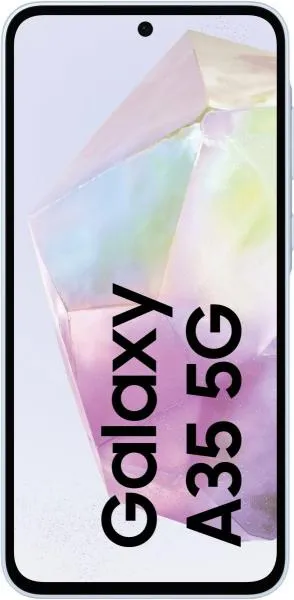
1. Specifications Comparison
| Feature | Xiaomi 14 | Samsung Galaxy A35 | Practical Impact |
|---|---|---|---|
| Design | |||
| Dimensions | 152.8 x 71.5 x 8.2 mm | 161.7 x 78 x 8.2 mm | The Xiaomi 14 is noticeably smaller and narrower, making it more pocketable and easier to use one-handed. |
| Weight | 188g | 209g | The Xiaomi 14 is significantly lighter, improving comfort during prolonged use. |
| Display | |||
| Size | 6.36" | 6.6" | The Galaxy A35 offers a slightly larger screen, potentially beneficial for media consumption, but less comfortable for one-handed use. |
| Type | LTPO OLED, 68B colors, 120Hz | Super AMOLED, 120Hz | Both offer smooth scrolling and vibrant colors. The Xiaomi 14's LTPO panel allows for dynamic refresh rate adjustment, potentially saving battery. |
| Resolution | 1200 x 2670 | 1080 x 2340 | The Xiaomi 14 has a sharper display with higher pixel density (460ppi vs 390ppi), resulting in crisper text and images. |
| Peak Brightness | 3000 nits | 1000 nits (HBM) | The Xiaomi 14 offers significantly higher peak brightness, ensuring excellent outdoor visibility even in direct sunlight. The A35's peak brightness is not specified. |
| Performance | |||
| Chipset | Snapdragon 8 Gen 3 (4nm) | Exynos 1380 (5nm) | The Snapdragon 8 Gen 3 is a flagship processor, significantly more powerful than the Exynos 1380, offering smoother performance in demanding tasks and games. |
| CPU | Octa-core (1x3.3 GHz Cortex-X4 & ...) | Octa-core (4x2.4 GHz ...) | The Xiaomi 14's CPU architecture and clock speeds suggest a considerable performance advantage. |
| GPU | Adreno 750 | Mali-G68 MP5 | The Adreno 750 is a more powerful GPU, delivering superior gaming and graphics performance compared to the Mali-G68 MP5. |
| RAM | 12GB | 8GB | The Xiaomi 14 offers more RAM, enabling better multitasking and smoother performance with multiple apps open. |
| Storage | 256/512GB | 128/256GB | Both offer ample storage options, although the Xiaomi 14 offers a 512GB variant for users needing maximum local storage. |
| Battery | |||
| Capacity | 4610 mAh | 5000 mAh | While the Galaxy A35 has a larger battery capacity, the Xiaomi 14's more efficient processor and LTPO display could result in comparable or better battery life. |
2. Key Differences Analysis
Xiaomi 14 Advantages:
- Significantly higher performance: The Snapdragon 8 Gen 3 offers a substantial advantage in processing power and graphics capabilities.
- Sharper and brighter display: Higher resolution and peak brightness result in a superior visual experience.
- More compact and lightweight design: Easier to handle and carry.
- More RAM: Better multitasking and smoother performance.
Samsung Galaxy A35 Advantages:
- Potentially longer battery life: Larger battery capacity might offer longer usage time, although real-world performance depends on usage patterns.
- Potentially lower price: While not specified, A-series phones generally target a more budget-conscious market segment.
3. User Profiles & Recommendations
Xiaomi 14: Ideal for users who prioritize performance, a premium display, and a compact form factor. Suitable for demanding tasks like gaming, video editing, and multitasking.
Samsung Galaxy A35: Suitable for users who prioritize battery life, a large screen, and affordability. Best for everyday tasks like browsing, social media, and media consumption.
4. Decision Framework
Key Questions:
- What is your budget?
- What are your primary use cases? (Gaming, photography, everyday tasks)
- Do you prioritize performance or battery life?
Scenario-Based Recommendations:
- Heavy user, gamer: Xiaomi 14
- Casual user, budget-conscious: Samsung Galaxy A35
My Choice: Xiaomi 14
While lacking some specific details like the A35's peak brightness, the Xiaomi 14's superior performance, display quality, and more compact design make it the clear winner for me. I value a smooth and responsive user experience, especially for tasks like gaming and multitasking, where the Snapdragon 8 Gen 3 excels. The brighter and sharper display enhances media consumption and overall visual appeal. Although the Galaxy A35 might offer longer battery life due to its larger capacity, the Xiaomi 14's LTPO display and more efficient chip could potentially offset this difference. The Xiaomi 14's more compact form factor is also a significant advantage for daily usability. Finally, as both phones are in the "medium price" range, the significant performance leap justifies the choice of the Xiaomi 14.
