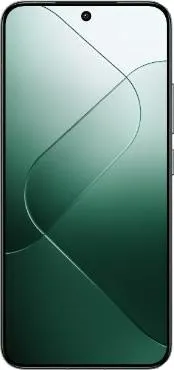
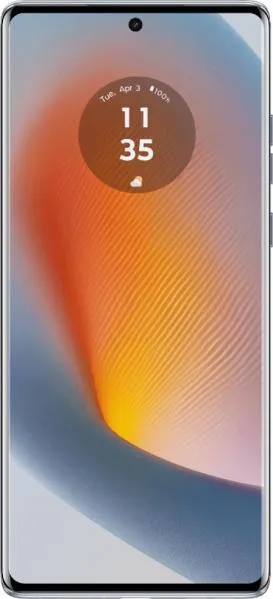
1. Specifications Comparison
| Feature | Xiaomi 14 | Motorola Edge 50 Fusion | Practical Impact |
|---|---|---|---|
| Design | |||
| Dimensions | 152.8 x 71.5 x 8.2 mm | 161.9 x 73.1 x 7.9 mm | Xiaomi 14 is noticeably smaller and slightly thinner, making it more pocketable and easier to handle one-handed. |
| Weight | 188g | 174.9g | While both are relatively lightweight, the Motorola is lighter, reducing hand fatigue during extended use. |
| Display | |||
| Size | 6.36" | 6.7" | Motorola offers a larger screen for more immersive content consumption, while Xiaomi's smaller size enhances one-handed usability. |
| Type | LTPO OLED | P-OLED | Both are high-quality display technologies; LTPO on Xiaomi allows for dynamic refresh rate adjustment, potentially saving battery. |
| Resolution | 1200 x 2670 | 1080 x 2400 | Xiaomi boasts a sharper display with higher pixel density (460 ppi vs 393 ppi), resulting in crisper text and images. |
| Peak Brightness | 3000 nits | 1600 nits | Xiaomi's significantly higher peak brightness ensures superior outdoor visibility in direct sunlight. |
| Refresh Rate | 120Hz | 120Hz (LATAM), 144Hz (INT) | Both offer smooth scrolling and animations; the international version of Motorola has a slightly higher refresh rate for even smoother visuals in supported content. |
| Performance | |||
| Chipset | Snapdragon 8 Gen 3 | Snapdragon 7s Gen 2 | Xiaomi's flagship Snapdragon 8 Gen 3 provides significantly more processing power for demanding tasks, gaming, and multitasking compared to Motorola's mid-range 7s Gen 2. |
| CPU | Octa-core (1x3.3 GHz Cortex-X4 & 3x3.2 GHz Cortex-A720 & 2x3.0 GHz Cortex-A720 & 2x2.3 GHz Cortex-A520) | Octa-core (4x2.40 GHz Cortex-A78 & 4x1.95 GHz Cortex-A55) | The superior core configuration and clock speeds of Xiaomi's CPU translate to much faster and smoother performance across all applications. |
| GPU | Adreno 750 | Adreno 710 | Xiaomi's more powerful GPU delivers a substantial advantage in gaming performance and graphics-intensive applications. |
| RAM/Storage | 12GB/256GB or 12GB/512GB | 8GB/256GB | Xiaomi offers more RAM, benefiting multitasking and overall system responsiveness. It also offers a 512GB storage option. |
| Battery | |||
| Capacity | 4610 mAh | 5000 mAh | Motorola has a larger battery capacity, potentially offering longer battery life. However, real-world usage will depend on various factors including display settings and usage patterns. |
| Camera | |||
| Video Capabilities | Up to 8K@24fps, 960fps slow-motion | Up to 4K@30fps, 120fps slow-motion | Xiaomi offers significantly more advanced video recording capabilities, including higher resolution (8K) and much higher frame rate slow-motion. Details about camera sensor size and aperture are missing, making a full camera comparison impossible. |
2. Key Differences Analysis
Xiaomi 14 Advantages:
- Significantly more powerful: The Snapdragon 8 Gen 3 offers a substantial performance advantage for demanding tasks and gaming.
- Sharper and brighter display: Higher resolution and peak brightness result in a superior visual experience.
- More compact design: Easier for one-handed use and portability.
- Advanced video recording: 8K resolution and high frame rate slow-motion capture.
Motorola Edge 50 Fusion Advantages:
- Larger battery: Potential for longer battery life.
- Larger display: More immersive content consumption.
- Lighter weight: Less hand fatigue during extended use.
- Potentially lower price: Though both are mid-range, Motorola might be more budget-friendly. No price information was provided for specific comparison.
3. User Profiles & Recommendations
Xiaomi 14: Users who prioritize performance, a premium display, and compact form factor. Ideal for mobile gaming, demanding applications, and content creation.
Motorola Edge 50 Fusion: Users who prioritize battery life, a large screen for media consumption, and a lightweight design. Suitable for casual gaming, social media, and general everyday use. Price sensitive buyers might favor this device if priced lower than the Xiaomi 14.
4. Decision Framework
Key Questions for Buyers:
- What is your budget? How much are you willing to spend relative to the performance and feature differences?
- What are your primary use cases? Gaming, content creation, media consumption, or general use?
- Do you prioritize performance or battery life? Compact design or larger screen?
Scenario-Based Recommendations:
- Heavy gamer: Xiaomi 14 for its superior performance and sharper display.
- Casual user on a budget: Motorola Edge 50 Fusion if priced lower, prioritizing battery life and large screen.
- Content creator: Xiaomi 14 for its advanced video recording capabilities and powerful processor.
My Choice: Xiaomi 14
While the Motorola Edge 50 Fusion offers a larger battery and display, the significant performance advantage, sharper and brighter screen, more compact form factor, and advanced video capabilities of the Xiaomi 14 make it the clear winner for me. I prioritize a smooth and responsive user experience, especially for gaming and multitasking, and the Snapdragon 8 Gen 3 delivers that. The superior display is also a major factor, enhancing everyday usage and content consumption. While battery life is important, I'm willing to sacrifice a bit of capacity for the overall enhanced user experience offered by the Xiaomi 14. The more advanced video recording capabilities also appeal to me.
