1. Specifications Comparison
| Feature | Xiaomi 13T | Honor X7b | Practical Impact |
|---|---|---|---|
| Design | |||
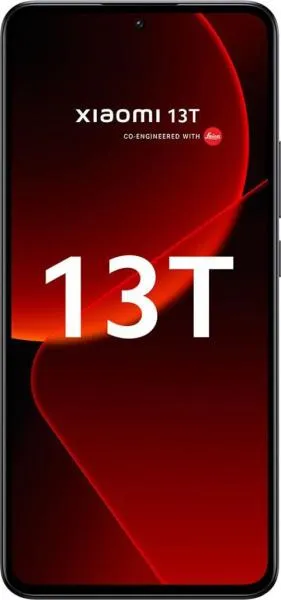
| Dimensions (mm) | 162.2 x 75.7 x 8.5 | 166.7 x 76.5 x 8.2 | The Xiaomi 13T is slightly smaller and thinner. The Honor X7b is negligibly thinner but noticeably taller and wider, potentially impacting one-handed usability. |
| Weight (g) | 193 | 199 | Negligible weight difference in real-world usage. |
| Build Materials | Missing | Missing | Cannot compare build quality and durability without this information. |
| Display | |||
| Display Type | AMOLED, 68B colors | IPS LCD | The Xiaomi 13T's AMOLED display offers significantly better contrast, deeper blacks, and more vibrant colors compared to the Honor X7b's IPS LCD. |
| Size (inches) | 6.67 | 6.8 | The Honor X7b offers a slightly larger screen for media consumption. |
| Resolution | 1220 x 2712 | 1080 x 2412 | The Xiaomi 13T has a much sharper display (446 ppi vs 389 ppi), resulting in clearer text and images. |
| Refresh Rate (Hz) | 144 | 90 | The Xiaomi 13T's 144Hz refresh rate delivers significantly smoother scrolling and animations, especially noticeable in gaming and fast-paced UI interactions. |
| Peak Brightness (nits) | 2600 | 850 | The Xiaomi 13T is drastically brighter, ensuring excellent outdoor visibility even in direct sunlight. The Honor X7b might struggle in bright conditions. |
| Performance | |||
| Chipset | Mediatek Dimensity 8200 Ultra (4 nm) | Qualcomm Snapdragon 680 4G (6 nm) | The Dimensity 8200 Ultra is a significantly more powerful processor than the Snapdragon 680, resulting in faster app loading, smoother multitasking, and better gaming performance. |
| CPU | Octa-core (1x3.1 GHz Cortex-A78 & 3x3.0 GHz Cortex-A78 & 4x2.0 GHz Cortex-A55) | Octa-core (4x2.4 GHz Kryo 265 Gold & 4x1.9 GHz Kryo 265 Silver) | The Xiaomi 13T's CPU architecture provides superior performance, especially in demanding tasks. |
| GPU | Mali-G610 MC6 | Adreno 610 | The Mali-G610 MC6 offers better graphics performance than the Adreno 610, beneficial for gaming and graphically intensive applications. |
| RAM | 12GB | 6GB/8GB | The Xiaomi 13T offers more RAM, enabling better multitasking and preventing apps from closing in the background. |
| Camera | |||
| Rear Camera Specs | Missing | Missing | Cannot compare camera quality and features without detailed specifications. |
| Video Capabilities | 4K@30fps (HDR, EIS), 1080p@ various fps (HDR, EIS) | 1080p@30fps | The Xiaomi 13T offers superior video recording capabilities, including 4K resolution, HDR, and Electronic Image Stabilization (EIS) for smoother footage. |
| Battery | |||
| Capacity (mAh) | 5000 | 5330 | The Honor X7b has a slightly larger battery capacity, potentially offering longer battery life. However, real-world usage will depend on other factors like display and processor efficiency. |
2. Key Differences Analysis
Xiaomi 13T Advantages:
- Significantly superior performance: The Dimensity 8200 Ultra chipset and 12GB RAM provide a much smoother and faster user experience.
- Much better display: The AMOLED display with a 144Hz refresh rate and high brightness delivers a vibrant and fluid visual experience.
- Superior video recording capabilities: 4K recording with HDR and EIS offers higher quality video content.
Honor X7b Advantages:
- Slightly larger battery capacity: Potentially longer battery life, although real-world performance depends on other factors.
- Slightly thinner (though larger overall): Might be marginally more pocketable despite being larger overall.
Trade-offs: The Honor X7b sacrifices performance and display quality for a potentially longer battery life and lower price point. The Xiaomi 13T prioritizes performance and a premium display.
3. User Profiles & Recommendations
Xiaomi 13T: Ideal for users who prioritize performance, a smooth and vibrant display, and high-quality video recording. Suitable for gamers, power users, and content creators.
Honor X7b: Best suited for users on a tighter budget who primarily use their phones for basic tasks like calling, texting, browsing, and social media. Less demanding users who value battery life over performance might find this phone suitable.
4. Decision Framework
Key Questions for Buyers:
- What is your budget? The Xiaomi 13T is likely more expensive.
- What are your primary phone usage patterns? (Gaming, content creation, basic communication)
- Which features are most important to you? (Performance, display quality, battery life)
Scenario-Based Recommendations:
- Gamer: Xiaomi 13T for its superior performance and high refresh rate display.
- Casual User: Honor X7b might suffice if budget is a major constraint.
- Content Creator: Xiaomi 13T for its superior video recording and performance capabilities.
My Choice: Xiaomi 13T
While lacking some specific details like camera specifications and build materials, the Xiaomi 13T is the clear winner based on the available data. Its superior processor, stunning AMOLED display with a 144Hz refresh rate, and enhanced video recording capabilities offer a significantly better user experience. While the Honor X7b boasts a slightly larger battery, the performance and display compromises are too significant to ignore. For my use case, which prioritizes a smooth and responsive experience, a high-quality display, and strong performance for multitasking and occasional gaming, the Xiaomi 13T is the better choice. The slightly higher price is justified by the significant jump in overall quality and user experience.
