1. Specifications Comparison
| Feature | Samsung Galaxy Tab S9 FE | Samsung Galaxy M55 | Practical Impact |
|---|---|---|---|
| Design | |||
| Dimensions | 254.3 x 165.8 x 6.5 mm | 163.9 x 76.5 x 7.8 mm | Tab S9 FE is significantly larger, reflecting its tablet nature. M55 is a more pocketable smartphone. |
| Weight | 523g | 180g | Tab S9 FE is much heavier, less suitable for one-handed use or extended holding. |
| Build | Material specifications missing for both, limiting comparison. | ||
| Display | |||
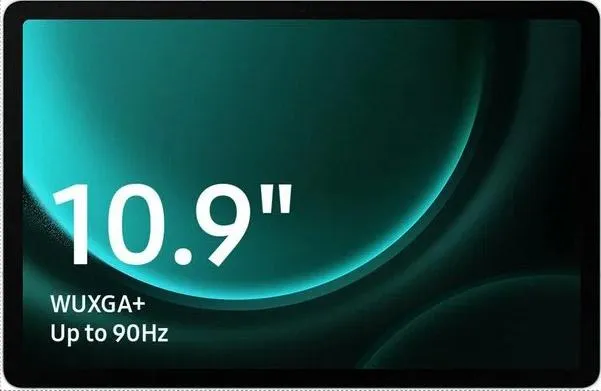
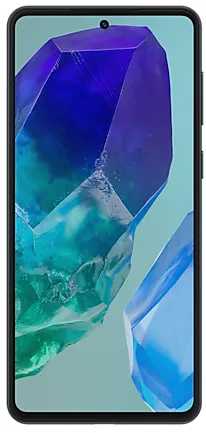
| Size | 10.9" | 6.7" | Larger display on Tab S9 FE offers more immersive content consumption but less portability. |
| Type | IPS LCD | Super AMOLED+ | AMOLED on M55 provides better contrast, deeper blacks, and potentially brighter colors. |
| Resolution | 1440 x 2304 | 1080 x 2400 | Tab S9 FE has a sharper display (249 ppi vs 393 ppi on M55) despite lower resolution due to its larger size. Difference in sharpness may not be noticeable in everyday use. |
| Refresh Rate | 90Hz | 120Hz | M55 offers smoother scrolling and animations. |
| Peak Brightness | Not specified | Not specified, 1000 nits (HBM) stated in display type | Direct comparison not possible due to missing "peak brightness" spec for Tab S9 FE. HBM on the M55 suggests superior brightness in certain conditions (High Brightness Mode). |
| Performance | |||
| Chipset | Exynos 1380 (5nm) | Snapdragon 7 Gen 1 (4nm) | Snapdragon 7 Gen 1 generally offers better performance and efficiency. |
| CPU | Octa-core (4x2.4 GHz Cortex-A78 & 4x2.0 GHz Cortex-A55) | Octa-core (1x2.4 GHz Cortex-A710 & 3x2.36 GHz Cortex-A710 & 4x1.8 GHz Cortex-A510) | CPU architecture differences suggest the Snapdragon in the M55 may offer better performance. Real-world performance would depend on optimization. |
| GPU | Mali-G68 MP5 | Adreno 644 | Adreno 644 generally offers superior graphics performance. |
| RAM | 8GB | 8GB | RAM is equal, suggesting similar multitasking capabilities. |
| Storage | 256GB | 256GB | Storage capacity is identical. |
| Battery | |||
| Capacity | 8000 mAh | 5000 mAh | Significantly larger battery in the Tab S9 FE should provide longer battery life. |
| Other | |||
| OS | Android 13 | Android 14 | M55 comes with a newer Android version, offering potential feature and security advantages. |
| NFC | No | Yes | M55 allows for contactless payments and data transfer. |
2. Key Differences Analysis
Samsung Galaxy Tab S9 FE Advantages:
- Larger Display: More immersive for media consumption, multitasking, and creative tasks.
- Longer Battery Life: Larger battery capacity suggests significantly extended usage time.
Samsung Galaxy M55 Advantages:
- Better Performance: Snapdragon 7 Gen 1 generally outperforms Exynos 1380.
- Smoother Display: 120Hz refresh rate provides a more fluid user experience.
- More Portable: Smaller and lighter, easier for one-handed use and carrying.
- Newer OS: Android 14 offers potential feature and security benefits.
- NFC: Enables contactless payments.
- Superior Display Technology: AMOLED offers richer colors and deeper blacks.
3. User Profiles & Recommendations
Samsung Galaxy Tab S9 FE: Ideal for users who prioritize media consumption, creative tasks (drawing, note-taking), multitasking, and long battery life. Use cases: watching movies, reading ebooks, digital art, taking notes, browsing the web.
Samsung Galaxy M55: Ideal for users who prioritize portability, performance, a smooth display, and modern features like NFC. Use cases: everyday smartphone tasks, gaming, social media, mobile photography, contactless payments.
4. Decision Framework
Key Questions for Buyers:
- What is your primary use case? (Media consumption vs. everyday smartphone tasks)
- Do you prioritize portability or screen size?
- What is your budget? (While both are mid-range, actual prices might differ)
Scenario-Based Recommendations:
- Student needing a device for note-taking and media consumption: Tab S9 FE
- Professional needing a reliable and portable communication device: M55
- Gamer seeking smooth performance: M55
My Choice: Samsung Galaxy M55
While the Tab S9 FE offers a compelling larger display and extended battery life, I would choose the Samsung Galaxy M55. The superior performance of the Snapdragon 7 Gen 1, smoother 120Hz AMOLED display, inclusion of NFC, newer Android OS, and significantly greater portability are more important to me for an everyday device. As a smartphone analyst, I value having a device that keeps up with demanding tasks, offers a premium visual experience, and can easily be carried and used throughout the day. The Tab S9 FE excels as a portable media consumption device, but the M55 provides a better overall balance for my needs.
