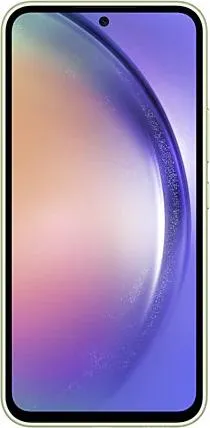

1. Specifications Comparison
| Feature | Samsung Galaxy A54 | Xiaomi 14 | Practical Impact |
|---|---|---|---|
| Design | |||
| Dimensions (mm) | 158.2 x 76.7 x 8.2 | 152.8 x 71.5 x 8.2 | Xiaomi 14 is noticeably more compact, making it easier to hold and pocket. |
| Weight (g) | 202 | 188 | Xiaomi 14 is lighter, further enhancing one-handed usability. |
| Display | |||
| Size (inches) | 6.4 | 6.36 | Negligible size difference. |
| Resolution (pixels) | 1080 x 2340 | 1200 x 2670 | Xiaomi 14 has a sharper display with higher pixel density (460 ppi vs 403 ppi), resulting in crisper text and images. |
| Type | Super AMOLED | LTPO OLED | Both offer vibrant colors and deep blacks. Xiaomi 14's LTPO panel allows for dynamic refresh rate adjustment, potentially saving battery life. |
| Refresh Rate (Hz) | 120 | 120 | Both offer smooth scrolling and animations. |
| Peak Brightness (nits) | 1000 (HBM) | 3000 (peak) | Xiaomi 14 boasts significantly higher peak brightness, ensuring excellent outdoor visibility. |
| Performance | |||
| Chipset | Exynos 1380 (5 nm) | Snapdragon 8 Gen 3 (4 nm) | Snapdragon 8 Gen 3 is a flagship processor, offering significantly better performance and efficiency than the mid-range Exynos 1380. This translates to faster app loading, smoother multitasking, and better gaming performance on the Xiaomi 14. |
| CPU | Octa-core (4x2.4 GHz Cortex-A78 & 4x2.0 GHz Cortex-A55) | Octa-core (1x3.3 GHz Cortex-X4 & 3x3.2 GHz Cortex-A720 & 2x3.0 GHz Cortex-A720 & 2x2.3 GHz Cortex-A520) | Xiaomi 14's CPU architecture is more powerful and modern. |
| GPU | Mali-G68 MP5 | Adreno 750 | Adreno 750 provides a substantial leap in graphics performance, crucial for demanding games and graphical applications. |
| RAM (GB) | 8 | 12 | More RAM on the Xiaomi 14 allows for more apps to be held in memory, reducing reloading times. |
| Camera | |||
| Main Camera (MP) | 50 | 50 | Similar resolution, but the Xiaomi 14 has larger sensor size (1/1.31\" vs 1/1.56\") and wider aperture (f/1.6 vs f/1.8), potentially capturing more light and detail, especially in low light. |
| Ultrawide (MP) | 13 | 50 | Xiaomi 14 offers significantly higher resolution ultrawide, capturing more detailed and wider shots. |
| Telephoto | No | 50 MP | Xiaomi 14 includes a telephoto lens for optical zoom, absent in the A54. |
| Video | 4K@30fps | 8K@24fps | Xiaomi 14 can record in higher resolution, offering more detail in videos. |
| Battery | |||
| Capacity (mAh) | 5000 | 4610 | While the A54 has a slightly larger battery, the Xiaomi 14's more efficient processor could potentially offer comparable battery life. |
| Charging (W) | 25 | 90 | Xiaomi 14 supports significantly faster charging, drastically reducing charging time. |
2. Key Differences Analysis
Xiaomi 14 Advantages:
- Significantly faster performance: Snapdragon 8 Gen 3 offers a substantial performance advantage for demanding tasks and gaming.
- Superior camera system: Larger sensors, wider apertures, telephoto lens, and 8K video recording capabilities.
- Sharper display: Higher resolution and peak brightness.
- Faster charging: 90W fast charging significantly reduces downtime.
- More compact and lighter design: Easier to handle and carry.
Samsung Galaxy A54 Advantages:
- Potentially longer battery life: Slightly larger battery capacity.
3. User Profiles & Recommendations
Xiaomi 14: Ideal for users who prioritize performance, photography, a premium display, and fast charging. Suitable for power users, mobile gamers, and content creators.
Samsung Galaxy A54: Best suited for users who prioritize battery life and affordability over peak performance. A good option for casual users who primarily use their phones for communication, social media, and light browsing.
4. Decision Framework
Key Questions for Buyers:
- What is your budget? The Xiaomi 14 is significantly more expensive.
- What are your primary smartphone usage patterns? (Gaming, photography, social media, etc.)
- How important are performance, camera quality, and charging speed to you?
Scenario-Based Recommendations:
- Tight Budget, Casual User: Samsung Galaxy A54
- Power User, Gamer, Photographer: Xiaomi 14
My Choice: Xiaomi 14
While the Samsung Galaxy A54 offers a solid mid-range experience, the Xiaomi 14 is the clear winner for me. The significant performance advantage of the Snapdragon 8 Gen 3, combined with the superior camera system, brighter and sharper display, faster charging, and more compact design, makes it a much more compelling device. I value performance and a premium user experience, and I am willing to pay the premium for the Xiaomi 14. The faster charging alone is a huge benefit in my busy lifestyle. While the A54's slightly larger battery might offer a marginal advantage in battery life, the Xiaomi 14's efficiency gains likely offset this difference. Ultimately, the Xiaomi 14 offers a more future-proof and well-rounded package.
