1. Specifications Comparison
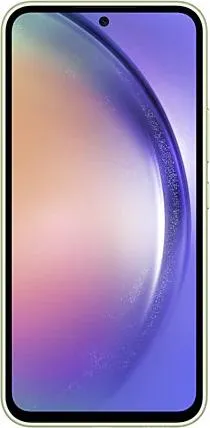
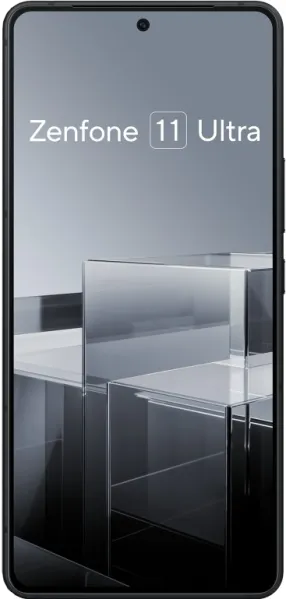
| Feature | Samsung Galaxy A54 | Asus Zenfone 11 Ultra | Practical Impact |
|---|---|---|---|
| Design | |||
| Dimensions (mm) | 158.2 x 76.7 x 8.2 | 163.8 x 76.8 x 8.9 | Zenfone 11 Ultra is slightly larger and thicker. |
| Weight (g) | 202 | 224 | Zenfone 11 Ultra is noticeably heavier. |
| Display | |||
| Size (inches) | 6.4 | 6.78 | Zenfone 11 Ultra offers a larger screen for more immersive media consumption. |
| Resolution (px) | 1080 x 2340 | 1080 x 2400 | Similar pixel density, but Zenfone's larger size may slightly reduce sharpness. |
| Refresh Rate (Hz) | 120 | 144 | Zenfone 11 Ultra's higher refresh rate will result in smoother scrolling and animations. |
| Display Type | Super AMOLED | LTPO AMOLED | Both offer vibrant colors and deep blacks. LTPO allows for dynamic refresh rate adjustment, potentially saving battery on the Zenfone. |
| Peak Brightness (nits) | 1000 (HBM) | 2500 (peak) | Zenfone 11 Ultra will be significantly more visible in direct sunlight. |
| Performance | |||
| Chipset | Exynos 1380 (5 nm) | Snapdragon 8 Gen 3 (4 nm) | Snapdragon 8 Gen 3 offers significantly better CPU and GPU performance, leading to faster app loading, smoother multitasking, and better gaming. |
| CPU | Octa-core (4x2.4 GHz Cortex-A78 & 4x2.0 GHz Cortex-A55) | Octa-core (1x3.3 GHz Cortex-X4 & 3x3.2 GHz Cortex-A720 & 2x3.0 GHz Cortex-A720 & 2x2.3 GHz Cortex-A520) | Significantly faster and more efficient CPU in the Zenfone. |
| GPU | Mali-G68 MP5 | Adreno 750 | Adreno 750 provides a major leap in graphics performance, crucial for demanding games and applications. |
| RAM (GB) | 8 | 16 | More RAM in the Zenfone allows for more apps to run in the background without performance slowdowns. |
| Camera | |||
| Main Camera (MP) | 50 | 50 | Both have similar resolution, but sensor and processing differences will likely impact image quality. |
| Ultrawide (MP) | 13 | 13 | Similar resolution. |
| Telephoto (MP) | N/A | 32 | Zenfone 11 Ultra offers optical zoom capability, absent in the A54. |
| Video Recording | 4K@30fps | 8K@24fps | Zenfone offers higher resolution video recording. |
| Battery | |||
| Capacity (mAh) | 5000 | 5500 | Larger battery in the Zenfone potentially translates to longer battery life. |
| Fast Charging (W) | 25 | 65 | Significantly faster charging on the Zenfone. |
2. Key Differences Analysis
Samsung Galaxy A54 Advantages:
- Potentially Lower Price: Typically, A series phones are more budget-friendly.
- More Compact and Lighter: Easier to handle and carry.
Asus Zenfone 11 Ultra Advantages:
- Significantly Superior Performance: The Snapdragon 8 Gen 3 provides a substantial performance advantage for demanding tasks and gaming.
- Better Display: Larger, brighter display with a higher refresh rate.
- Faster Charging: 65W fast charging drastically reduces charging time.
- More Versatile Camera System: Inclusion of a telephoto lens and 8K video recording.
- Larger Battery: Potentially longer battery life.
Trade-offs:
- Price: The Zenfone 11 Ultra is likely to be considerably more expensive.
- Size and Weight: The Zenfone 11 Ultra's larger size and weight might be less comfortable for some users.
3. User Profiles & Recommendations
Samsung Galaxy A54:
- Ideal User: Budget-conscious users who prioritize basic smartphone functionality, social media, web browsing, and casual gaming.
- Use Cases: Everyday tasks, light photography, social media consumption.
Asus Zenfone 11 Ultra:
- Ideal User: Power users, mobile gamers, and photography enthusiasts who demand top-tier performance, a high-quality display, and advanced camera features.
- Use Cases: Demanding mobile gaming, professional photography/videography, multitasking, content creation.
4. Decision Framework
Key Questions for Buyers:
- What is your budget? The price difference between these phones is likely significant.
- What are your primary smartphone usage patterns? Do you need top-tier performance or are basic functions sufficient?
- What features are most important to you? (e.g., camera quality, battery life, display size).
Scenario-Based Recommendations:
- Limited Budget, Basic Usage: Samsung Galaxy A54
- Demanding User, High Budget: Asus Zenfone 11 Ultra
My Choice: Asus Zenfone 11 Ultra
While the Samsung Galaxy A54 is a solid mid-range option, the Asus Zenfone 11 Ultra offers a substantial upgrade in nearly every aspect that matters to me. The significantly improved performance of the Snapdragon 8 Gen 3, the superior display quality (brightness, refresh rate, size), the faster charging, and the more versatile camera system (telephoto lens, 8K video) are all compelling reasons to choose the Zenfone. I prioritize a smooth and responsive user experience, high-quality visuals, and the ability to capture great photos and videos. While the price difference is a factor, the Zenfone's advanced features and future-proof specifications make it a worthwhile investment for my needs. The heavier weight is a minor inconvenience compared to the significant performance and feature gains.
