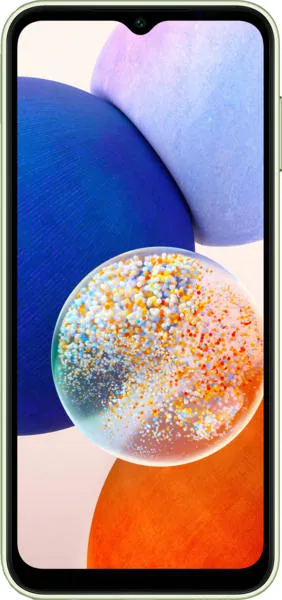
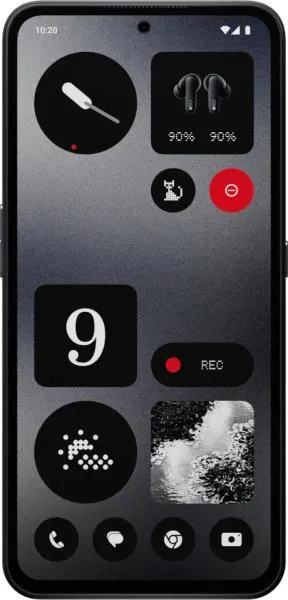
1. Specifications Comparison
| Feature | Samsung Galaxy A14 | Nothing CMF Phone 1 | Practical Impact |
|---|---|---|---|
| Design | |||
| Dimensions (mm) | 167.7 x 78 x 9.1 | 164 x 77 x 8.2 | CMF Phone 1 is slightly smaller and thinner, making it potentially more pocketable. |
| Weight (g) | 201 | 197 | Negligible weight difference in real-world usage. |
| Build Material | Not specified | Not specified | Cannot compare build quality and durability without material information. |
| Display | |||
| Display Type | PLS LCD | AMOLED | AMOLED offers significantly better contrast, deeper blacks, and potentially brighter colors leading to a more vibrant viewing experience. |
| Display Size (inches) | 6.6 | 6.67 | Negligible size difference. |
| Resolution | 1080 x 2408 | 1080 x 2400 | Virtually identical resolution, resulting in similar sharpness. |
| Refresh Rate | Not specified | 120Hz | 120Hz refresh rate on the CMF Phone 1 will provide a smoother and more responsive user experience, especially noticeable in scrolling and gaming. |
| Peak Brightness | Not specified | 2000 nits | CMF Phone 1's higher peak brightness ensures better visibility in direct sunlight. Lack of data for the A14 prevents a complete comparison. |
| Performance | |||
| Chipset | Mediatek Helio G80 (12nm) | Mediatek Dimensity 7300 (4nm) | The Dimensity 7300, built on a smaller process node, will offer significantly better performance and power efficiency compared to the Helio G80. |
| CPU | Octa-core (2x2.0 GHz Cortex-A75 & 6x1.8 GHz Cortex-A55) | Octa-core (4x2.5 GHz Cortex-A78 & 4x2.0 GHz Cortex-A55) | CMF Phone 1 has a more powerful CPU architecture with faster clock speeds, translating to smoother multitasking and faster app loading. |
| GPU | Mali-G52 MC2 | Mali-G615 MC2 | CMF Phone 1 has a more capable GPU, resulting in better gaming performance and smoother graphics rendering. |
| RAM | 4GB | 8GB | CMF Phone 1's larger RAM enables better multitasking and reduces app closures in the background. |
| Camera | |||
| Main Camera | 50MP, f/1.8 | 50MP, f/1.79, Sony IMX882 | Both have 50MP main sensors, but the CMF Phone 1 uses a known high-quality sensor (Sony IMX882) potentially offering better image quality. The slightly wider aperture on the CMF might improve low-light performance. |
| Video Recording | 1080p@30fps | 4K@30fps with EIS | CMF Phone 1 supports higher resolution video recording (4K) and includes Electronic Image Stabilization (EIS) for smoother videos. |
| Battery | |||
| Capacity | 5000 mAh | 5000 mAh | Identical battery capacities suggest similar battery life, though real-world usage may vary due to different chipsets and displays. |
| Fast Charging | 15W | 33W | CMF Phone 1 supports significantly faster charging, reducing downtime. |
2. Key Differences Analysis
Nothing CMF Phone 1 Advantages:
- Superior Display: AMOLED with 120Hz refresh rate offers a dramatically better visual experience.
- Significantly Faster Performance: More powerful chipset, CPU, GPU, and larger RAM contribute to smoother and faster overall performance.
- Better Camera Features: Higher resolution video recording (4K) with EIS, and a potentially superior main camera sensor.
- Faster Charging: 33W fast charging significantly reduces charging time.
Samsung Galaxy A14 Advantages:
- Potentially Lower Price: Given its older release date and less powerful specs, the A14 is likely more affordable. The provided data lists varying prices for both.
- Expandable Storage: While not explicitly stated in the provided data, the A14 likely offers expandable storage via microSD, a feature often absent in newer phones. This is not confirmed with the given data.
3. User Profiles & Recommendations
Nothing CMF Phone 1: Users who prioritize performance, a high-quality display, a good camera, and fast charging. Ideal for gaming, media consumption, and multitasking.
Samsung Galaxy A14: Budget-conscious users who prioritize basic functionality and long battery life. Suitable for light users primarily focused on calling, texting, and web browsing. Potentially good for users who require expandable storage.
4. Decision Framework
Key Questions for Buyers:
- What is your budget? The CMF Phone 1 is likely more expensive.
- What are your primary use cases? Gaming and media consumption benefit from the CMF Phone 1's superior performance and display.
- How important is display quality? The AMOLED display on the CMF Phone 1 is a significant advantage.
My Choice: Nothing CMF Phone 1
While pricing wasn't explicitly compared due to fluctuating market values, the Nothing CMF Phone 1 offers significant advantages in performance, display, camera, and charging speed. The smoother 120Hz AMOLED display, faster processor (Dimensity 7300), and quicker charging (33W) make it a more compelling device for a wider range of users. The Samsung Galaxy A14 might be a suitable option for extremely budget-conscious buyers who prioritize basic functionality above all else, but the CMF Phone 1 provides a substantially better user experience for a moderate price increase. The improved performance and display alone justify the price difference for most users.
