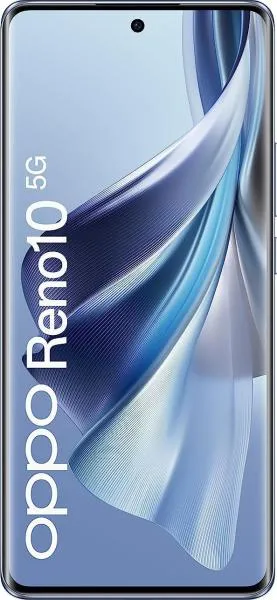

1. Specifications Comparison
| Feature | Oppo Reno10 | Xiaomi 14 | Practical Impact |
|---|---|---|---|
| Design | |||
| Dimensions | 162.4 x 74.2 x 8 mm | 152.8 x 71.5 x 8.2 mm | Xiaomi 14 is noticeably smaller and slightly thicker, potentially offering better one-handed usability. |
| Weight | 185g | 188g | Negligible weight difference; both phones are relatively lightweight. |
| Display | |||
| Size | 6.7" | 6.36" | Oppo Reno10 offers a larger screen for media consumption, while Xiaomi 14's smaller size might be preferable for one-handed use. |
| Type | AMOLED, 1B colors | LTPO OLED, 68B colors | Xiaomi 14's LTPO OLED panel offers superior color depth and potentially better power efficiency due to variable refresh rate. While both support HDR10+, Xiaomi 14 also boasts Dolby Vision. |
| Resolution | 1080 x 2412 | 1200 x 2670 | Xiaomi 14 has a sharper display with higher pixel density (460 ppi vs 394 ppi), resulting in crisper text and images. |
| Peak Brightness | 950 nits | 3000 nits | Xiaomi 14 offers significantly higher peak brightness, ensuring excellent outdoor visibility even in direct sunlight. |
| Refresh Rate | 120Hz | 120Hz | Both phones offer smooth scrolling and animations thanks to the 120Hz refresh rate. |
| Performance | |||
| Chipset | Mediatek Dimensity 7050 (6 nm) | Qualcomm Snapdragon 8 Gen 3 (4 nm) | Xiaomi 14 features a significantly more powerful processor built on a more advanced process node, resulting in much faster performance, better power efficiency, and improved graphics capabilities. |
| CPU | Octa-core (2x2.6 GHz Cortex-A78 & 6x2.0 GHz Cortex-A55) | Octa-core (1x3.3 GHz Cortex-X4 & 3x3.2 GHz Cortex-A720 & 2x3.0 GHz Cortex-A720 & 2x2.3 GHz Cortex-A520) | Xiaomi 14's CPU architecture is superior, offering higher clock speeds and improved core configuration for demanding tasks and multitasking. |
| GPU | Mali-G68 MC4 | Adreno 750 | Xiaomi 14's Adreno 750 GPU significantly outperforms the Mali-G68 MC4, providing a much better gaming and graphics-intensive application experience. |
| RAM/Storage | 8GB/256GB | 12GB/256GB or 12GB/512GB | Xiaomi 14 offers more RAM and storage options, enabling smoother multitasking and ample space for apps and files. |
| Battery | |||
| Capacity | 5000 mAh | 4610 mAh | Oppo Reno10 has a larger battery capacity, potentially offering longer battery life despite having a larger display. However, Xiaomi 14's more efficient processor might offset this difference. |
| Camera | No detailed specs provided | No detailed specs provided | Cannot provide a detailed comparison without camera sensor specifications like megapixels, aperture, and sensor size. Video capabilities suggest Xiaomi 14 offers much higher resolution and frame rate recording. |
2. Key Differences Analysis
Xiaomi 14 Advantages:
- Significantly more powerful: The Snapdragon 8 Gen 3 offers a substantial performance leap over the Dimensity 7050.
- Brighter and sharper display: The LTPO OLED with higher resolution and peak brightness delivers a superior visual experience.
- More RAM and Storage: Provides smoother multitasking and ample space for files.
- Superior video recording capabilities: Offers higher resolution and frame rates.
Oppo Reno10 Advantages:
- Larger battery capacity: Potentially longer battery life.
- Larger display: More immersive experience for media consumption.
3. User Profiles & Recommendations
Oppo Reno10: Suitable for users prioritizing battery life and a large display for media consumption on a budget. Good for casual users who don't require top-tier performance.
Xiaomi 14: Ideal for power users, gamers, and those seeking the best possible performance and display quality. Excellent for demanding tasks, multitasking, and content creation.
4. Decision Framework
Key Questions:
- What is your budget? Both are mid-range but the Xiaomi 14 likely sits at the higher end.
- What is your primary use case? Casual use vs. demanding tasks/gaming.
- Which features are most important to you? Battery life, display quality, performance.
Scenario-Based Recommendations:
- Heavy gamer: Xiaomi 14 is the clear choice due to its superior performance.
- Casual user prioritizing battery life: Oppo Reno10 might be a good option.
- User wanting the best display: Xiaomi 14's brighter, sharper display is the winner.
My Choice: Xiaomi 14
While the Oppo Reno10 offers a larger battery and display, the Xiaomi 14's significant performance advantage, superior display quality, and more future-proof specifications make it the better overall choice for me. The Snapdragon 8 Gen 3 is a generational leap in mobile processing, ensuring a smooth and responsive experience for years to come. The brighter, sharper LTPO display with Dolby Vision also significantly enhances the visual experience. The extra RAM ensures smoother multitasking. While the smaller battery is a slight concern, the 8 Gen 3's efficiency might offset this in real-world usage. Ultimately, I value performance and future-proofing over marginal gains in battery capacity and screen size.
