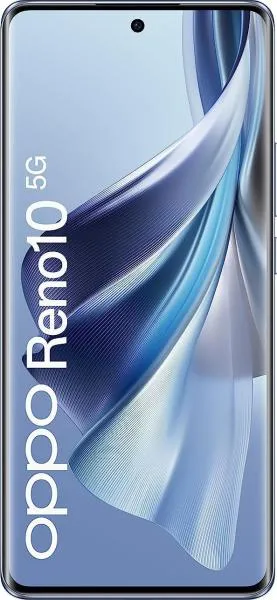
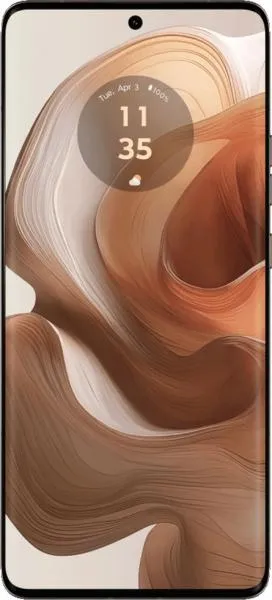
1. Specifications Comparison
| Feature | Oppo Reno10 | Motorola Edge 50 Ultra | Practical Impact |
|---|---|---|---|
| Design | |||
| Dimensions | 162.4 x 74.2 x 8 mm | 161.1 x 72.4 x 8.6 mm | Virtually identical in hand feel, though the Motorola is slightly thicker. |
| Weight | 185g | 197g | Noticeable difference in weight; Oppo will feel lighter. |
| Display | |||
| Display Type | AMOLED, 1B colors, 120Hz | P-OLED, 1B colors, 144Hz | Both offer vibrant colors and smooth scrolling. The 144Hz on the Motorola might be slightly smoother for gaming enthusiasts, but imperceptible to most users. P-OLED generally offers deeper blacks. |
| Resolution | 1080 x 2412 | 1220 x 2712 | Motorola has a sharper display with noticeably higher pixel density. |
| Peak Brightness | 950 nits | 2500 nits | Motorola's display will be significantly more visible in direct sunlight. |
| Performance | |||
| Chipset | Mediatek Dimensity 7050 (6 nm) | Qualcomm Snapdragon 8s Gen 3 (4 nm) | Motorola's Snapdragon 8s Gen 3 offers a significant performance advantage in demanding tasks like gaming and video editing. |
| CPU | Octa-core (2x2.6 GHz Cortex-A78 & 6x2.0 GHz Cortex-A55) | Octa-core (1x3.0 GHz Cortex-X4 & 4x2.8 GHz Cortex-A720 & 3x2.0 GHz Cortex-A520) | Motorola's CPU architecture is more powerful and efficient. |
| GPU | Mali-G68 MC4 | Adreno 735 | Motorola provides a superior gaming and graphics rendering experience. |
| RAM | 8GB | 16GB | Motorola offers significantly more RAM for multitasking and demanding applications. |
| Storage | 256GB | 512GB | Motorola offers double the storage space. |
| Camera | |||
| Video Capabilities | Up to 4K@30fps, 1080p@480fps | Up to 4K@60fps, 1080p@960fps | Motorola offers higher resolution and frame rate video recording capabilities, especially for slow-motion. Detailed camera specifications (sensor size, aperture) are missing, hindering a thorough comparison. |
| Battery | |||
| Capacity | 5000 mAh | 4500 mAh | Oppo has a larger battery capacity, potentially offering longer battery life. Real-world usage may vary depending on optimization. |
2. Key Differences Analysis
Motorola Edge 50 Ultra Advantages:
- Significantly more powerful: The Snapdragon 8s Gen 3 provides a massive performance leap over the Dimensity 7050.
- Sharper and brighter display: Higher resolution and peak brightness lead to a superior visual experience.
- More RAM and Storage: Double the RAM and storage compared to the Oppo.
- Superior video recording: Higher resolution and frame rates.
- More recent OS with longer support: Launched with Android 14 and promised updates to Android 17.
Oppo Reno10 Advantages:
- Larger Battery: Potentially longer battery life.
- Lighter Weight: More comfortable for extended use.
- Potentially Lower Price: While both are in the "medium price" range, the Oppo might be more affordable given the less powerful specs.
3. User Profiles & Recommendations
Oppo Reno10:
- Ideal User: Casual users prioritizing battery life, a lightweight phone, and affordability.
- Use Cases: Everyday tasks like browsing, social media, light gaming, and calling.
Motorola Edge 50 Ultra:
- Ideal User: Power users, gamers, content creators, and those seeking the best performance and display.
- Use Cases: Demanding games, video editing, multitasking, and consuming high-resolution content.
4. Decision Framework
Key Questions for Buyers:
- What is your budget? The Motorola is likely more expensive.
- What are your primary use cases? For basic tasks, the Oppo might suffice. For demanding tasks, the Motorola is necessary.
- How important is battery life versus performance? The Oppo likely has longer battery life, while the Motorola prioritizes performance.
Scenario-Based Recommendations:
- Limited Budget, Casual User: Oppo Reno10
- Power User, Gamer: Motorola Edge 50 Ultra
- Balanced User Seeking Value: Depends on individual priorities and price difference.
My Choice: Motorola Edge 50 Ultra
While the Oppo Reno10 offers a larger battery and lighter weight, the Motorola Edge 50 Ultra's significantly superior performance, brighter and sharper display, larger RAM and storage, and better video recording capabilities make it the clear winner for me. I prioritize a smooth and responsive user experience, future-proofing with longer OS support, and the ability to handle demanding tasks. The slightly heavier weight and potentially shorter battery life are acceptable trade-offs for the substantial performance gains. The newer and more powerful chipset would ensure a longer usable lifespan for the device, making it a better long-term investment.
