1. Specifications Comparison
| Feature | Category | Nothing Phone (2) | Motorola Edge 50 Ultra | Practical Impact |
|---|---|---|---|---|
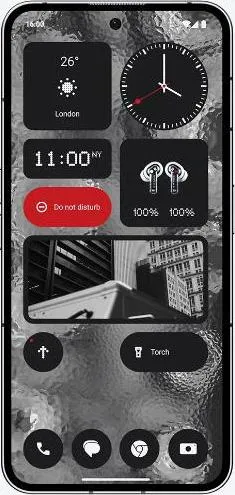
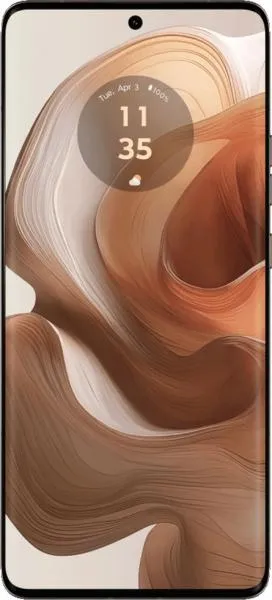
| Dimensions | Design | 162.1 x 76.4 x 8.6 mm, 201.2g | 161.1 x 72.4 x 8.6 mm, 197g | The Motorola is slightly narrower, lighter, making it potentially more comfortable for one-handed use. Depth and thickness are practically identical. |
| Build | Design | Glass front/back, aluminum frame | Information missing | Build materials impact durability and premium feel. Unable to compare without Motorola's build information. |
| Display Type | Display | LTPO OLED, 1B colors, 120Hz | P-OLED, 1B colors, 144Hz | Both offer excellent color accuracy and smooth scrolling. The Motorola's 144Hz may provide a slightly smoother experience in fast-paced games, but the difference is often imperceptible in everyday use. LTPO allows for more granular refresh rate control, potentially saving battery. |
| Resolution | Display | 1080 x 2412, 394 ppi | 1220 x 2712, 446 ppi | The Motorola has a sharper display due to the higher resolution and pixel density, resulting in crisper text and images. |
| Peak Brightness | Display | 1600 nits | 2500 nits | The Motorola's significantly higher peak brightness ensures better visibility in direct sunlight. |
| Chipset | Performance | Snapdragon 8+ Gen 1 | Snapdragon 8s Gen 3 | Both are high-performance chipsets. The 8s Gen 3 is newer and likely offers slight performance and efficiency improvements, but the 8+ Gen 1 is still incredibly capable. |
| CPU | Performance | Octa-core (1x3.0 GHz Cortex-X2 & 3x2.5 GHz Cortex-A710 & 4x1.80 GHz Cortex-A510) | Octa-core (1x3.0 GHz Cortex-X4 & 4x2.8 GHz Cortex-A720 & 3x2.0 GHz Cortex-A520) | Motorola uses newer core architecture; expect moderately better performance in demanding tasks and potentially improved power efficiency. |
| GPU | Performance | Adreno 730 | Adreno 735 | The Adreno 735 offers a marginal performance boost over the 730 in graphics-intensive tasks like gaming. |
| RAM/Storage | Performance | 12GB/256GB, 12GB/512GB | 16GB/512GB | The Motorola offers more RAM, which can improve multitasking and overall system responsiveness. Both offer ample storage. |
| Battery | Battery | 4700 mAh | 4500 mAh | The Nothing Phone has a slightly larger battery capacity, potentially offering longer battery life. Real-world usage will vary depending on individual usage patterns. |
| OS | Software | Android 13, upgradable to 16 | Android 14, upgradable to 17 | Motorola ships with a newer Android version and will receive longer software updates, providing security and feature advantages in the long run. |
| Video Capabilities | Camera | Up to 4K@60fps with OIS/EIS | Up to 4K@60fps with EIS, slow-mo up to 960fps | Both offer excellent video recording capabilities. Motorola provides more slow-motion options. Missing OIS on Motorola could result in less stable footage in some scenarios. |
2. Key Differences Analysis
Nothing Phone (2) Advantages:
- Slightly larger battery: Potentially longer battery life.
- Potentially better price: "Medium price" designation might translate to a lower cost than the Motorola.
Motorola Edge 50 Ultra Advantages:
- Sharper display: Higher resolution and PPI for a crisper viewing experience.
- Brighter display: Much brighter for improved outdoor visibility.
- More powerful chipset and more RAM: Smoother performance, especially in demanding tasks and multitasking.
- Newer Android version with longer update promise: Access to newer features and better long-term security.
- More slow-motion video options: Greater creative flexibility for video recording.
3. User Profiles & Recommendations
Nothing Phone (2): Users prioritizing battery life and potentially a lower price.
Motorola Edge 50 Ultra: Users who value a top-tier display, performance, and the latest software with longer support. Suitable for demanding tasks, gaming, and media consumption.
4. Decision Framework
Key Questions:
- What is your budget? Compare actual prices, as "medium price" is subjective.
- Is display quality a top priority? The Motorola offers a significantly better display.
- How important is long-term software support? The Motorola will receive updates for a longer period.
Scenario-Based Recommendations:
- Budget-conscious user: Wait for actual pricing, but the Nothing Phone (2) might offer better value.
- Power user/gamer: The Motorola Edge 50 Ultra's superior performance and display make it the clear choice.
- User who keeps phones for several years: The Motorola's longer software update cycle is a significant advantage.
My Choice: Motorola Edge 50 Ultra
While battery life is important, the Motorola Edge 50 Ultra's superior display, performance (CPU/GPU/RAM), newer software with a longer update commitment outweigh the slightly smaller battery and potential price difference. The sharper, brighter screen and smoother performance would enhance my daily usage significantly. The longer software support provides peace of mind and continued access to new features and security updates. While lacking OIS on video recording is a drawback, the overall package offered by the Motorola is more compelling.
