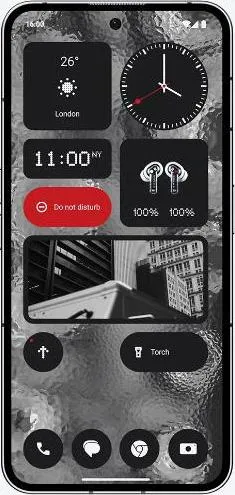

1. Specifications Comparison
| Feature | Category | Nothing Phone (2) | Asus ROG Phone 8 | Practical Impact |
|---|---|---|---|---|
| Dimensions | Design | 162.1 x 76.4 x 8.6 mm, 201.2g | 163.8 x 76.8 x 8.9 mm, 225g | ROG Phone 8 is noticeably heavier and slightly larger. The Nothing Phone (2) will be more comfortable for one-handed use and extended periods. |
| Build | Design | Glass front/back, aluminum frame | Information not provided | Durability and premium feel cannot be fully compared without ROG Phone 8's build materials. |
| Display Size | Display | 6.7" | 6.78" | Negligible difference in screen real estate. |
| Display Type | Display | LTPO OLED, 1B colors, 120Hz | LTPO AMOLED, 1B colors, 165Hz | Both offer excellent color accuracy and smooth scrolling. The ROG Phone 8's 165Hz may provide a slightly smoother experience in fast-paced games, but the difference will be subtle for most users. |
| Peak Brightness | Display | 1600 nits | 2500 nits | ROG Phone 8 will be significantly more visible in direct sunlight. |
| Resolution | Display | 1080 x 2412 | 1080 x 2400 | Virtually identical pixel density, resulting in similar sharpness. |
| Chipset | Performance | Snapdragon 8+ Gen 1 | Snapdragon 8 Gen 3 | ROG Phone 8 boasts a newer, more powerful processor, leading to faster performance in demanding tasks and games. |
| CPU | Performance | Octa-core (1x3.0 GHz Cortex-X2 & 3x2.5 GHz Cortex-A710 & 4x1.80 GHz Cortex-A510) | Octa-core (1x3.3 GHz Cortex-X4 & 3x3.2 GHz Cortex-A720 & 2x3.0 GHz Cortex-A720 & 2x2.3 GHz Cortex-A520) | ROG Phone 8's CPU architecture provides a significant performance advantage. |
| GPU | Performance | Adreno 730 | Adreno 750 | ROG Phone 8 has a more powerful GPU, resulting in better gaming performance and smoother graphics rendering. |
| RAM | Performance | 12GB | 16GB | ROG Phone 8 offers more RAM, allowing for better multitasking and smoother performance with demanding applications. |
| Battery Capacity | Battery | 4700 mAh | 5500 mAh | ROG Phone 8 offers significantly longer battery life. |
| OS | Software | Android 13, upgradable to 16 | Android 14, upgradable to 16 | Both will receive long-term software updates. ROG Phone 8 starts with a newer Android version. |
| Video Capabilities | Camera | Up to 4K@60fps | Up to 8K@24fps | ROG Phone 8 offers higher resolution video recording but specific camera sensor details are missing for a complete comparison. |
2. Key Differences Analysis
Nothing Phone (2) Advantages:
- Lighter and More Compact: More comfortable for one-handed use and portability.
Asus ROG Phone 8 Advantages:
- Significantly More Powerful: Superior CPU and GPU for demanding tasks and gaming.
- Brighter Display: Much better outdoor visibility.
- Longer Battery Life: Larger battery capacity for extended use.
- Higher Resolution Video Recording: Captures more detail in videos.
- More RAM: Improved multitasking and performance with demanding applications.
3. User Profiles & Recommendations
Nothing Phone (2): Users who prioritize a lightweight, comfortable phone for everyday use and value a clean software experience.
Asus ROG Phone 8: Mobile gamers, power users, and those who demand top-tier performance and long battery life. Content creators who require high-resolution video recording would also benefit.
4. Decision Framework
Key Questions:
- What is your primary use case? (Gaming, everyday use, content creation)
- What is your budget? (Consider the price difference between the two phones.)
- How important is portability and one-handed use?
My Choice: Asus ROG Phone 8
While the Nothing Phone (2) offers a more comfortable form factor, the Asus ROG Phone 8 provides a significant leap in performance, battery life, and display brightness. The Snapdragon 8 Gen 3 and Adreno 750, combined with 16GB of RAM, ensure a future-proof device capable of handling any demanding task. The brighter display is crucial for outdoor use, and the larger battery provides peace of mind. Although heavier, the performance benefits and future-proofing outweigh the slight decrease in portability for my needs. I prioritize performance and longevity in a device.
