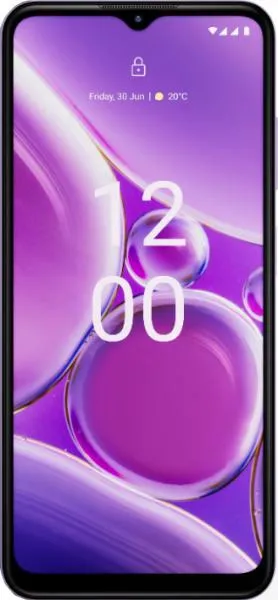

1. Specifications Comparison
| Feature | Nokia G42 | vivo V40 | Practical Impact |
|---|---|---|---|
| Design | |||
| Dimensions (mm) | 165 x 75.8 x 8.6 | 164.2 x 75 x 7.6 | Vivo V40 is slightly thinner and lighter, potentially more comfortable for one-handed use. |
| Weight (g) | 193.8 | 190 | Negligible weight difference in practical use. |
| Display | |||
| Display Type | IPS LCD | AMOLED | Vivo V40's AMOLED display offers significantly better contrast, deeper blacks, and potentially brighter colors. |
| Display Size (inches) | 6.56 | 6.78 | Vivo V40 has a larger display, providing more immersive content consumption. |
| Resolution | 720 x 1612 | 1260 x 2800 | Vivo V40 has a much sharper display with higher pixel density (453 ppi vs 269 ppi), resulting in crisper text and images. |
| Refresh Rate (Hz) | 90 | 120 | Vivo V40's 120Hz refresh rate offers smoother scrolling and animations compared to the Nokia G42's 90Hz. |
| HDR | No HDR support detected | HDR10+ | Vivo V40 supports HDR10+ for enhanced video quality with wider color gamut and dynamic range on compatible content. |
| Performance | |||
| Chipset | Snapdragon 480+ 5G | Snapdragon 7 Gen 3 | Vivo V40 has a significantly more powerful processor, leading to much faster performance in demanding tasks and gaming. |
| CPU | Octa-core (2x2.2 GHz Kryo 460 & 6x1.8 GHz Kryo 460) | Octa-core (1x2.63 GHz Cortex-A715 & 3x2.4 GHz Cortex-A715 & 4x1.8 GHz Cortex-A510) | Vivo V40 boasts a newer CPU architecture and higher clock speeds resulting in superior processing power. |
| GPU | Adreno 619 | Adreno 720 | Vivo V40's GPU provides a substantial improvement in graphics performance for smoother gaming and faster rendering. |
| RAM | 4GB/6GB/8GB depending on the version | 12GB | Vivo V40 offers significantly more RAM, enabling better multitasking and smoother performance with multiple apps open. |
| Camera | |||
| Main Camera | 50MP | 50MP | While both have the same resolution, the Vivo V40 likely uses a superior sensor (Samsung GNJ) and offers features like pixel binning for improved low-light performance. More information is needed to compare sensor quality definitively. |
| Video Recording | 1080p@30fps | 4K@30fps with OIS, EIS | Vivo V40 supports higher resolution video recording (4K) with optical and electronic image stabilization for smoother videos. |
| Battery | |||
| Capacity (mAh) | 5000 | 5500 | Vivo V40 has a slightly larger battery capacity, potentially offering longer battery life. However, real-world usage depends on various factors. |
2. Key Differences Analysis
Nokia G42 Advantages:
- Potentially Lower Price: Likely more affordable than the Vivo V40.
Vivo V40 Advantages:
- Significantly Better Performance: The Snapdragon 7 Gen 3 offers a major performance advantage over the Snapdragon 480+, making it suitable for demanding tasks and gaming.
- Superior Display: The AMOLED display with a higher resolution, refresh rate, and HDR10+ support delivers a vastly improved visual experience.
- Enhanced Camera Capabilities: 4K video recording with stabilization, a likely superior main sensor, and more features contribute to better photography and videography.
- Larger RAM: 12GB of RAM ensures smooth multitasking and efficient handling of demanding applications.
3. User Profiles & Recommendations
Nokia G42: Suitable for budget-conscious users who prioritize basic smartphone functionality (calling, texting, web browsing, social media) and light gaming.
Vivo V40: Ideal for users who demand high performance for gaming, content creation, and multitasking. The superior display and camera also cater to multimedia enthusiasts.
4. Decision Framework
Key Questions for Buyers:
- What is your budget? The Nokia G42 is likely much cheaper.
- What are your primary smartphone uses? For basic tasks, the G42 might suffice. For demanding tasks, gaming, or multimedia consumption, the V40 is superior.
- How important is display and camera quality? The V40 significantly outperforms the G42 in these areas.
My Choice: Vivo V40
While the Nokia G42 might be a good budget option, the Vivo V40 offers a significantly superior overall experience due to its vastly improved performance, stunning display, enhanced camera capabilities, and larger RAM. The price difference is justified by these substantial upgrades. Even though the specific pricing wasn't provided in a directly comparable way, the performance jump alone would make the V40 the better choice for my needs. I prioritize a smooth user experience, high-quality visuals, and the ability to run demanding applications without lag. The Vivo V40 delivers on all these fronts.
