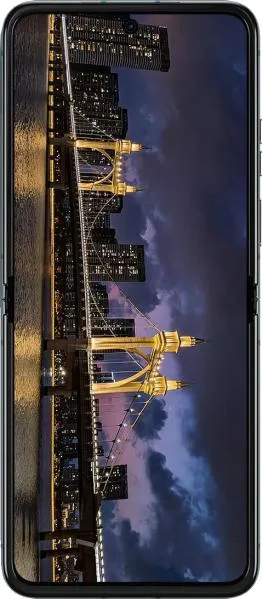

1. Specifications Comparison
| Feature | Motorola Razr 40 Ultra | OnePlus 12R | Practical Impact |
|---|---|---|---|
| Design | |||
| Form Factor | Foldable | Standard | Razr offers portability and novelty; OnePlus prioritizes a larger, traditional screen. |
| Dimensions (mm) | 170.8 x 74 x 7 | 163.3 x 75.3 x 8.8 | Razr is significantly thinner when folded but taller unfolded. OnePlus is thicker but potentially more comfortable for one-handed use. |
| Weight (g) | 184.5 | 207 | Razr is noticeably lighter, benefiting portability. |
| Display | |||
| Display Type | Foldable LTPO AMOLED | LTPO4 AMOLED | Razr's folding screen allows for a compact folded size, but may have a crease. OnePlus offers a larger, uninterrupted display. |
| Size (inches) | 6.9 | 6.78 | OnePlus offers a slightly larger display area for media consumption and multitasking. |
| Resolution | 1080 x 2640 | 1264 x 2780 | OnePlus has a higher resolution, resulting in sharper text and images. |
| Refresh Rate (Hz) | 165 | 120 | Razr's higher refresh rate provides smoother animations and scrolling. |
| Peak Brightness (nits) | 1400 | 4500 | OnePlus's significantly higher peak brightness ensures better visibility in direct sunlight. |
| Performance | |||
| Chipset | Snapdragon 8+ Gen 1 | Snapdragon 8 Gen 2 | OnePlus utilizes a newer, more powerful and efficient chipset, resulting in better performance and potentially longer battery life. |
| CPU | Octa-core (up to 3.19 GHz) | Octa-core (up to 3.2 GHz) | Both offer high-end performance, but the OnePlus 12R with the newer Cortex cores and architecture will likely edge out the Razr in demanding tasks and sustained performance. |
| GPU | Adreno 730 | Adreno 740 | OnePlus has a more powerful GPU, leading to improved gaming and graphics performance. |
| RAM | 8GB | 16GB | The OnePlus 12R offers double the RAM, enabling superior multitasking and app switching without performance slowdowns. |
| Camera | |||
| Main Camera (MP) | 12 | 50 | OnePlus features a much higher resolution main sensor, likely capturing more detail and offering better low-light performance. |
| Ultrawide (MP) | 13 | 8 | Razr has a higher resolution ultrawide; however, sensor size and processing play a crucial role in image quality, which is not available in the provided data. |
| Selfie Camera (MP) | 32 | 16 | Razr has a higher resolution selfie camera. |
| Battery | |||
| Capacity (mAh) | 3800 | 5500 | OnePlus offers significantly larger battery capacity, translating to longer usage time. |
2. Key Differences Analysis
Motorola Razr 40 Ultra Advantages:
- Portability: The foldable design makes it incredibly compact when folded.
- Novelty: The unique form factor offers a distinctive user experience.
- Higher Refresh Rate Display: Smoother animations and scrolling.
OnePlus 12R Advantages:
- Performance: Newer and more powerful chipset, GPU, and double the RAM.
- Battery Life: Significantly larger battery capacity.
- Brighter Display: Much higher peak brightness for better outdoor visibility.
- Main Camera Resolution: Higher resolution main camera sensor, likely capturing more detailed images.
3. User Profiles & Recommendations
Motorola Razr 40 Ultra: Ideal for users who prioritize portability and a unique, stylish device and are willing to compromise on some performance and battery life for the foldable form factor.
OnePlus 12R: Best suited for users who value performance, battery life, a large and vibrant display, and a robust camera system in a traditional smartphone design.
4. Decision Framework
Key Questions for Buyers:
- Form Factor Priority: Is a foldable design essential, or is a larger traditional screen preferred?
- Performance Needs: Are demanding tasks and gaming a priority, or is moderate performance sufficient?
- Battery Life Importance: Is all-day battery life crucial, or is charging throughout the day acceptable?
Scenario-Based Recommendations:
- Heavy User: The OnePlus 12R is better for power users due to its superior performance and battery life.
- Style Conscious User: The Razr 40 Ultra appeals to those seeking a unique and compact device.
My Choice: OnePlus 12R
While the Razr 40 Ultra is undeniably cool with its foldable design, the OnePlus 12R is the more practical and powerful device for my needs. The significantly longer battery life, superior performance thanks to the Snapdragon 8 Gen 2 and 16GB of RAM, brighter display, and higher-resolution main camera outweigh the novelty of a foldable phone. I prioritize a smooth and powerful user experience, long battery life, and a great camera, all of which the OnePlus 12R delivers convincingly. The larger display is also preferable for media consumption and productivity. While I appreciate the Razr's portability, the trade-offs in performance and battery are too significant for my usage patterns.
