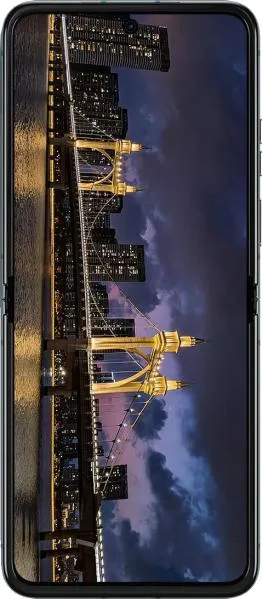
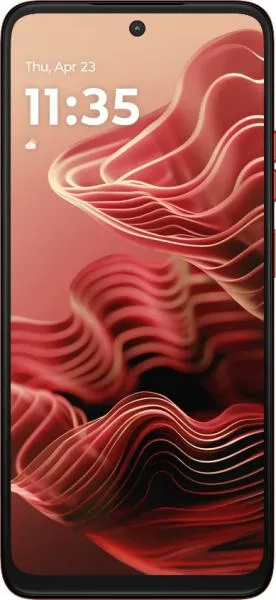
1. Specifications Comparison
| Feature | Motorola Razr 40 Ultra | Motorola Moto G35 | Practical Impact |
|---|---|---|---|
| Design | |||
| Dimensions (mm) | 170.8 x 74 x 7 | 166.3 x 76 x 7.8 | Razr 40 Ultra significantly thinner due to foldable design, but wider when unfolded. G35 is a more traditional candybar form factor. |
| Weight (g) | 184.5 | 188 | Negligible weight difference. |
| Foldable | Yes | No | Razr 40 Ultra offers compact portability when folded. |
| Display | |||
| Display Type | Foldable LTPO AMOLED | IPS LCD | Razr 40 Ultra provides deeper blacks, more vibrant colors, and better power efficiency with LTPO. G35's IPS LCD is generally less power-hungry but offers less impressive visuals. |
| Display Size (inches) | 6.9 | 6.72 | Similar screen real estate. |
| Resolution | 1080 x 2640 | 1080 x 2400 | Comparable sharpness. |
| Refresh Rate (Hz) | 165 | 120 | Razr 40 Ultra offers smoother animations and scrolling. |
| Peak Brightness (nits) | 1400 | 1000 | Razr 40 Ultra will be more visible in direct sunlight. |
| Performance | |||
| Chipset | Snapdragon 8+ Gen 1 | Unisoc T760 | Razr 40 Ultra boasts significantly more powerful CPU and GPU, resulting in much faster performance for demanding tasks and gaming. |
| CPU | Octa-core (1x3.19 GHz Cortex-X2 & 3x2.75 GHz Cortex-A710 & 4x1.80 GHz Cortex-A510) | Octa-core (1x2.2 GHz Cortex-A76 & 3x Cortex-A76 & 4x Cortex-A55) | Razr 40 Ultra's CPU architecture provides superior performance and efficiency. |
| RAM (GB) | 8/12 | 4/8 | Razr 40 Ultra offers configurations with more RAM, enabling better multitasking and smoother performance. |
| Camera | |||
| Main Camera (MP) | 12 | 50 | While G35 boasts higher megapixels, Razr's sensor quality and processing (not detailed) ultimately determine image quality. Megapixel count alone is not conclusive. |
| Selfie Camera (MP) | 32 | 16 | Razr 40 Ultra has a higher resolution front-facing camera, potentially resulting in better selfie quality. |
| Video Recording | Up to 4K@60fps with HDR, EIS | Up to 4K@30fps | Razr 40 Ultra supports higher resolution and frame rate video recording with HDR and better stabilization (EIS). |
| Battery | |||
| Capacity (mAh) | 3800 | 5000 | G35 has a significantly larger battery, likely leading to longer battery life. Razr's foldable design constraints limit battery size. |
2. Key Differences Analysis
Motorola Razr 40 Ultra Advantages:
- Significantly more powerful: The Snapdragon 8+ Gen 1 provides a substantial performance advantage for demanding tasks, gaming, and multitasking.
- Higher quality display: The foldable LTPO AMOLED offers superior color accuracy, contrast, and refresh rate.
- More compact when folded: Offers unique portability benefits.
- Faster refresh rate: Smoother user experience.
Motorola Moto G35 Advantages:
- Larger battery: Potentially much longer battery life.
- Lower price: Offers a more budget-friendly option.
3. User Profiles & Recommendations
Motorola Razr 40 Ultra: Users who value cutting-edge technology, portability, a premium display, and top-tier performance. Ideal for those who want a compact device without sacrificing performance and are willing to pay a premium. Use cases: Mobile gaming, content creation, multitasking.
Motorola Moto G35: Users who prioritize battery life, affordability, and a large screen. Ideal for users who primarily use their phones for basic tasks like calling, texting, browsing, and social media, and are on a tighter budget. Use cases: Everyday communication, media consumption.
4. Decision Framework
Key Questions for Buyers:
- Is portability a top priority? If yes, the Razr 40 Ultra's foldable design is a significant advantage.
- What is your budget? The G35 offers better value for budget-conscious buyers.
- What is your typical phone usage? Demanding users will appreciate the Razr's performance, while casual users might find the G35 sufficient.
My Choice: Motorola Razr 40 Ultra
While the Moto G35 offers impressive battery life and value, I would choose the Motorola Razr 40 Ultra. The superior performance, stunning display, and unique foldable design are compelling. I prioritize a smooth and responsive user experience, especially for tasks like gaming and multitasking. While battery life is a consideration, I'm willing to compromise slightly for the Razr's other advantages. The compact form factor when folded is a significant benefit for portability. Additionally, I am willing to invest in the more premium device for long-term satisfaction.
