1. Specifications Comparison
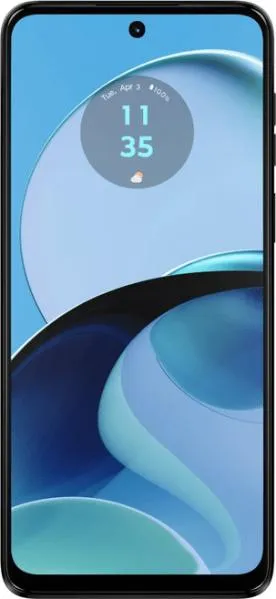
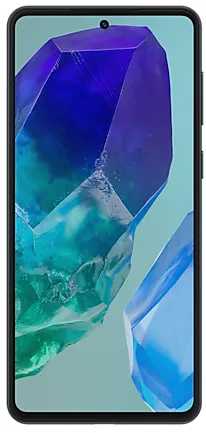
| Feature | Motorola Moto G14 | Samsung Galaxy M55 | Practical Impact |
|---|---|---|---|
| Design | |||
| Dimensions | 161.5 x 73.8 x 8 mm | 163.9 x 76.5 x 7.8 mm | M55 slightly larger and heavier. Negligible difference in hand feel for most users. |
| Weight | 177g | 180g | M55 slightly heavier, but the difference is minimal. |
| Fingerprint Sensor | Side-mounted | Under-display | Preference-based. Under-display is often perceived as more modern. |
| Display | |||
| Size | 6.5" | 6.7" | M55 offers a slightly larger viewing area for media consumption. |
| Type | IPS LCD | Super AMOLED+, 120Hz | M55's AMOLED provides richer colors, deeper blacks, and better power efficiency. 120Hz refresh rate results in significantly smoother animations and scrolling. |
| Resolution | 1080 x 2400 | 1080 x 2400 | Identical resolution, but pixel density is slightly lower on the M55 due to the larger screen size. Difference is negligible. |
| Refresh Rate | Not specified | 120Hz | M55's 120Hz significantly improves smoothness and responsiveness compared to the G14's unspecified (likely 60Hz) refresh rate. |
| Brightness | Not specified | 1000 nits (HBM) | M55's high brightness ensures better visibility in direct sunlight. Lack of data for the G14 prevents a complete comparison. |
| Performance | |||
| Chipset | Unisoc Tiger T616 (12 nm) | Qualcomm Snapdragon 7 Gen 1 (4 nm) | Snapdragon 7 Gen 1 offers significantly better CPU and GPU performance, resulting in smoother multitasking, faster app loading, and improved gaming capabilities. |
| CPU | Octa-core (2x2.0 GHz Cortex-A75 & 6x1.8 GHz Cortex-A55) | Octa-core (1x2.4 GHz Cortex-A710 & 3x2.36 GHz Cortex-A710 & 4x1.8 GHz Cortex-A510) | M55's CPU architecture is newer and more powerful. |
| GPU | Mali-G57 MP1 | Adreno 644 | Adreno 644 provides a substantial improvement in graphics performance for demanding games and applications. |
| RAM | 8GB | 8GB | Equal RAM capacity. |
| Storage | 256GB | 256GB | Equal storage capacity. |
| Camera | |||
| Video | 1080p@30fps | 4K@30fps (OIS, EIS), 1080p@30/60fps (OIS, EIS) | M55 offers significantly better video recording capabilities with 4K resolution, Optical Image Stabilization (OIS), and Electronic Image Stabilization (EIS) for smoother footage. |
| Battery | |||
| Capacity | 5000 mAh | 5000 mAh | Same battery capacity. Real-world battery life will depend on software optimization and display type; the M55's AMOLED might offer better efficiency. |
| Other | |||
| OS | Android 13 | Android 14 | M55 comes with a newer Android version, potentially offering more features and longer software support. |
| USB | USB Type-C 2.0 | USB Type-C 2.0, OTG | Both have USB-C, but the M55 also supports On-The-Go (OTG) for connecting peripherals. |
2. Key Differences Analysis
Motorola Moto G14 Advantages:
- Potentially Lower Price: Belonging to the "low price" range, it likely offers better affordability.
Samsung Galaxy M55 Advantages:
- Superior Display: AMOLED with 120Hz refresh rate delivers a significantly better visual experience.
- Significantly Better Performance: Snapdragon 7 Gen 1 outperforms the Unisoc T616 in all aspects.
- Enhanced Camera Capabilities: 4K video recording with OIS and EIS enables higher quality video capture.
- More Recent Software: Ships with Android 14, offering potential advantages in features and updates.
- Added Features: OTG support expands connectivity options.
3. User Profiles & Recommendations
Motorola Moto G14: Budget-conscious users who prioritize basic functionality: calling, texting, web browsing, and light app usage. Not recommended for demanding tasks or gaming.
Samsung Galaxy M55: Users who value a smooth and responsive user experience, enjoy media consumption and gaming, and require a capable camera.
4. Decision Framework
Key Questions for Buyers:
- What is your budget? The G14 is likely much cheaper.
- What are your primary smartphone usage patterns? The M55 excels in performance and media consumption.
- How important is display quality and smoothness? The M55's 120Hz AMOLED display is a major differentiator.
Scenario-Based Recommendations:
- Tight Budget: Moto G14
- Balanced Needs and Budget: Samsung Galaxy M55
- Power User/Gamer/Media Enthusiast: Samsung Galaxy M55
My Choice: Samsung Galaxy M55
While the Motorola Moto G14 might be a decent option for extremely budget-conscious buyers, the Samsung Galaxy M55 offers significantly better value overall. The superior display, performance, camera, and newer software make it a more future-proof and enjoyable device to use. The price difference is likely justified by these substantial improvements in user experience. The 120Hz AMOLED display alone is a compelling reason to choose the M55, as it drastically improves the feel of daily interactions. The Snapdragon 7 Gen 1 ensures smooth performance even for demanding tasks, making the M55 a more versatile device.
