
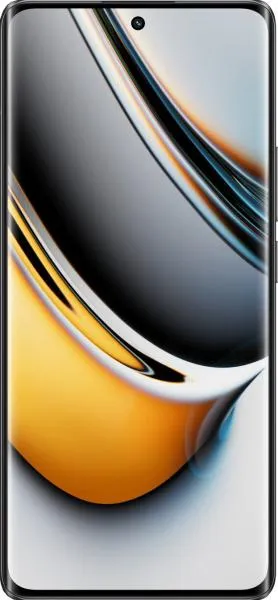
1. Specifications Comparison
| Feature | Huawei Mate X3 | Realme 11 Pro | Practical Impact |
|---|---|---|---|
| Design | |||
| Form Factor | Foldable | Standard | Mate X3 offers larger screen real estate when unfolded, compact when folded; Realme 11 Pro is a traditional slab phone. |
| Dimensions (mm) | 156.9 x 141.5 x 5.3 (folded) | 161.7 x 73.9 x 8.2 | Mate X3 significantly thinner when folded, potentially more pocketable; Realme 11 Pro thinner when unfolded. |
| Weight (g) | 239 | 183 | Realme 11 Pro noticeably lighter for everyday use. |
| Display | |||
| Size (inches) | 7.85 (unfolded), ~6.4" (outer) | 6.7 | Mate X3 provides a tablet-like experience when unfolded; Realme 11 Pro has a large, standard display. |
| Resolution (px) | 2224 x 2496 (unfolded) | 1080 x 2412 | Mate X3 boasts a sharper display due to higher resolution and pixel density; both offer smooth 120Hz refresh rates. |
| Type | Foldable OLED | AMOLED | Both offer vibrant colors and deep blacks; Mate X3's foldable screen introduces a crease but allows for flexible usage. |
| Performance | |||
| Chipset | Snapdragon 8+ Gen 1 4G (4 nm) | Dimensity 7050 (6 nm) | Mate X3 offers significantly more processing power for demanding tasks and gaming; Realme 11 Pro provides adequate performance for daily use. |
| CPU | Octa-core (1x3.19 GHz Cortex-X2 & 3x2.75 GHz Cortex-A710 & 4x2.0 GHz Cortex-A510) | Octa-core (2x2.6 GHz Cortex-A78 & 6x2.0 GHz Cortex-A55) | Mate X3's CPU architecture and higher clock speeds translate to faster app loading, smoother multitasking, and better gaming performance. |
| GPU | Adreno 730 | Mali-G68 MC4 | Mate X3's GPU provides a superior gaming and graphics rendering experience compared to the Realme 11 Pro. |
| RAM | 8/12GB | 8/12GB | Both offer ample RAM for smooth multitasking; impact depends on specific configuration chosen. |
| Camera | |||
| Main Camera | 50MP (Sony IMX766) | 100MP (Omnivision OVA0B40) | Realme 11 Pro boasts higher resolution; image quality depends on sensor size, processing, and other factors. Practical differences require real-world camera comparisons. |
| Telephoto | 16MP (5x Optical Zoom) | None | Mate X3 offers optical zoom for better image quality at longer distances. Realme 11 Pro relies on digital zoom. |
| Battery | |||
| Capacity (mAh) | 4800 | 5000 | Realme 11 Pro has a slightly larger battery capacity, potentially offering longer battery life. Real-world usage will vary. |
2. Key Differences Analysis
Huawei Mate X3 Advantages:
- Foldable Design: Offers versatility of a tablet and portability of a phone.
- Superior Performance: Significantly more powerful processor and GPU.
- Optical Zoom: Provides better image quality at longer distances.
- Higher Resolution Display: Sharper visuals for media consumption.
Realme 11 Pro Advantages:
- Lower Price: Significantly more affordable.
- Larger Battery Capacity: Potentially longer battery life.
- Lighter Weight: More comfortable for extended use.
- 5G Connectivity: Supports faster cellular data speeds (Mate X3 is 4G).
3. User Profiles & Recommendations
Huawei Mate X3: Ideal for power users, multitaskers, content creators, and those who value a large, high-quality display and portability. Use cases: Productivity on the go, immersive media consumption, mobile gaming.
Realme 11 Pro: Suitable for budget-conscious users, casual users, and those prioritizing battery life and 5G connectivity. Use cases: Everyday communication, social media, web browsing, light gaming.
4. Decision Framework
Key Questions for Buyers:
- Budget: Is a premium price justifiable for the foldable design and superior performance of the Mate X3?
- Usage: Do you need a large screen for productivity and media or is a standard display sufficient?
- Priorities: Which features are most important: performance, camera, battery life, connectivity, or form factor?
Scenario-Based Recommendations:
- Power User with High Budget: Huawei Mate X3
- Budget-Conscious User Prioritizing Value: Realme 11 Pro
- User Needing a Large Screen for Productivity: Huawei Mate X3
My Choice: Realme 11 Pro
While the Huawei Mate X3 is undeniably a more powerful and feature-rich device, the significantly higher price tag makes it less appealing to me. The Realme 11 Pro offers excellent value for its price, providing a large AMOLED display, good battery life, 5G connectivity, and decent performance for everyday tasks. I don't require the absolute best performance or a foldable screen, making the Realme 11 Pro a more practical choice for my needs and budget. The lack of a telephoto lens is a trade-off I'm willing to make considering the price difference. Finally, the lack of readily available Google Mobile Services on the Mate X3 would significantly impact my usage.
