1. Specifications Comparison
| Feature | Honor X7b | Xiaomi Redmi 13 | Practical Impact |
|---|---|---|---|
| Design | |||
| Dimensions (mm) | 166.7 x 76.5 x 8.2 | 168.6 x 76.3 x 8.3 | Redmi 13 is slightly larger and thicker. Negligible difference in daily use. |
| Weight (g) | 199 | 205 | Redmi 13 is slightly heavier. Negligible difference in daily use. |
| Build Materials | Not specified | Not specified | Cannot compare build quality and durability without more information. |
| Display | |||
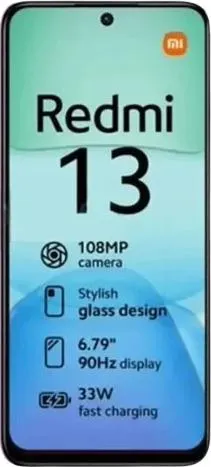
| Size (inches) | 6.8 | 6.79 | Virtually identical screen sizes. |
| Type | IPS LCD | IPS LCD | Both offer similar color accuracy and viewing angles, typically less vibrant than AMOLED. |
| Resolution | 1080 x 2412 | 1080 x 2460 | Negligible difference in sharpness at this screen size. |
| Refresh Rate (Hz) | 90 | 90 | Both offer smooth scrolling and animations. |
| Peak Brightness (nits) | 850 | 550 (HBM) | The Honor X7b should be significantly more visible in direct sunlight. Redmi 13's HBM value is unclear without knowing the duration and typical brightness. |
| Performance | |||
| Chipset | Snapdragon 680 4G (6 nm) | Mediatek Helio G91 Ultra (12 nm) | Snapdragon 680 generally offers better power efficiency due to the smaller manufacturing process. Helio G91 might have slightly better raw performance, but real-world difference may vary. |
| CPU | Octa-core (4x2.4 GHz & 4x1.9 GHz) | Octa-core (2x2.0 GHz & 6x1.8 GHz) | Difficult to compare directly without benchmarks. Both are mid-range CPUs, suitable for everyday tasks but might struggle with demanding games. |
| GPU | Adreno 610 | Mali-G52 MC2 | Adreno 610 generally provides a more consistent gaming experience. |
| RAM/Storage | 256GB/6GB, 128GB/8GB | 256GB/8GB RAM | Redmi 13 offers more RAM in its configuration, potentially improving multitasking performance. |
| Battery | |||
| Capacity (mAh) | 5330 | 5030 | Honor X7b offers a larger battery, potentially leading to longer battery life. Real-world usage will depend on optimization. |
| Charging Speed | Not specified | Not specified | Cannot compare charging speeds without more information. |
| Software | |||
| OS | Android 13 | Android 14 | Redmi 13 comes with a newer Android version out of the box, offering potential features and security updates. Honor X7b can be upgraded to Android 14. |
| Other | |||
| NFC | Yes | Yes | Both support contactless payments and data transfer. |
| USB | USB Type-C 2.0, OTG | USB Type-C | Honor X7b explicitly supports OTG for connecting peripherals. Redmi 13's USB version is unspecified; assuming it's at least 2.0. |
2. Key Differences Analysis
Honor X7b Advantages:
- Brighter Display: Significantly brighter for outdoor use.
- Larger Battery: Potentially longer battery life.
- More Efficient Chipset: Likely resulting in better battery life.
Xiaomi Redmi 13 Advantages:
- Newer Android Version: Access to the latest features and security updates out-of-the-box.
- More RAM: Improved multitasking performance.
- Lower Price: Offers better value for budget-conscious users.
3. User Profiles & Recommendations
Honor X7b: Users who prioritize battery life and outdoor visibility. Suitable for media consumption and general use.
Xiaomi Redmi 13: Budget-conscious users who want the latest software and decent performance for everyday tasks. Suitable for light gaming and social media.
4. Decision Framework
Key Questions:
- What is your budget? The Redmi 13 is a lower-priced option.
- How important is battery life and outdoor visibility? The Honor X7b excels in these areas.
- Do you need the latest Android features immediately? The Redmi 13 ships with Android 14.
Scenario-Based Recommendations:
- Tight Budget: Redmi 13.
- Heavy Outdoor Use: Honor X7b.
- Latest Software Features: Redmi 13.
My Choice: Honor X7b
While the Redmi 13 offers a newer Android version and more RAM at a lower price, the Honor X7b's significantly brighter display, larger battery, and more power-efficient chipset are more compelling to me. I prioritize battery life and outdoor visibility, making the Honor X7b a better fit for my personal needs. The slight performance advantage of the Redmi 13 is less important than day-to-day usability in bright sunlight and extended battery life. While the Redmi 13 offers good value, the X7b's advantages in key areas justify the likely price difference for my use case.
