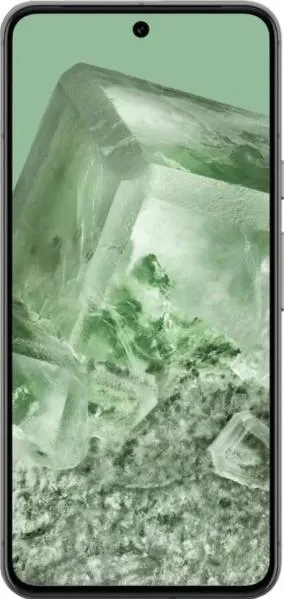
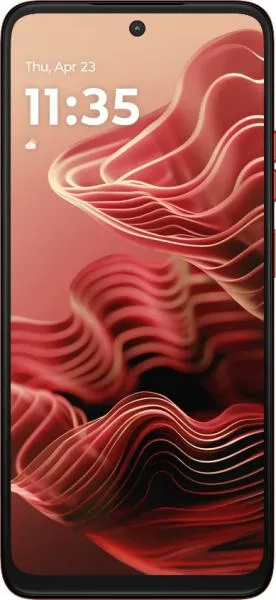
Let's dive into a comparative analysis of the Google Pixel 8 and the Motorola Moto G35. Both phones occupy the "medium price" range, but their specifications reveal distinct strengths and target audiences.
1. Specifications Breakdown
| Feature | Google Pixel 8 | Motorola Moto G35 | Real-World Implications |
|---|---|---|---|
| Design | |||
| Dimensions | 150.5 x 70.8 x 8.9 mm | 166.3 x 76 x 7.8 mm | Pixel 8 is noticeably smaller and slightly thicker. Moto G35 might feel larger in hand. |
| Weight | 187g | 188g | Negligible weight difference. |
| Build Materials | Not specified | Not specified | Durability and premium feel are unclear without further information. |
| Display | |||
| Display Type | OLED, 120Hz, HDR10+ | IPS LCD, 120Hz, HDR10 | Pixel 8's OLED offers deeper blacks, richer colors, and better power efficiency. |
| Size | 6.2 inches | 6.72 inches | Moto G35 provides a larger screen for media consumption. |
| Resolution | 1080 x 2400 | 1080 x 2400 | Comparable sharpness despite size difference; Pixel 8 will have slightly higher pixel density due to smaller size. |
| Refresh Rate | 120Hz | 120Hz | Both offer smooth scrolling and animations. |
| Peak Brightness | 2000 nits | 1000 nits | Pixel 8 will be significantly brighter outdoors. |
| Performance | |||
| Chipset | Google Tensor G3 (4nm) | Unisoc T760 (6nm) | Tensor G3 is likely more powerful and efficient due to advanced architecture and smaller process node. Expect better performance in demanding tasks and AI on the Pixel 8. |
| CPU | Nona-core (1x3.0 GHz Cortex-X3 & 4x2.45 GHz Cortex-A715 & 4x2.15 GHz Cortex-A510) | Octa-core (1x2.2 GHz Cortex-A76 & 3x Cortex-A76 & 4x Cortex-A55) | Pixel 8 has a more modern and powerful CPU configuration. |
| GPU | Immortalis-G715s MC10 | Mali-G57 | Pixel 8's GPU will likely offer better gaming and graphics performance. |
| RAM | 8GB | 8GB | Comparable RAM capacity for multitasking. |
| Storage | 256GB | 128GB | Pixel 8 offers double the storage. |
| Battery Life | |||
| Capacity | 4575 mAh | 5000 mAh | Moto G35 has a larger battery capacity, but real-world battery life depends on optimization and usage. |
| Other | |||
| OS | Android 14 | Android 14 | Both run the latest Android version. |
| Charging | Not specified | Not specified | Charging speeds are unknown. |
| Camera | Not specified | Not specified | Camera performance can't be compared without detailed sensor and feature information. |
2. Key Insights
- Performance: The Pixel 8, with its Tensor G3 chip, significantly outperforms the Moto G35 in processing power, graphics capabilities, and AI functionalities. This translates to smoother multitasking, faster app loading, and enhanced gaming experiences.
- Display: The Pixel 8 boasts a superior OLED display with vibrant colors, perfect blacks, and exceptional brightness, making it ideal for outdoor use and media consumption. While the Moto G35's larger screen size might appeal to some, its IPS LCD panel lacks the richness and contrast of the Pixel 8's OLED.
- Battery: While the Moto G35 has a larger battery, the Pixel 8's more efficient processor could potentially offset this advantage. Real-world battery life will depend on individual usage patterns.
- Software & Updates: Pixel phones generally receive faster and more frequent software updates directly from Google, ensuring timely security patches and new features.
3. User Profiles and Recommendations
- Pixel 8: Best suited for users who prioritize performance, a premium display, a compact form factor, timely software updates, and a polished user experience. Ideal for demanding tasks, gaming, photography (assuming a superior camera based on Pixel history), and those who value having the latest Android features.
- Moto G35: A suitable option for budget-conscious users who prioritize a large screen for media consumption and basic daily tasks. Acceptable for casual gaming and general use, but performance limitations might be noticeable for more demanding applications.
4. Buying Decision Framework
- What is your budget? Both phones are in the mid-range, but the Pixel 8 is likely positioned at a higher price point.
- What are your primary use cases? If performance and a top-tier display are crucial, the Pixel 8 is the clear winner. If a large screen and long battery life are priorities, the Moto G35 is a contender.
- How important is software and long-term support? The Pixel's guaranteed updates and pure Android experience provide a significant advantage in this area.
My Choice: I would choose the Google Pixel 8. While lacking camera details, the significantly superior processing power, stunning OLED display, compact form factor, and the promise of timely software updates align perfectly with my needs as a power user and tech enthusiast. The performance gains and overall user experience offered by the Tensor G3 and the vibrant display outweigh the Moto G35's larger battery and screen size. I prioritize a fluid, responsive device with cutting-edge technology and long-term software support.
