
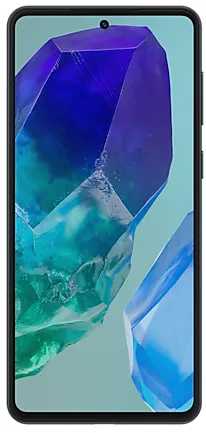
1. Specifications Comparison
| Feature | Apple iPhone 15 | Samsung Galaxy M55 | Practical Impact |
|---|---|---|---|
| Design | |||
| Dimensions | 147.6 x 71.6 x 7.8 mm | 163.9 x 76.5 x 7.8 mm | iPhone 15 is significantly smaller and easier to handle one-handed. |
| Weight | 171g | 180g | Noticeable weight difference, but both are relatively light. |
| Build Materials | Not specified | Not specified | Build quality and durability cannot be compared without further information. |
| Display | |||
| Size | 6.1" | 6.7" | Galaxy M55 offers a larger screen for media consumption and multitasking. |
| Type | Super Retina XDR OLED | Super AMOLED+ | Both are high-quality display technologies with vibrant colors and deep blacks; subjective preference may apply. |
| Resolution | 1179 x 2556 | 1080 x 2400 | iPhone 15 has a sharper display due to higher pixel density (461 ppi vs 393 ppi). |
| Refresh Rate | Not specified | 120Hz | Galaxy M55's 120Hz refresh rate results in smoother scrolling and animations. Missing refresh rate for iPhone 15 hinders comparison. |
| Peak Brightness | 2000 nits | 1000 nits | iPhone 15's significantly higher peak brightness improves outdoor visibility. |
| Performance | |||
| Chipset | Apple A16 Bionic (4 nm) | Qualcomm Snapdragon 7 Gen 1 (4 nm) | A16 is generally considered a more powerful chip, likely leading to better performance in demanding tasks and gaming. |
| CPU | Hexa-core | Octa-core | Core count alone doesn't determine performance; A16's architecture likely provides superior single-core performance. |
| GPU | Apple GPU (5-core) | Adreno 644 | A16's GPU is expected to offer better graphics performance for gaming. |
| RAM | 6GB | 8GB | Galaxy M55 has more RAM, potentially enabling better multitasking and preventing app closures in the background. |
| Storage | 256GB/512GB | 256GB | iPhone 15 offers a 512GB option for users needing more storage. |
| Battery | |||
| Capacity | 3349 mAh | 5000 mAh | Galaxy M55 has significantly larger battery capacity, likely resulting in longer battery life. |
| Camera | |||
| Video Capabilities | Up to 4K@60fps, 1080p@240fps | Up to 4K@30fps | iPhone 15 offers higher resolution and frame rate video recording, including slow-motion at 240fps. |
| Specific sensor details | Missing for both | Missing for both | Detailed camera comparison impossible without sensor size, aperture, and other specifications. |
2. Key Differences Analysis
iPhone 15 Advantages:
- Smaller, more premium design (assumed based on history): Easier one-handed use.
- Sharper display: More detailed content.
- More powerful processor and GPU: Smoother performance, especially in demanding tasks and games.
- Brighter display: Better outdoor visibility.
- Higher quality video recording capabilities: More detailed and smoother videos.
Samsung Galaxy M55 Advantages:
- Larger display: More immersive experience for media consumption.
- Higher refresh rate: Smoother scrolling and animations.
- Significantly larger battery: Longer usage time between charges.
- More RAM: Better multitasking.
- Potentially lower price (in some regions): Higher value proposition for budget-conscious users.
3. User Profiles & Recommendations
iPhone 15: Users prioritizing performance, a compact design, a brighter display, and a premium ecosystem. Ideal for demanding tasks, gaming, and content creation.
Samsung Galaxy M55: Users prioritizing battery life, a large display, smooth scrolling, and value. Ideal for media consumption, multitasking, and general daily use.
4. Decision Framework
Key Questions:
- What screen size do you prefer? Large for media consumption or compact for one-handed use?
- How important is performance and a premium OS experience? Prioritize this for demanding tasks and gaming.
- What is your budget and how important is battery life? The M55 likely offers better value for budget-conscious users seeking longer battery life.
My Choice: iPhone 15
While the Samsung Galaxy M55 offers compelling features like a larger battery and 120Hz display, I would choose the iPhone 15. The A16 Bionic chip's superior performance, brighter display for outdoor use, and the historically more premium build quality of iPhones are decisive factors for me. I prioritize a smooth user experience, especially in demanding tasks and gaming, and value a compact phone for easy one-handed use. While battery life is important, I'm willing to compromise in this area for the overall performance and user experience offered by the iPhone 15. The sharper display is also a significant advantage. However, if budget is a primary concern and battery life is paramount, the Galaxy M55 might be the better choice. Ultimately, this is a subjective decision based on individual priorities.
