
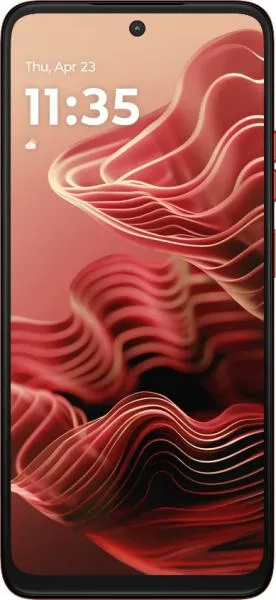
1. Specifications Comparison
| Feature | Apple iPhone 15 Plus | Motorola Moto G35 | Practical Impact |
|---|---|---|---|
| Design | |||
| Dimensions | 160.9 x 77.8 x 7.8 mm | 166.3 x 76 x 7.8 mm | The iPhone 15 Plus is slightly shorter and wider, while both have the same thickness. The difference in hand feel will be minimal. |
| Weight | 201g | 188g | The Moto G35 is noticeably lighter, making it more comfortable for extended use. |
| Build Materials | Not specified | Not specified | Build quality and durability cannot be compared without further information. |
| Display | |||
| Display Type | Super Retina XDR OLED | IPS LCD | The iPhone's OLED display offers significantly better contrast, deeper blacks, and wider viewing angles. |
| Display Size | 6.7" | 6.72" | Negligible difference in screen real estate. |
| Resolution | 1290 x 2796 | 1080 x 2400 | The iPhone has a much sharper display with higher pixel density (460 ppi vs 392 ppi), resulting in crisper text and images. |
| Refresh Rate | Not specified | 120Hz | A higher refresh rate on the Moto G35 results in smoother scrolling and animations, making the user experience feel more fluid. However, the iPhone likely has ProMotion which dynamically adjusts refresh rate, optimizing for both smoothness and battery life. Lack of iPhone refresh rate info limits full comparison. |
| Peak Brightness | 2000 nits | 1000 nits | The iPhone's significantly higher peak brightness ensures better visibility in direct sunlight. |
| Performance | |||
| Chipset | Apple A16 Bionic (4 nm) | Unisoc T760 (6 nm) | The A16 Bionic is a flagship chipset known for its superior performance and efficiency compared to the mid-range Unisoc T760. This translates to faster app loading, smoother multitasking, and better gaming performance on the iPhone. |
| CPU | Hexa-core | Octa-core | Core count alone doesn't determine performance. The A16's architecture and individual core performance are significantly more powerful. |
| GPU | Apple GPU (5-core) | Mali-G57 | The Apple GPU is expected to offer superior graphics performance compared to the Mali-G57, resulting in a better gaming and content consumption experience. Specific benchmarks would provide greater clarity. |
| RAM | 6GB | 8GB | While the Moto G35 has more RAM, iOS's memory management is generally more efficient. Real-world performance differences due to RAM are likely to be minimal. |
| Storage | 256GB/512GB | 128GB | The iPhone offers more storage options, catering to users with larger media libraries. |
| Battery | |||
| Capacity | 4383 mAh | 5000 mAh | The Moto G35 has a larger battery capacity, potentially offering longer battery life. However, actual battery life depends on various factors including software optimization and display technology. |
| Camera | |||
| Video Capabilities | 4K@60fps (HDR), up to 1080p@240fps | 4K@30fps, 1080p@30fps | The iPhone offers significantly more advanced video recording capabilities, including higher resolution, frame rates, and HDR support. This translates to noticeably better video quality. Detailed camera sensor specs are needed for comprehensive comparison. |
| Other | |||
| OS | iOS 17 | Android 14 | OS preference is subjective. iOS is known for its simplicity and tight integration with Apple's ecosystem, while Android offers more customization options. |
2. Key Differences Analysis
iPhone 15 Plus Advantages:
- Superior Display: OLED technology offers significantly better visuals.
- Significantly Faster Performance: The A16 Bionic chip provides a substantial performance advantage.
- More Advanced Video Recording: Higher resolution, frame rates, and HDR support.
- Brighter Display: Better visibility in sunlight.
Moto G35 Advantages:
- Larger Battery Capacity: Potentially longer battery life.
- Higher Refresh Rate Screen: Smoother scrolling and animations (although iPhone refresh rate is unknown).
- Lower Price: Likely more affordable. (Price range is the same but likely different actual prices)
- Lighter Weight: More comfortable for extended use.
Trade-offs:
- Performance vs. Battery Life: The iPhone prioritizes performance, while the Moto G35 leans towards battery life.
- Premium Features vs. Affordability: The iPhone offers a more premium experience but likely at a higher cost.
3. User Profiles & Recommendations
iPhone 15 Plus: Users who prioritize performance, display quality, premium design, and a seamless ecosystem integration. Ideal for demanding tasks, gaming, content creation, and those heavily invested in the Apple ecosystem.
Moto G35: Budget-conscious users who prioritize battery life, a large display, and a smooth user experience. Suitable for everyday tasks, media consumption, and casual gaming. Good for users who prefer Android's customization.
4. Decision Framework
Key Questions:
- What is your budget? The iPhone 15 Plus is likely significantly more expensive.
- What are your performance requirements? For demanding tasks and gaming, the iPhone is the clear winner.
- What features are most important to you? Prioritize battery life, display quality, or performance based on your needs.
Scenario-Based Recommendations:
- Heavy User: iPhone 15 Plus for its superior performance and ecosystem.
- Casual User on a Budget: Moto G35 for its affordability and long battery life.
- Content Creator: iPhone 15 Plus for its advanced video recording capabilities.
My Choice: iPhone 15 Plus
While the Moto G35 offers a compelling value proposition with its large battery and smooth display, the iPhone 15 Plus's significant advantages in performance, display quality, and overall ecosystem make it my preferred choice. The A16 Bionic chip ensures a future-proof device capable of handling demanding tasks for years to come. The superior OLED display drastically improves the visual experience. Although missing some specifications, the overall picture paints the iPhone 15 Plus as the better device, despite the likely higher price. I value long-term performance and a premium experience over battery capacity and a slightly smoother refresh rate.
