Aquos R11
Overview
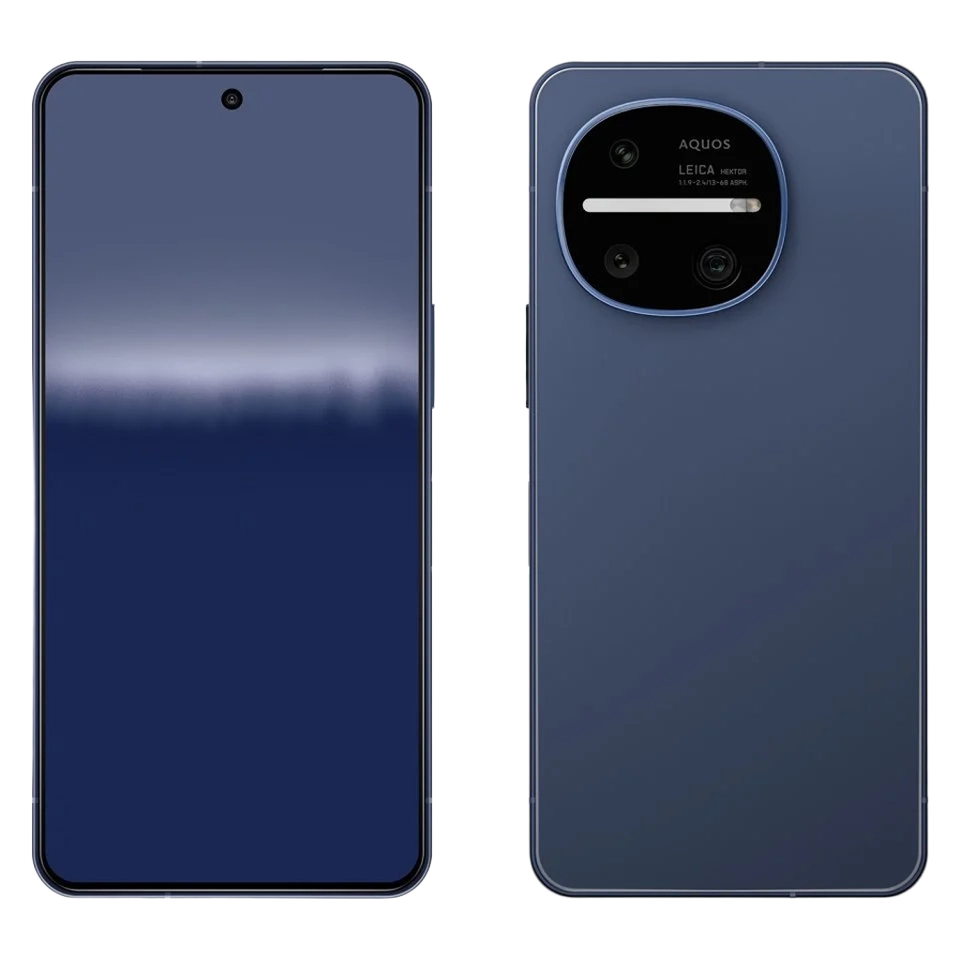
The Aquos R11 is a 2026 smartphone from Sharp. It features a 6.5" IGZO display with 1080 x 2340 px resolution (396 ppi pixel density), offering a smooth 240 Hz refresh rate and impressive peak brightness of 3600 nits, protected by Corning Gorilla Glass Victus 2. The device is powered by the Qualcomm Snapdragon 8s Gen4 (4 nm process), 12GB RAM LPDDR5X RAM and Adreno 825 GPU. Power is provided by a 5000 mAh Li-Polymer battery with 36W fast charging. The phone runs on Android 16.
Aquos R11 Review
Aquos R11 Review
The Sharp Aquos R11 looks like a performance-first Android phone with a genuinely distinctive display: a 6.5-inch IGZO panel that can scale from 1Hz to 240Hz, paired with a Snapdragon 8s Gen4, 12GB of LPDDR5X RAM, 512GB of fast UFS 4.1 storage, and a 5,000mAh battery. On paper, that makes it a high-end device aimed at people who want speed, smoothness, modern connectivity, and strong longevity.
But this spec sheet also has some important gaps. The biggest one is the camera system: only a 50MP front/selfie camera is clearly listed, while rear camera details are missing or unclear. Price is also not provided, which makes value harder to judge. So the Aquos R11 is easier to evaluate as a performance and display phone than as a complete all-rounder.
1. Specifications Overview
Design
| Feature | Specification | Practical Impact |
|---|---|---|
| Dimensions | 156 × 74 × 8.9 mm | Compact enough for a 6.5-inch phone, though the 8.9mm thickness means it will feel a little chunkier than ultra-slim flagships. |
| Weight | 195g | Reasonable for a high-end phone with a 5,000mAh battery; not featherlight, but not excessively heavy either. |
| Build/display protection | Corning Gorilla Glass Victus 2, scratch-resistant front | Good protection against scratches and drops by modern standards, though a case is still wise because curved glass can be more vulnerable at the edges. |
| Screen shape | 3D curved glass, frameless design, hole-punch notch | Gives the phone a premium, immersive look, but curved edges can sometimes lead to reflections or accidental touches depending on software tuning. |
| Fingerprint sensor | Side-mounted | Usually fast and reliable, especially when the phone is lying flat or being pulled from a pocket; some users may prefer under-display sensors for a cleaner look. |
| Colors | Not specified | No way to judge finish options or whether there are matte/glossy variants. |
| Water/dust resistance | Not specified | This is a notable omission. Without an IP rating listed, buyers should not assume strong water resistance. |
Display
| Feature | Specification | Practical Impact |
|---|---|---|
| Size | 6.5 inches | A comfortable middle ground: large enough for video and gaming, still easier to handle than many 6.8-inch phones. |
| Panel type | IGZO | IGZO panels are known for efficiency and variable refresh behavior; this should help balance smoothness and battery life if tuned well. |
| Resolution | 1080 × 2340 | Sharp enough at this size for most people. It is not a QHD panel, but the upside is better battery efficiency and less GPU load. |
| Pixel density | 396 ppi | Text and UI elements should look crisp in normal use; only very close inspection would reveal it is not ultra-high-resolution. |
| Aspect ratio | 19.5:9 | Tall and modern, good for scrolling feeds, multitasking, and cinematic video, though some videos may show small borders. |
| Refresh rate | 1–240Hz adaptive | Potentially excellent: 240Hz can feel extremely fluid in supported content, while dropping to 1Hz can save battery on static screens like Always-On Display. |
| Typical brightness | 500 nits | Fine indoors, but not especially impressive as a sustained brightness figure for outdoor use. |
| Peak brightness | 3600 nits | Very high on paper and helpful for HDR highlights or brief outdoor boosts, but peak brightness is not the same as sustained full-screen brightness. |
| HDR | HDR10+ | Better contrast and highlight detail in supported video apps, assuming the apps certify and use the panel correctly. |
| Color | DCI-P3, 10-bit panel | Should support rich color and smoother gradients, useful for streaming, photos, and gaming visuals. |
| Always-On Display | Supported | Convenient for checking time and notifications at a glance, especially with the 1Hz refresh capability. |
| Display output | DisplayPort 1.4 listed | Potentially useful for connecting to monitors, but the port details are confusing because USB-C is listed as “false.” This needs confirmation before buying for desktop-style use. |
Performance
| Feature | Specification | Practical Impact |
|---|---|---|
| Chipset | Qualcomm Snapdragon 8s Gen4, 4nm | A high-end-class chip that should handle demanding apps, multitasking, gaming, and AI features comfortably. |
| CPU | Octa-core with Cortex-X4/A720-class cores | Strong single-core and multi-core potential; everyday use should feel very fast, and heavy apps should launch quickly. |
| Listed max frequency | 4.32GHz, but CPU breakdown lists 3.21GHz prime core | The spec sheet appears inconsistent. Performance should still be high, but the exact clock speed needs verification. |
| GPU | Adreno 825 | Should be capable of serious mobile gaming, especially paired with a 1080p display that is less demanding than QHD. |
| RAM | 12GB LPDDR5X | Plenty for multitasking, keeping apps in memory, and heavier workloads without frequent reloads. |
| Storage | 512GB UFS 4.1 | Excellent capacity and speed; apps, large games, 4K media files, and offline maps should load and transfer quickly. |
| Expandable storage | microSD slot listed | A welcome feature for media collectors, especially rare on high-end phones. Performance will depend on the card used. |
| Benchmark | AnTuTu v11: 1,649,018 | Indicates high performance potential, but benchmarks do not guarantee sustained gaming performance under heat. |
| Cooling system | Yes | Encouraging for gaming and long camera/video sessions, though real thermal behavior still requires hands-on testing. |
| Gaming buttons | No | Not a dedicated gaming phone, even if the chip and display are strong. |
| Audio | Stereo speakers, Hi-Res Audio | Good signs for movies and games, though speaker loudness, bass, and tuning cannot be judged from specs alone. |
Camera
| Feature | Specification | Practical Impact |
|---|---|---|
| Selfie camera | 50MP CMOS | High resolution can help with detail and cropping, but megapixels alone do not guarantee better selfies. Sensor size and processing matter more. |
| Selfie aperture | f/2.2 | Typical for a front camera; should be fine in daylight, but low-light quality depends heavily on processing. |
| Selfie field of view | 122° wide angle | Great for group selfies, vlogging, and fitting more background into the frame; may introduce edge distortion if correction is not strong. |
| Rear camera specs | Not clearly provided | This is the biggest unknown. Without rear sensor, lens, stabilization, aperture, and video details, it is impossible to judge main camera quality responsibly. |
| Video capabilities | Not specified | A serious omission for buyers who record clips, vlogs, kids, pets, concerts, or social content. No assumptions should be made about 4K/8K, stabilization, or slow motion. |
Battery & Charging
| Feature | Specification | Practical Impact |
|---|---|---|
| Battery capacity | 5,000mAh | A solid capacity for a 6.5-inch phone; combined with a 1080p IGZO adaptive display, battery life could be strong if software is efficient. |
| Battery type | Li-Polymer, non-removable | Standard for modern phones; battery replacement will require service rather than a quick user swap. |
| Wired charging | 36W fast charging | Decent, but not class-leading. Faster than basic charging, slower than many Chinese-brand phones offering 80W–120W. |
| Wireless charging | Not specified | Do not assume it has wireless charging. This matters if you use desk, car, or bedside charging pads. |
| USB charging | Supported | Basic wired charging is confirmed. |
| USB details | USB-C listed as false; USB host true; USB OTG false | The port information is contradictory or unclear. Since DisplayPort 1.4 is also listed, buyers should verify the physical connector and accessory support before purchase. |
Software & Connectivity
| Feature | Specification | Practical Impact |
|---|---|---|
| OS | Android 16 | Launches with a current Android version for 2026, giving it a modern software base. |
| Update promise | Not specified | Long-term value depends heavily on OS/security update support, and the spec sheet does not provide that commitment. |
| NFC | Yes | Useful for mobile payments, transit cards, quick pairing, and digital access cards where supported. |
| Wi-Fi | Wi-Fi 7, Wi-Fi 6E, Wi-Fi 6, ac/n/g/b/a | Excellent future-proofing for home networks; Wi-Fi 7 can improve speed and latency if you have a compatible router. |
| Bluetooth | Bluetooth 6.0 with AAC, SBC, aptX, LDAC | Strong wireless audio support, especially for higher-quality headphones using LDAC or aptX. |
| GPS | Multi-system with dual-band GPS support | Better positioning accuracy in cities and difficult environments than basic single-band GPS. |
| SIM | Dual SIM, Nano SIM + eSIM | Flexible for travel, work/personal numbers, or switching carriers without a physical SIM. |
| 5G bands | Broad sub-6GHz support including n1/n3/n5/n7/n8/n28/n38/n40/n41/n66/n77/n78/n79 | Strong international compatibility on paper, though buyers should still check their exact carrier bands. |
| 4G bands | Broad LTE support | Good for fallback coverage and travel, especially where 5G is inconsistent. |
| Audio jack | No | Wired headphone users will need USB audio or Bluetooth. |
| FM radio | No | Not suitable if you rely on offline FM radio. |
| VoLTE | Yes | Better call quality and network compatibility where supported. |
| Tethering | Listed as false | Unusual for a modern smartphone; if accurate, it would be a major limitation for hotspot users. This should be verified. |
2. Strengths & Weaknesses
Real Strengths
A standout display for smoothness
- The 1–240Hz IGZO panel is the Aquos R11’s signature feature. In daily use, this should make scrolling, animations, and supported games feel exceptionally fluid.
- The adaptive range matters: if the phone can drop to 1Hz on static content, it can reduce the battery penalty that usually comes with high-refresh displays.
High-end performance without forcing a QHD screen
- The Snapdragon 8s Gen4, Adreno 825 GPU, 12GB LPDDR5X RAM, and UFS 4.1 storage should make the phone feel very fast.
- Because the display is 1080p rather than QHD, games should be easier for the GPU to drive smoothly, potentially improving frame rates and reducing heat.
Large, fast storage with expansion
- 512GB is generous, and UFS 4.1 should make app loading and large file handling feel quick.
- The microSD slot is a rare advantage if you keep lots of downloaded video, photos, music, or documents.
Strong modern connectivity
- Wi-Fi 7, Bluetooth 6.0, NFC, eSIM, broad 5G bands, and dual-band GPS make this feel properly future-facing.
- For travelers, the Nano SIM + eSIM setup is especially useful.
Good durability signs on the front
- Gorilla Glass Victus 2 is a strong choice for scratch and drop resistance.
- That said, no IP rating is listed, so durability is not complete without water/dust resistance confirmation.
Potentially good battery balance
- A 5,000mAh battery plus an efficient 4nm chip and adaptive 1080p IGZO display is a promising combination.
- The 240Hz mode could drain more power during heavy use, but the display’s 1Hz floor helps offset that in lighter moments.
Weaknesses and Compromises
Rear camera information is missing
- This is the most serious gap. A phone can have excellent performance and still be a poor camera phone if the main sensor, optics, stabilization, and processing are weak.
- The listed 50MP selfie camera sounds impressive, but megapixels do not tell us how it handles skin tones, dynamic range, backlighting, or night scenes.
Video capabilities are not specified
- If you shoot family videos, social clips, travel footage, or vlogs, this is a key unknown.
- There is no listed 4K/8K support, frame rate, stabilization, HDR video mode, or slow-motion capability.
Charging is only moderate
- 36W wired charging is useful, but not exceptional in 2026.
- If you are used to phones that refill in 20–30 minutes, this likely will not feel as fast.
Wireless charging is not listed
- For a high-end-style phone, the absence or uncertainty of wireless charging may disappoint users with charging pads or car mounts.
Port and USB specs are confusing
- DisplayPort 1.4 is listed, but USB-C is listed as false, while USB host is true and OTG is false.
- That combination does not cleanly make sense. If you care about monitor output, USB accessories, external storage, or desktop mode, verify this before buying.
No headphone jack or FM radio
- This is normal for many modern premium phones, but still a downside for wired audio users or anyone who relies on FM radio.
No update policy listed
- Android 16 is a strong starting point, but long-term ownership depends on how many OS upgrades and security patches Sharp promises.
- Without that information, it is harder to recommend for buyers who keep phones for four or five years.
High refresh rate can cost battery
- The 240Hz display is exciting, but if you force high refresh behavior or play demanding games, battery drain will rise.
- The phone’s real endurance will depend on how intelligently it switches refresh rates.
3. Who It’s For
Ideal User
The Aquos R11 is best suited to someone who values display smoothness, fast performance, generous storage, and modern connectivity more than guaranteed camera excellence. It looks especially appealing for power users who want a compact-ish high-end Android phone with a very fast screen and lots of internal storage.
Use Cases Where It Should Excel
Gaming
- The Snapdragon 8s Gen4, Adreno 825 GPU, cooling system, 12GB RAM, and 240Hz display make this a strong gaming candidate.
- The lack of gaming triggers means it is not a dedicated gaming phone, but the core hardware is powerful.
Fast everyday multitasking
- Switching between messaging, maps, browser tabs, social apps, productivity tools, and streaming services should feel smooth.
- 12GB RAM and UFS 4.1 storage should help the phone stay responsive under heavier workloads.
Media watching
- The 6.5-inch HDR10+ 10-bit display with DCI-P3 color should be enjoyable for streaming.
- Stereo speakers and Hi-Res Audio support are promising, though actual speaker quality needs listening tests.
Travel and connectivity
- eSIM + Nano SIM, broad 4G/5G band support, NFC, Wi-Fi 7, and strong GPS support make it a practical travel phone.
- Dual-band satellite support should help navigation in dense cities or challenging signal areas.
Large local storage
- 512GB plus microSD support is excellent for people who download movies, keep large music libraries, save offline maps, or store lots of files.
Use Cases Where It May Fall Short
Mobile photography
- The selfie camera is specified, but rear camera details are missing. If the camera is your top priority, this spec sheet does not provide enough confidence.
- Night photography, zoom, portrait quality, stabilization, and color science are all unknown.
Video recording
- No video specifications are listed, so vloggers and content creators should be cautious.
Charging convenience
- 36W wired charging is acceptable but not class-leading.
- Wireless charging is not confirmed.
Rugged use
- Gorilla Glass Victus 2 is good, but no IP rating is listed. If you need water resistance, check official documentation.
Price-to-Value Assessment
Price is not provided, so value depends heavily on launch pricing.
- If priced as an upper-midrange phone, the Aquos R11 could be very compelling because the display, performance, RAM/storage, and connectivity are strong.
- If priced as a premium flagship, the missing camera details, unclear wireless charging, unclear USB/port situation, and unknown update policy become harder to forgive.
- If you are importing the Japan version, check carrier compatibility, warranty coverage, eSIM support, language/software features, and mobile payment compatibility in your region.
4. Buyer’s Decision Framework
Before choosing the Aquos R11, ask yourself these three questions:
1. Do I care more about performance and display smoothness than camera certainty?
- If yes: The Aquos R11 looks very strong. The 240Hz IGZO display and high-end hardware should make it feel fast and fluid.
- If no: Be cautious. Rear camera specs are not clearly provided, and camera quality cannot be judged from the listed selfie megapixels alone.
- If you mainly shoot photos at night: Wait for real camera samples or choose a phone with proven image processing, optical stabilization, and known sensor hardware.
2. Will I use the phone for gaming, media, and heavy multitasking?
- If yes: This phone makes sense. Snapdragon 8s Gen4-class performance, 12GB RAM, UFS 4.1 storage, cooling, and a 1080p high-refresh panel are a strong combination.
- If you play competitive games: The 240Hz display may be a real advantage only if your games support very high frame rates.
- If you mostly browse, message, and stream casually: The Aquos R11 may be more power than you need unless the price is attractive.
3. Do I need specific convenience features like wireless charging, hotspot tethering, USB-C accessories, or water resistance?
- If yes: Verify before buying. Wireless charging, IP rating, tethering, and USB-C/OTG behavior are missing, unclear, or contradictory in the provided specs.
- If you use your phone as a hotspot often: The spec sheet lists tethering as false, which would be a major concern if accurate.
- If you connect to monitors or external accessories: The DisplayPort 1.4 listing is promising, but the USB details need confirmation.
Verdict
The Aquos R11 should be on your shortlist if you want a fast, modern Android phone with a superbly smooth display, strong storage, excellent connectivity, and a practical 5,000mAh battery. It looks especially appealing for gamers, heavy multitaskers, travelers, and media users who value speed and screen quality over camera certainty.
You should skip it or wait for full reviews if photography is a major priority, because the rear camera system and video capabilities are not properly specified. Also be cautious if you need wireless charging, water resistance, reliable hotspot support, or USB-C accessory compatibility, because those areas are either missing or unclear.
Bottom line: buy the Aquos R11 for performance, display, storage, and connectivity; don’t buy it blindly for the camera or premium convenience features until those gaps are confirmed.

Emily Harper
Basic Information
| Brand | Sharp |
|---|---|
| Model | Aquos R11 |
| Launch Date | Monday, June 1, 2026 |
| Release Year | 2026 |
| Dimensions | 156 × 74 × 8.9 mm |
| Weight | 195 g |
| Volume | 102.74 cm³ |
| Available Colors | N/A |
Aquos R11 was released on Monday, June 1, 2026. The phone measures 156 × 74 × 8.9 mm with a volume of 102.74 cm³ and weighs 195g. It features a 6.5" IGZO display with 1080 x 2340 px resolution (396 ppi pixel density) and 240 HzHz refresh rate.
Display
| Size | 6.5" |
|---|---|
| Type | IGZO |
| Resolution | 1080 x 2340 px |
| Pixel Density | 396 ppi |
| Aspect Ratio | 19.5:9 |
| Refresh Rate | 240 Hz |
| Brightness | Typical: 500 nits, HBM: 1800 nits, Peak: 3600 nits |
| Contrast Ratio | N/A |
| HDR Support | HDR10+ |
| Protection | Corning Gorilla Glass Victus 2 |
| Additional Features |
|
The Aquos R11 features a 6.5" IGZO display with 1080 x 2340 px resolution (396 ppi pixel density) in 19.5:9 aspect ratio. The display offers typical brightness of 500 nits, with HBM mode reaching 1800 nits, with peak brightness of 3600 nits. It delivers smooth 240 Hz refresh rate. The screen supports advanced HDR formats including HDR10+. Display protection is provided by Corning Gorilla Glass Victus 2. User-centric features include hole-punch notch, always-on display, multi-touch. Technical capabilities include displayport 1.4, 1-240 hz refresh rate, dci-p3, 10 bits panel, 3d curved glass screen, capacitive, frameless. Additional protection features include scratch resistant.
Sensors
| Security Sensors |
|
|---|---|
| Motion Sensors |
|
| Environmental Sensors |
|
| Health Sensors | N/A |
For security, the Aquos R11 features fingerprint (side-mounted). Motion tracking is handled by accelerometer gyro gravity. Environmental monitoring includes proximity light sensor geomagnetic.
Battery
| Capacity | 5000 mAh |
|---|---|
| Type | Li-Polymer |
| Fast Charging | 36W |
| Wireless Charging | N/A |
| Features |
|
| Additional Info | N/A |
The Aquos R11 is equipped with a 5000 mAh Li-Polymer battery. It features fast charging at 36W. The battery system includes non-removable (do not allow an easy removal of the battery from the mobile).
Hardware
| Chipset | Qualcomm Snapdragon 8s Gen4 |
|---|---|
| CPU | |
| Processor Details |
|
| GPU | Adreno 825 |
| RAM & Storage | 12GB RAM LPDDR5X, 512GB UFS Storage 4.1, SD Card SupportAquos R11 Versions:
|
| AnTuTu Score | 1,649,018 (v11) |
| Additional Features | Cooling System |
| Sensors |
|
| Audio Features |
|
| SD Card Slot | Yes |
| Battery | 5000 mAh |
The Aquos R11 is equipped with Qualcomm Snapdragon 8s Gen4 built on 4 nm process technology with 64-bit architecture. Graphics processing is handled by Adreno 825. The device comes with 12GB RAM (RAM LPDDR5X) and 512GB storage (UFS Storage 4.1). Storage can be expanded via SD card. In AnTuTu benchmark v11, it achieves 1,649,018 points. Audio capabilities include Hi-Res Audio, Stereo Speakers. The Aquos R11 features advanced cooling system. Integrated sensors include Fingerprint (side-mounted), proximity, Light sensor, accelerometer. The device is powered by a 5000 mAh battery. The Aquos R11 is available in 12GB RAM + 512GB storage configurations.
Connectivity
| WiFi | WiFi Standards
Other WiFi Features
|
|---|---|
| Bluetooth | Bluetooth 6.0 Bluetooth Features
|
| GPS |
|
| Network Bands | 5G
4G LTE
3G
2G
|
| SIM | Dual SIM (Best Dual SIM phones) (https://www.kimovil.com/en/best-smartphones-dual-sim) Dual Standby (Nano SIM + eSIM) SIM cards (MiniSIM) can be cut to MicroSIM, MicroSIM can be cut to NanoSIM and a SIM can even be cut to a NanoSIM (although not recommended). Download this SIM Cutting Template (https://cdn-files.kimovil.com/downloads/sim-cutting-guide.pdf) and forget about having to ask your operator for a new SIM... |
| USB |
|
| NFC | Yes |
The Aquos R11 supports 802.11a, 802.11b, 802.11g, 802.11n, 802.11n 5GHz, 802.11ac (Best mobiles with Wifi AC (5Ghz)) (https://www.kimovil.com/en/best-smartphones-wifi-5g), WiFi 6 (802.11ax), WiFi 6E (WiFi 6E differs mainly from WiFi 6, because it adds the 6GHz band. This new frequency makes it have a higher connection speed when you are close to the router, but a shorter range.), WiFi 7 (802.11be) with features like Hotspot (Allows your phone to share internet with other devices by creating a wifi network around it. The characteristics of this network are fully configurable and programmable: Network type, user, password, etc.), Direct (Ability to share files between two computers using a wireless network set up between the two. It creates a wireless network between two computers connected without having to go through the router to exchange files. The advantages lie mainly in the transfer rate. Through Direct we can share up Gigabytes of information in just a minute comparison of Bluetooth, through which share a photo in large format is going to take a few minutes.), Display (Wifi Display technology to view multimedia content on different devices without cables. It is a direct connection, no cables and no need for 'router' wifi. Allows sharing multimedia content between devices), MiMO. The Aquos R11 comes with Bluetooth 6.0 supporting A2DP (Advanced Audio Distribution Profile) (Advanced audio distribution. Defines how to propagate a stream of audio (mono or stereo) between devices via a connection .1 Initially used in conjunction with an intermediate transceiver connected to the audio output jack default performing the conversion and transmission. Currently, there are 2.0 devices supporting this connection without this need. They usually also support AVRCP, HSP and HFP. A2DP2 can transmit a stereo stream into two channels to a radio or headphones. This page uses AVDTP and GAVDP. It includes mandatory support for codecs sub-band low complexity (SBC) and optional support for MPEG-1, MPEG-2, AAC and ATRAC, along with codecs defined by the manufacturer. Most stacks implement DRM (specifically, SCMS-T mechanism). In these cases they can not connect headphones for high quality audio. For example, Motorola HT820 can only do this with certain versions of toshiba stack.), APT-x, LDAC, SBC, AAC. For cellular connectivity, the Aquos R11 uses Dual SIM (Best Dual SIM phones) (https://www.kimovil.com/en/best-smartphones-dual-sim) Dual Standby (Nano SIM + eSIM) SIM cards (MiniSIM) can be cut to MicroSIM, MicroSIM can be cut to NanoSIM and a SIM can even be cut to a NanoSIM (although not recommended). Download this SIM Cutting Template (https://cdn-files.kimovil.com/downloads/sim-cutting-guide.pdf) and forget about having to ask your operator for a new SIM.... The Aquos R11 features Charging, Host connectivity. The Aquos R11 includes NFC support for contactless payments and quick device pairing. The Aquos R11 supports 5G bands, 4G LTE bands, 3G bands, 2G bands.
Camera Features
| Video Resolution | N/A |
|---|---|
| Frame Rates | N/A |
| Video Features | N/A |
For selfies, the Aquos R11 uses a 50MP front camera with f/2.2 aperture.
DxOMark Scores
No DxOMark scores available for this device.
Camera details
Selfie Camera
Additional Features
- 2
- 50 Mpx
- ƒ/ 2.2
- 122°
- --
- CMOS
- --
Software
| OS | Android |
|---|---|
| OS Version | 16 |
| Max OS Version | N/A |
The Aquos R11 runs on Android 16. It is powered by the Qualcomm Snapdragon 8s Gen4 chipset .
Prices
| Store | Price | Storage | RAM |
|---|