Turbo 6X Pro
Overview
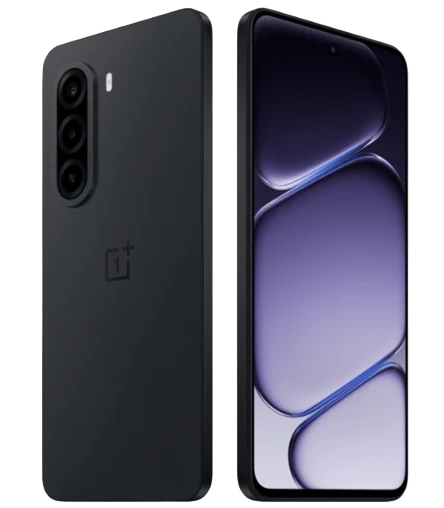
The Turbo 6X Pro is a 2026 smartphone from OnePlus. It features a 6.78" AMOLED display with 1272 x 2772 px resolution (450 ppi pixel density), offering a smooth 144 Hz refresh rate and impressive peak brightness of 6500 nits. The device is powered by the MediaTek Dimensity 7400 (4 nm process) with 4x 2.6GHz Cortex-78 cores, 8GB RAM and Mali-G615 MP2 GPU. Power is provided by a 8000 mAh Si-Carbon Li-Ion battery with 80W fast charging. The phone runs on Android 16. Available in multiple configurations: 8GB RAM + 128GB storage, 8GB RAM + 256GB storage, 12GB RAM + 256GB storage.
Turbo 6X Pro Review
Turbo 6X Pro Review
The Turbo 6X Pro is a very unusual midrange phone on paper: for around €355, it combines a huge 8,000 mAh silicon-carbon battery, a sharp 6.78-inch AMOLED display, a very fast 144 Hz LTPO refresh rate, and a modern 4 nm MediaTek Dimensity 7400 chipset. That makes it look like a battery-and-display monster rather than a camera-first all-rounder.
Its biggest promise is simple: long endurance without feeling slow or cheap. But the spec sheet also leaves some important gaps — especially around the rear camera system, storage type, software update policy, durability rating, and USB details — so this is not a phone I’d judge purely by headline numbers.
1. Specifications Overview
| Feature | Specification | Practical Impact |
|---|---|---|
| Design — Size | 162.2 × 77.6 × 8.8 mm | This is a large phone. The tall 6.78-inch screen gives you lots of viewing space, but one-handed use will be difficult for many people. |
| Design — Weight | 216 g | Heavier than many mainstream phones, likely because of the huge battery. It should feel substantial, but pocket comfort and long reading sessions may suffer. |
| Design — Foldable | No | A conventional slab phone, so durability and app compatibility should be simpler than with foldables. |
| Design — Fingerprint | Under-display fingerprint sensor | Convenient unlocking without a rear or side-mounted scanner. Real speed and reliability depend on sensor quality, which the spec sheet cannot confirm. |
| Design — Audio | Stereo speakers | Better for videos, games, and speakerphone calls than a single-speaker setup. Speaker quality still needs hands-on testing. |
| Design — Headphone jack | No 3.5 mm jack | Wired headphone users will need USB audio or Bluetooth headphones. |
| Design — microSD slot | No | You’ll need to choose enough storage upfront. The 256 GB version is the safer pick for most users. |
| Design — Protection | Screen protection not specified; scratch-resistant listed | Some scratch resistance is claimed, but there’s no named glass or IP water/dust rating provided, so durability is uncertain. A case and screen protector are sensible. |
| Display — Size | 6.78-inch AMOLED | Great for streaming, gaming, reading, and multitasking. The trade-off is a physically large device. |
| Display — Resolution | 1272 × 2772 pixels, 450 ppi | Sharper than typical 1080p-class midrange phones. Text and UI elements should look crisp without going to battery-hungry 1440p extremes. |
| Display — Refresh rate | 144 Hz LTPO | Very smooth scrolling and gaming support. LTPO can help reduce refresh rate when not needed, but 144 Hz still uses more power than 60/90 Hz if driven constantly. |
| Display — Panel type | AMOLED, 10-bit, DCI-P3, HDR10+ | Rich contrast, wide color, and better HDR potential for compatible video. Real HDR impact depends on sustained brightness and tuning, not just format support. |
| Display — Brightness | 800 nits typical, 6500 nits peak | 800 nits typical should be usable outdoors. The 6500-nit figure is almost certainly a small-area peak, not full-screen sustained brightness, so don’t expect the whole screen to sit at that level in sunlight. |
| Display — Eye comfort | DC dimming listed | Helpful for users sensitive to OLED flicker, though implementation quality varies. |
| Display — Always-On Display | Supported | Useful for time and notifications at a glance, with some battery cost. The large battery makes that cost less worrying. |
| Performance — Chipset | MediaTek Dimensity 7400, 4 nm | A modern, efficient upper-midrange chip. It should feel fast in everyday use and should be much more battery-friendly than older midrange processors. |
| Performance — CPU | 4× Cortex-A78 up to 2.6 GHz + 4× Cortex-A55 up to 2.0 GHz | The four performance cores should handle multitasking and heavier apps well, while efficiency cores help background tasks sip power. |
| Performance — GPU | Mali-G615 MP2 | Good enough for casual and many mainstream games, but not a flagship-class GPU. Demanding 3D games may require lowered settings for stable performance. |
| Performance — Cooling | Cooling system listed | Encouraging for gaming and fast charging, but thermal performance can’t be judged without testing sustained loads. |
| Performance — RAM | 8 GB listed; 12 GB variant available | 8 GB is enough for normal multitasking today. The 12 GB version is better if you keep many apps open or plan to use the phone for several years. |
| Performance — Storage | 256 GB listed; 128/256 GB variants | 256 GB is generous at this price and useful because there’s no microSD expansion. Storage speed type is not specified, so app install/load performance can’t be fully assessed. |
| Performance — Benchmark | AnTuTu v11: 1,068,041 | Strong for the price tier on paper. Benchmarks suggest good speed, but they don’t guarantee sustained gaming performance or long-term smoothness. |
| Software — OS | Android 16 | Ships with a current Android version for 2026. Update length is not specified, which matters for long-term value and security. |
| Camera — Selfie camera | 16 MP, f/2.4 CMOS | Should be fine for video calls and basic selfies in good light. The f/2.4 aperture suggests low-light selfies may be average unless processing is strong. |
| Camera — Wide-angle lens | 8 MP, f/2.2 CMOS | Likely useful for landscapes and group shots, but 8 MP ultrawide cameras often lose detail, especially at night. Sensor model and size are not provided. |
| Camera — Rear main camera | Not clearly specified | This is a major missing detail. Without the main sensor, aperture, stabilization, and image processing info, camera quality cannot be confidently judged. |
| Camera — Video | No video capabilities listed | Recording resolution, stabilization, and frame rates are unknown. If video matters to you, this needs confirmation before buying. |
| Battery — Capacity | 8,000 mAh | The headline feature. Paired with a 4 nm chip and LTPO display, this should deliver exceptional endurance — potentially well beyond a normal day for many users. |
| Battery — Chemistry | Silicon-carbon Li-Ion | Allows higher capacity without making the phone impossibly thick. It helps explain how an 8,000 mAh battery fits into an 8.8 mm body. |
| Battery — Charging | 80 W wired fast charging | Very fast for such a large battery, though charging curves matter: it may hit high wattage only briefly and slow near full. |
| Battery — Bypass charging | Supported | Great for gaming while plugged in because the phone can draw power directly instead of constantly charging the battery, reducing heat and battery wear. |
| Battery — Reverse charging | Listed | Useful in emergencies for topping up earbuds or another phone. The exact method and speed are not specified. |
| Battery — Wireless charging | Not specified / no wattage listed | Don’t assume wireless charging is supported. If you rely on charging pads, verify before buying. |
| Connectivity — 5G | Dual SIM 5G bands listed, including n1/n3/n5/n8/n28a/n38/n40/n41/n77/n78 | Strong 5G coverage on paper, but the listing includes China-market band caveats around n28/B28. Buyers should check carrier compatibility carefully. |
| Connectivity — Wi‑Fi | Wi‑Fi 6, dual-band, MIMO | Fast home networking and better performance on crowded networks than older Wi‑Fi 5 devices, assuming your router supports it. |
| Connectivity — Bluetooth | Bluetooth 5.4 LE with AAC, aptX, aptX Adaptive, LDAC | Excellent codec support for wireless audio users, especially if you own compatible earbuds or headphones. |
| Connectivity — NFC | Yes | Supports contactless payments and transit cards where available. |
| Connectivity — GPS | Multi-system GPS with L1+L5 support | Dual-frequency support should improve location accuracy in cities and difficult signal areas. |
| Connectivity — USB | USB charging and host listed; USB-C listed as false; OTG listed as false | The USB details are contradictory/unusual for a 2026 phone. Confirm the port type and accessory support before purchase. |
| Connectivity — FM radio | No | Not ideal if you rely on offline broadcast radio. |
| Connectivity — Tethering | Listed as false | Unusual for Android; this may be a data/spec error. If hotspot sharing matters, confirm with the seller or manufacturer. |
2. Strengths & Weaknesses
Real strengths
Exceptional battery potential
- The 8,000 mAh battery is the phone’s defining feature. Most phones in this price range sit far below that, so the Turbo 6X Pro should be excellent for heavy users, travelers, delivery drivers, commuters, students, and anyone who hates battery anxiety.
- The 4 nm Dimensity 7400 and LTPO display should help efficiency, especially if the software manages refresh rate intelligently.
Big, sharp, smooth AMOLED display
- The 6.78-inch AMOLED panel should make movies, games, maps, documents, and social feeds look immersive.
- The 450 ppi resolution means text should be crisp.
- The 144 Hz refresh rate should feel very fluid, especially in scrolling and supported games.
- HDR10+, 10-bit color, and DCI-P3 support make it look promising for media, though final quality depends on calibration and real brightness behavior.
Strong performance for the price
- The Dimensity 7400, 8 GB RAM, and reported AnTuTu score put it comfortably above basic budget phones.
- It should handle everyday use — messaging, web browsing, streaming, maps, banking apps, social media, and multitasking — without feeling underpowered.
Useful gaming-friendly battery features
- Bypass charging is a genuinely practical feature. If you game while plugged in, it can reduce battery heat and long-term wear.
- The listed cooling system is promising, though sustained performance still needs testing.
Good wireless connectivity
- Wi‑Fi 6, Bluetooth 5.4, NFC, dual-frequency GPS, and broad codec support make the phone feel modern.
- LDAC and aptX Adaptive support are especially good news for wireless audio users.
256 GB storage option is sensible
- With no microSD slot, the 256 GB variant is the one most people should consider. It gives breathing room for apps, offline video, games, and photos.
Real weaknesses and compromises
The camera system is poorly specified
- We only have a 16 MP selfie camera and an 8 MP wide-angle lens listed. The main rear camera is not clearly provided, and video specs are absent.
- That makes it impossible to recommend this as a camera-first phone from the spec sheet alone.
- Megapixels also don’t tell the full story: sensor size, optical stabilization, lens quality, and processing matter more.
Large and heavy
- At 216 g and nearly 78 mm wide, this is not a compact phone.
- The huge battery is useful, but it comes with the predictable trade-off: comfort. If you prefer light phones, this may feel bulky.
144 Hz can cost battery if not well managed
- LTPO helps, but a high refresh panel still uses more power when running at high rates.
- If you want maximum endurance, you may need to use adaptive refresh or reduce the refresh rate manually.
Durability details are incomplete
- No clear IP rating is listed.
- No named display protection is provided.
- “Scratch resistant” is helpful but vague. This is not the same as knowing it has Gorilla Glass, Dragontrail, or a certified drop/water resistance rating.
Software support is unknown
- It ships with Android 16, which is good, but there’s no stated maximum OS version or update commitment.
- For a phone you might keep several years — especially one with such a large battery — update policy matters.
Storage type and RAM type are not listed
- 256 GB is plenty, but whether it uses fast UFS storage or slower storage is unclear.
- That affects app loading, game installs, file transfers, and long-term responsiveness.
USB and hotspot details are questionable
- The spec sheet says USB charging is supported but also says USB Type-C: false, which is unusual for a modern Android phone.
- USB OTG is listed as false while USB host is true, which is contradictory.
- Tethering is listed as false, also unusual.
- These may be database errors, but they are worth verifying before purchase.
3. Who It’s For
Ideal user
The Turbo 6X Pro is best for someone who wants maximum battery life, a big premium-feeling display, and strong everyday performance at a midrange price — and who does not need a proven flagship-grade camera.
This is a practical power-user phone more than a photography phone.
Use cases where it should excel
Travel and long days away from chargers
- The 8,000 mAh battery is the killer feature. If you navigate, stream, message, translate, and take calls throughout the day, this phone is built for that lifestyle.
Streaming and reading
- The large AMOLED display, high resolution, HDR10+ support, and stereo speakers make it promising for Netflix, YouTube, sports, manga, PDFs, and web reading.
General productivity
- Big screen, 8/12 GB RAM options, 256 GB storage, strong chipset, and dual SIM support make it useful for work and personal use on one device.
Gaming with sensible expectations
- The 144 Hz display, cooling system, bypass charging, and large battery are gaming-friendly.
- However, the Mali-G615 MP2 GPU is not flagship-class. It should be good for casual and mid-level gaming, but heavy titles may need medium settings.
Wireless audio users
- Bluetooth 5.4 with LDAC, aptX, aptX Adaptive, AAC, and SBC is unusually complete. If your headphones support better codecs, this phone should make good use of them.
Navigation-heavy users
- Dual-frequency GPS support is excellent for city navigation, fitness tracking, and rideshare/delivery work.
Where it may fall short
Night photography
- The camera information is too incomplete, and the listed 8 MP wide-angle camera is unlikely to be a low-light star.
- If you mainly shoot at night, indoors, or at concerts/restaurants, wait for camera samples.
Serious video recording
- Video capabilities are not listed. That is a red flag if you record vlogs, social media clips, sports, or family events often.
Compact-phone comfort
- This is a large, heavy device. People with smaller hands or tight pockets should think carefully.
Long-term software confidence
- Android 16 is current, but without an update promise, long-term value is harder to judge.
Price-to-value assessment
At around €355, the Turbo 6X Pro looks like strong value if battery life and display quality are your top priorities. An 8,000 mAh silicon-carbon battery, 80 W charging, 144 Hz LTPO AMOLED, Wi‑Fi 6, NFC, and a modern 4 nm chipset are a compelling package for the tier.
But the value equation weakens if you care most about cameras, waterproofing, software updates, or verified USB/accessory support. Those areas are either under-specified or unclear.
4. Buyer’s Decision Framework
Before choosing the Turbo 6X Pro, ask yourself these three questions:
1. Do I value battery life more than pocket comfort?
- Buy it if: you regularly end days below 20%, travel often, game or stream for hours, or hate carrying a power bank.
- Think twice if: you prefer lightweight phones or use your phone one-handed often.
- Scenario: If you’re a commuter who watches video, uses maps, and takes calls all day, the battery is a major advantage. If you mostly sit near a charger, the 216 g weight may feel like an unnecessary trade-off.
2. Is camera quality a top priority?
- Buy it if: you mostly take casual daylight photos, selfies, document scans, and social media shots.
- Skip or wait for reviews if: you shoot night photos, children/pets in motion, travel photography, or lots of video.
- Scenario: If you mainly shoot photos at night or indoors, don’t buy based on this spec sheet alone. The main camera and video specs are missing, and the 8 MP wide-angle camera is unlikely to carry the experience.
3. Do I need confirmed durability, updates, and accessory support?
- Buy it if: you’re comfortable verifying details before purchase and mainly care about core hardware value.
- Be cautious if: you need an IP rating, years of software updates, USB-C accessory support, hotspot/tethering, or reliable OTG storage.
- Scenario: If you use your phone for work and depend on mobile hotspot, check tethering support with the seller first. The spec sheet listing is unusual and may be incorrect, but it cannot be ignored.
Verdict
The Turbo 6X Pro is a compelling midrange phone for buyers who want huge battery life, a big sharp AMOLED display, smooth 144 Hz performance, modern connectivity, and strong everyday speed without paying flagship money. For around €355, its battery-and-screen combination is the clear selling point.
You should buy it if you are a battery-first user, heavy streamer, traveler, student, commuter, gamer with realistic expectations, or someone who simply wants a phone that can go hard all day.
You should skip it — or at least wait for hands-on testing — if you care most about camera quality, low-light photography, video recording, compact design, water resistance, or guaranteed long-term updates. The camera specs are too incomplete, durability details are vague, and some connectivity/USB entries need confirmation.
Bottom line: the Turbo 6X Pro looks like a battery champion with a premium-feeling display at a very attractive price, but it is not yet a safe recommendation for camera-focused buyers or anyone who needs fully verified durability and software support.

Emily Harper
Basic Information
| Brand | OnePlus |
|---|---|
| Model | Turbo 6X Pro |
| Launch Date | Monday, June 1, 2026 |
| Release Year | 2026 |
| Dimensions | 162.2 × 77.6 × 8.8 mm |
| Weight | 216 g |
| Volume | 110.76 cm³ |
| Available Colors | N/A |
Turbo 6X Pro was released on Monday, June 1, 2026. The phone measures 162.2 × 77.6 × 8.8 mm with a volume of 110.76 cm³ and weighs 216g. It features a 6.78" AMOLED display with 1272 x 2772 px resolution (450 ppi pixel density) and 144 HzHz refresh rate.
Display
| Size | 6.78" |
|---|---|
| Type | AMOLED |
| Resolution | 1272 x 2772 px |
| Pixel Density | 450 ppi |
| Aspect Ratio | 20:9 |
| Refresh Rate | 144 Hz |
| Brightness | Typical: 800 nits, HBM: 1400 nits, Peak: 6500 nits |
| Contrast Ratio | 8000000:1 |
| HDR Support | HDR10+ |
| Protection | N/A |
| Additional Features |
|
The Turbo 6X Pro features a 6.78" AMOLED display with 1272 x 2772 px resolution (450 ppi pixel density) in 20:9 aspect ratio. The display offers typical brightness of 800 nits, with HBM mode reaching 1400 nits, with peak brightness of 6500 nits. It delivers smooth 144 Hz refresh rate and impressive 8000000:1 contrast ratio. The screen supports advanced HDR formats including HDR10+. User-centric features include hole-punch notch, always-on display, multi-touch. Technical capabilities include dci-p3, dc dimming, 10 bits panel, capacitive, frameless, ltpo (low temperature polysilicon oxide). Additional protection features include scratch resistant.
Sensors
| Security Sensors |
|
|---|---|
| Motion Sensors |
|
| Environmental Sensors |
|
| Health Sensors | N/A |
For security, the Turbo 6X Pro features fingerprint (under display). Motion tracking is handled by accelerometer gyro gravity. Environmental monitoring includes proximity compass light sensor.
Battery
| Capacity | 8000 mAh |
|---|---|
| Type | Si-Carbon Li-Ion |
| Fast Charging | 80W |
| Wireless Charging | N/A |
| Features |
|
| Additional Info | N/A |
The Turbo 6X Pro is equipped with a 8000 mAh Si-Carbon Li-Ion battery. It features fast charging at 80W. The battery system includes bypass charging (bypass charging allows the devices (smartphone or tablet) draw power directly from the charger. with this technology, will be reduced heat and extended battery lifespan.), reverse charging (with reverse charge, your device has ability to act as the charging station for a wireless charging-capable smartphone or another wireless device, for example wireless headphones. reverse wireless charging isn't as quick as wired charge,is a low-power solution for emergency like when you have forgotten your standard charger or a charging cable.), non-removable (do not allow an easy removal of the battery from the mobile).
Hardware
| Chipset | MediaTek Dimensity 7400 |
|---|---|
| CPU |
|
| Processor Details |
|
| GPU | Mali-G615 MP2 |
| RAM & Storage | 8GB, 256GBTurbo 6X Pro Versions:
|
| AnTuTu Score | 1,068,041 (v11) |
| Additional Features | Cooling System |
| Sensors |
|
| Audio Features |
|
| SD Card Slot | No |
| Battery | 8000 mAh |
The Turbo 6X Pro is equipped with MediaTek Dimensity 7400 built on 4 nm process technology with 64-bit architecture. The processor features 4x 2.6GHz Cortex-78. Graphics processing is handled by Mali-G615 MP2. The device comes with 8GB RAM and 256GB storage. In AnTuTu benchmark v11, it achieves 1,068,041 points. Audio capabilities include Stereo Speakers. The Turbo 6X Pro features advanced cooling system. Integrated sensors include Fingerprint (under display), proximity, Light sensor, accelerometer. The device is powered by a 8000 mAh battery. The Turbo 6X Pro is available in 8GB RAM + 128GB storage, 8GB RAM + 256GB storage, 12GB RAM + 256GB storage configurations.
Connectivity
| WiFi | WiFi Standards
Other WiFi Features
|
|---|---|
| Bluetooth | Bluetooth 5.4 LE Low energy consumption Bluetooth Features
|
| GPS |
|
| Network Bands | 5G
4G LTE
3G
2G
|
| SIM | Dual SIM (Best Dual SIM phones) (https://www.kimovil.com/en/best-smartphones-dual-sim) Dual Standby (Nano SIM + Nano SIM) SIM cards (MiniSIM) can be cut to MicroSIM, MicroSIM can be cut to NanoSIM and a SIM can even be cut to a NanoSIM (although not recommended). Download this SIM Cutting Template (https://cdn-files.kimovil.com/downloads/sim-cutting-guide.pdf) and forget about having to ask your operator for a new SIM... |
| USB |
|
| NFC | Yes |
The Turbo 6X Pro supports 802.11a, 802.11b, 802.11g, 802.11n, 802.11n 5GHz, 802.11ac (Best mobiles with Wifi AC (5Ghz)) (https://www.kimovil.com/en/best-smartphones-wifi-5g), WiFi 6 (802.11ax) with features like Dual band, Hotspot (Allows your phone to share internet with other devices by creating a wifi network around it. The characteristics of this network are fully configurable and programmable: Network type, user, password, etc.), Direct (Ability to share files between two computers using a wireless network set up between the two. It creates a wireless network between two computers connected without having to go through the router to exchange files. The advantages lie mainly in the transfer rate. Through Direct we can share up Gigabytes of information in just a minute comparison of Bluetooth, through which share a photo in large format is going to take a few minutes.), Display (Wifi Display technology to view multimedia content on different devices without cables. It is a direct connection, no cables and no need for 'router' wifi. Allows sharing multimedia content between devices), MiMO. The Turbo 6X Pro comes with Bluetooth 5.4 LE Low energy consumption supporting A2DP (Advanced Audio Distribution Profile) (Advanced audio distribution. Defines how to propagate a stream of audio (mono or stereo) between devices via a connection .1 Initially used in conjunction with an intermediate transceiver connected to the audio output jack default performing the conversion and transmission. Currently, there are 2.0 devices supporting this connection without this need. They usually also support AVRCP, HSP and HFP. A2DP2 can transmit a stereo stream into two channels to a radio or headphones. This page uses AVDTP and GAVDP. It includes mandatory support for codecs sub-band low complexity (SBC) and optional support for MPEG-1, MPEG-2, AAC and ATRAC, along with codecs defined by the manufacturer. Most stacks implement DRM (specifically, SCMS-T mechanism). In these cases they can not connect headphones for high quality audio. For example, Motorola HT820 can only do this with certain versions of toshiba stack.), LE (Low Energy), APT-x, LDAC, SBC, AAC, Apt-x Adaptive. For cellular connectivity, the Turbo 6X Pro uses Dual SIM (Best Dual SIM phones) (https://www.kimovil.com/en/best-smartphones-dual-sim) Dual Standby (Nano SIM + Nano SIM) SIM cards (MiniSIM) can be cut to MicroSIM, MicroSIM can be cut to NanoSIM and a SIM can even be cut to a NanoSIM (although not recommended). Download this SIM Cutting Template (https://cdn-files.kimovil.com/downloads/sim-cutting-guide.pdf) and forget about having to ask your operator for a new SIM.... The Turbo 6X Pro features Charging, Host connectivity. The Turbo 6X Pro includes NFC support for contactless payments and quick device pairing. The Turbo 6X Pro supports 5G bands, 4G LTE bands, 3G bands, 2G bands.
Camera Features
| Video Resolution | N/A |
|---|---|
| Frame Rates | N/A |
| Video Features | N/A |
For selfies, the Turbo 6X Pro uses a 16MP front camera with f/2.4 aperture.
DxOMark Scores
No DxOMark scores available for this device.
Camera details
Selfie Camera
Additional Features
- 2
- 8 Mpx
- ƒ/ 2.2
- --
- CMOS
- --
Software
| OS | Android |
|---|---|
| OS Version | 16 |
| Max OS Version | N/A |
The Turbo 6X Pro runs on Android 16. It is powered by the MediaTek Dimensity 7400 chipset with 4x 2.6GHz Cortex-78 CPU configuration.
Prices
| Store | Price | Storage | RAM |
|---|