
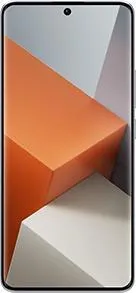
1. Specifications Comparison
| Feature | ZTE nubia Z50S Pro | Xiaomi Redmi Note 13 Pro+ | Practical Impact |
|---|---|---|---|
| Design | |||
| Dimensions | 163.9 x 76.3 x 8.3 mm | 161.4 x 74.2 x 8.9 mm | The Redmi is slightly shorter, narrower, and thicker. The Z50S Pro might feel slightly more compact in hand. |
| Weight | 228g | 199g | The Redmi is noticeably lighter, reducing hand fatigue during extended use. |
| Build | No Data | No Data | Build quality (materials used) can't be compared due to lack of information. This impacts durability and premium feel. |
| Display | |||
| Size | 6.8" | 6.67" | Negligible difference in screen real estate. |
| Type | AMOLED, 1B colors, 120Hz | AMOLED, 68B colors, 120Hz, Dolby Vision, HDR10+ | Both offer smooth scrolling with 120Hz. The Redmi's 68B colors and HDR10+ support deliver a wider color range and better contrast, resulting in a more visually appealing experience for HDR content. |
| Resolution | 1260 x 2800 | 1220 x 2712 | Both offer sharp displays. The Z50S Pro's slightly higher resolution might result in marginally sharper text, but the difference will likely be imperceptible in everyday use. |
| Peak Brightness | 1200 nits | 1800 nits | The Redmi's significantly higher peak brightness ensures better visibility in direct sunlight. |
| Performance | |||
| Chipset | Snapdragon 8+ Gen 2 | Dimensity 7200 Ultra | The Snapdragon 8+ Gen 2 is a flagship-level processor, offering significantly better performance than the Dimensity 7200 Ultra, especially in demanding tasks like gaming and heavy multitasking. |
| CPU | Octa-core (1x3.36 GHz Cortex-X3 & 2x2.8 GHz Cortex-A715 & 2x2.8 GHz Cortex-A710 & 3x2.0 GHz Cortex-A510) | Octa-core (2x2.8 GHz Cortex-A715 & 6x2.0 GHz Cortex-A510) | The Z50S Pro's CPU configuration, featuring the powerful Cortex-X3 core, will deliver superior single-core and multi-core performance compared to the Redmi. |
| GPU | Adreno 740 | Mali-G610 MC4 | The Adreno 740 provides a significant advantage in graphics performance, resulting in smoother gaming and faster rendering times compared to the Mali-G610 MC4. |
| RAM | 12GB | 8GB/12GB | 12GB RAM ensures smooth multitasking on both. However, the 8GB option on the Redmi might show limitations with heavy multitasking. |
| Storage | 1000GB | 256GB/512GB | The Z50S Pro offers a massive 1TB storage option, while the Redmi maxes out at 512GB. |
| Camera | |||
| Video Capabilities | 8K@30fps, 4K@120fps | 4K@30fps, 1080p@120fps | Z50S Pro offers superior video recording capabilities with 8K and 4K at 120fps. Detailed camera specs (sensor size, aperture) are missing, limiting a comprehensive comparison. |
| Battery | |||
| Capacity | 5100 mAh | 5000 mAh | Negligible difference in battery capacity. Real-world battery life depends on optimization and usage patterns. |
2. Key Differences Analysis
ZTE nubia Z50S Pro Advantages:
- Significantly more powerful processor: The Snapdragon 8+ Gen 2 provides a major performance advantage for demanding tasks and gaming.
- Larger storage option: The 1TB option caters to users who need ample space for media and files.
- Higher resolution video recording: Offers 8K and 4K@120fps video recording.
Xiaomi Redmi Note 13 Pro+ Advantages:
- Brighter Display: The 1800 nits peak brightness ensures excellent outdoor visibility.
- Wider Color Gamut and HDR Support: Provides a richer visual experience for compatible content.
- Lighter weight: More comfortable for extended use.
- Potentially Lower Price: While both are in the "medium price" range, the Redmi might be more affordable given its less powerful processor. Specific pricing is needed for accurate comparison.
3. User Profiles & Recommendations
ZTE nubia Z50S Pro: Ideal for power users, gamers, and those who prioritize performance and large storage.
Xiaomi Redmi Note 13 Pro+: Suitable for users who prioritize display quality, consume a lot of media, and prefer a lighter phone. Good for general use and less demanding tasks.
4. Decision Framework
Key Questions:
- What is your budget? The Redmi Note 13 Pro+ will likely be more affordable.
- What are your primary use cases? Gaming and heavy multitasking benefit from the Z50S Pro's superior performance. Media consumption benefits from the Redmi's display.
- Do you prioritize performance or display quality? The Z50S Pro excels in performance, while the Redmi offers a better visual experience.
My Choice: ZTE nubia Z50S Pro
While the Redmi Note 13 Pro+ boasts an impressive display, I would choose the ZTE nubia Z50S Pro. The significantly more powerful Snapdragon 8+ Gen 2 is a deciding factor for me. I value smooth performance, future-proofing, and the ability to handle demanding tasks without compromise. The large 1TB storage is also a compelling feature for my usage. The slightly heavier weight is a trade-off I'm willing to make for the performance gains. However, if budget is a primary concern and my usage is primarily focused on media consumption and general tasks, the Redmi Note 13 Pro+ would be a strong contender.
