
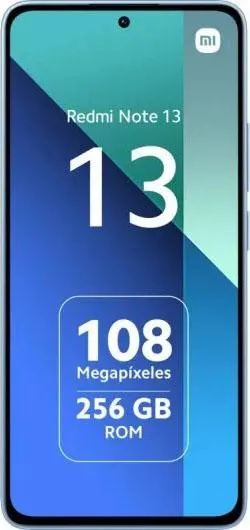
1. Specifications Comparison
| Feature | ZTE nubia Z50S Pro | Xiaomi Redmi Note 13 4G | Practical Impact |
|---|---|---|---|
| Design | |||
| Dimensions | 163.9 x 76.3 x 8.3 mm | 162.3 x 75.6 x 8.0 mm | Virtually identical in size and hand feel. |
| Weight | 228 g | 188.5 g | The Redmi is noticeably lighter, reducing hand fatigue during extended use. |
| Build Materials | Not specified | Not specified | Unable to compare build quality and durability. |
| Display | |||
| Size | 6.8" | 6.67" | Negligible difference in screen real estate. |
| Type | AMOLED, 1B colors, 120Hz | AMOLED, 120Hz | Both offer vibrant colors and smooth scrolling. The Z50S Pro's 1 Billion colors offer a wider color gamut for more accurate color representation. |
| Resolution | 1260 x 2800 | 1080 x 2400 | The Z50S Pro has a sharper display (452 ppi vs 395 ppi), resulting in crisper text and images. |
| Peak Brightness | 1200 nits | 1800 nits | The Redmi offers significantly higher peak brightness, ensuring better visibility in direct sunlight. |
| Performance | |||
| Chipset | Snapdragon 8+ Gen 2 | Snapdragon 685 | The 8+ Gen 2 in the Z50S Pro provides significantly faster processing power for demanding tasks, gaming, and multitasking. The 685 is sufficient for everyday tasks but will struggle with high-end gaming or heavy multitasking. |
| CPU | Octa-core (1x3.36 GHz Cortex-X3 & 2x2.8 GHz Cortex-A715 & 2x2.8 GHz Cortex-A710 & 3x2.0 GHz Cortex-A510) | Octa-core (4x2.8 GHz Cortex-A73 & 4x1.9 GHz Cortex-A53) | The Z50S Pro boasts a more powerful and modern CPU architecture, translating to a significantly smoother and faster user experience. |
| GPU | Adreno 740 | Adreno 610 | The Z50S Pro's GPU offers a substantial advantage in graphics performance for gaming and graphically intensive applications. |
| RAM | 12GB | 8GB | The Z50S Pro's extra RAM enables smoother multitasking and faster app loading. |
| Storage | 1000GB | 128GB/256GB | The Z50S Pro offers substantially more storage. |
| Camera | |||
| Rear Camera | Not specified | Not specified | Cannot compare camera quality and features. |
| Video | 8K@30fps, 4K@ up to 120fps | 1080p@30fps | The Z50S Pro offers significantly higher video resolution and frame rate options, allowing for more detailed and smoother video recording. |
| Battery | |||
| Capacity | 5100 mAh | 5000 mAh | Negligible difference in battery capacity. Real-world battery life will depend more on software optimization and usage patterns. |
| Charging Speed | Not specified | Not specified | Unable to compare charging speeds. |
2. Key Differences Analysis
ZTE nubia Z50S Pro Advantages:
- Significantly more powerful: The Snapdragon 8+ Gen 2, superior GPU, and ample RAM deliver a vastly smoother and faster experience for demanding tasks and gaming.
- Sharper display: Higher resolution leads to crisper visuals.
- More storage: 1TB offers ample space for apps, media, and files.
- Superior video recording: Offers higher resolution and frame rates.
Xiaomi Redmi Note 13 4G Advantages:
- Lighter weight: More comfortable for extended use.
- Brighter display: Better visibility outdoors.
- Potentially lower price: While both are mid-range, the Redmi's less powerful specs suggest a potentially lower price point.
Trade-offs:
- The Z50S Pro prioritizes performance and display sharpness over battery life and weight.
- The Redmi Note 13 4G sacrifices high-end performance for a lighter build and potentially lower price.
3. User Profiles & Recommendations
ZTE nubia Z50S Pro: Ideal for power users, gamers, and multimedia enthusiasts who prioritize performance, a sharp display, and ample storage.
Xiaomi Redmi Note 13 4G: Suitable for budget-conscious users who prioritize basic tasks like web browsing, social media, and casual photography. Those who value a lighter phone might also prefer it.
4. Decision Framework
Key Questions for Buyers:
- What is your budget? The Z50S Pro is likely more expensive.
- What are your primary smartphone uses? Demanding tasks and gaming benefit from the Z50S Pro's power.
- Do you prioritize performance or portability? The Z50S Pro offers performance, while the Redmi Note 13 4G is lighter.
Scenario-Based Recommendations:
- Heavy gamer: ZTE nubia Z50S Pro
- Budget-conscious social media user: Xiaomi Redmi Note 13 4G
- Photographer/Videographer: ZTE nubia Z50S Pro (due to superior video capabilities)
My Choice: ZTE nubia Z50S Pro
While lacking some information (camera specs, build materials, charging speeds), the ZTE nubia Z50S Pro is the clear winner for me. The significantly superior performance offered by the Snapdragon 8+ Gen 2, coupled with the sharper display and massive storage, outweighs the Redmi's advantages in brightness and weight. I prioritize a smooth and responsive user experience, especially for multitasking and occasional gaming, making the Z50S Pro the better choice. The Redmi Note 13 4G feels like a more basic phone aimed at a different user segment. I am willing to accept the slightly heavier weight for the substantial performance gains.
