
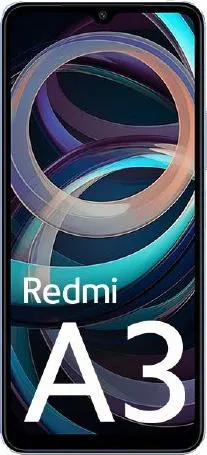
1. Specifications Comparison
| Feature | ZTE nubia Z50S Pro | Xiaomi Redmi A3 | Practical Impact |
|---|---|---|---|
| Design | |||
| Dimensions (mm) | 163.9 x 76.3 x 8.3 | 168.3 x 76.3 x 8.3 | The Redmi A3 is slightly taller and potentially less pocketable. |
| Weight (g) | 228 | 193 | The Redmi A3 is noticeably lighter, reducing hand fatigue during extended use. |
| Build Materials | Missing | Missing | Cannot compare build quality and durability. |
| Display | |||
| Display Type | AMOLED, 1B colors, 120Hz | IPS LCD, 90Hz | The Z50S Pro offers significantly better contrast, color accuracy, and potentially deeper blacks due to AMOLED technology. Its higher refresh rate results in smoother scrolling and animations. |
| Resolution | 1260 x 2800 | 720 x 1650 | The Z50S Pro has a much sharper display with significantly higher pixel density (452 vs 268 PPI), resulting in crisper text and images. |
| Peak Brightness (nits) | 1200 | 500 (HBM) | The Z50S Pro will be much more readable in direct sunlight. |
| Performance | |||
| Chipset | Snapdragon 8+ Gen 2 (4 nm) | MediaTek Helio G36 (12 nm) | The Z50S Pro boasts a vastly more powerful processor, enabling significantly faster performance in demanding tasks like gaming and multitasking. |
| CPU | Octa-core (1x3.36 GHz Cortex-X3 & ...) | Octa-core (4x2.2 GHz Cortex-A53 & ...) | The Z50S Pro's CPU architecture is considerably more advanced, leading to superior processing power and efficiency. |
| GPU | Adreno 740 (719 MHz) | PowerVR GE8320 | The Z50S Pro offers a substantially more powerful GPU, enabling a much better gaming experience and smoother graphics rendering. |
| RAM | 12GB | 4GB/6GB | The Z50S Pro offers more RAM, allowing for smoother multitasking and better performance with memory-intensive applications. |
| Storage | 1000GB | 128GB | The Z50S Pro provides significantly more storage for apps, photos, and videos. |
| Camera | |||
| Video Capabilities | 8K@30fps, 4K@120fps | 1080p@30fps | The Z50S Pro offers significantly higher video resolution and frame rates, enabling much more detailed and smoother video recording. |
| Rear Camera Specs | Missing | Missing | Cannot compare image quality, low-light performance, and camera features. |
| Battery | |||
| Capacity (mAh) | 5100 | 5000 | Similar battery capacities, though real-world battery life depends on optimization and usage patterns. |
| Charging Speed | Missing | Missing | Cannot compare charging speeds. |
2. Key Differences Analysis
ZTE nubia Z50S Pro Advantages:
- Significantly more powerful: The Snapdragon 8+ Gen 2 vastly outperforms the Helio G36, resulting in a dramatically better experience for demanding tasks and gaming.
- Superior display: The AMOLED display with a 120Hz refresh rate and higher resolution offers significantly better visual quality.
- More storage: 1000GB storage provides ample space for files and media.
- Advanced video recording: Offers 8K and 4K recording at high frame rates.
Xiaomi Redmi A3 Advantages:
- Lighter weight: More comfortable for extended use.
- Lower price: Positioned in the low-price range, making it more budget-friendly.
3. User Profiles & Recommendations
ZTE nubia Z50S Pro: Ideal for power users, gamers, and those who prioritize performance, a high-quality display, and ample storage. Excellent for demanding tasks, content creation, and media consumption.
Xiaomi Redmi A3: Suitable for budget-conscious users who prioritize basic functionality, such as calling, texting, and light web browsing. Good for users who don't engage in demanding tasks or heavy media consumption.
4. Decision Framework
Key Questions for Buyers:
- What is your budget? The Redmi A3 is significantly cheaper.
- What is your primary use for a smartphone? For demanding tasks, the Z50S Pro is essential. For basic communication, the Redmi A3 might suffice.
- How important is display quality and performance? The Z50S Pro offers a vastly superior visual experience and significantly smoother performance.
My Choice: ZTE nubia Z50S Pro
While significantly more expensive, the ZTE nubia Z50S Pro offers a vastly superior user experience in almost every aspect. The Snapdragon 8+ Gen 2, combined with the beautiful AMOLED display and ample storage, ensures a smooth and enjoyable experience for demanding tasks, gaming, and media consumption. The Redmi A3, while budget-friendly, compromises too much on performance and display quality for my personal needs. The significant difference in processing power, display quality, and storage capacity justifies the higher price for a user who values a premium smartphone experience.
