
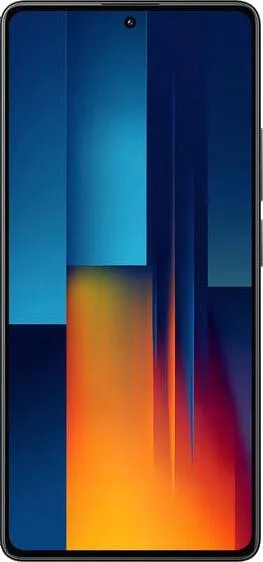
1. Specifications Comparison
| Feature | ZTE nubia Z50S Pro | Xiaomi Poco M6 Pro | Practical Impact |
|---|---|---|---|
| Design | |||
| Dimensions | 163.9 x 76.3 x 8.3 mm | 161.1 x 75 x 8 mm | Z50S Pro is slightly taller and wider. Negligible difference in daily use. |
| Weight | 228g | 179g | Poco M6 Pro is significantly lighter, more comfortable for extended use. |
| Build | Not specified | Not specified | Unable to compare build quality and materials. |
| Display | |||
| Size | 6.8" | 6.67" | Negligible size difference. |
| Type | AMOLED, 1B colors, 120Hz | AMOLED, 120Hz | Both offer smooth scrolling and vibrant colors thanks to AMOLED and 120Hz. Z50S Pro supports 1 Billion colors leading to smoother color gradients and more accurate color reproduction. |
| Resolution | 1260 x 2800 | 1080 x 2400 | Z50S Pro has a sharper display (452 ppi vs 395 ppi), noticeable in text and image clarity. |
| Peak Brightness | 1200 nits | 1300 nits | Poco M6 Pro slightly brighter in direct sunlight. |
| Performance | |||
| Chipset | Snapdragon 8+ Gen 2 | Mediatek Helio G99 Ultra | Z50S Pro significantly more powerful, enabling smoother multitasking, demanding gaming, and faster app loading. |
| CPU | Octa-core (1x3.36 GHz Cortex-X3 & 2x2.8 GHz Cortex-A715 & 2x2.8 GHz Cortex-A710 & 3x2.0 GHz Cortex-A510) | Octa-core (2x2.2 GHz Cortex-A76 & 6x2.0 GHz Cortex-A55) | Z50S Pro's CPU offers superior performance across all tasks. |
| GPU | Adreno 740 | Mali-G57 MC2 | Z50S Pro's GPU offers a much better gaming and graphics-intensive task experience. |
| RAM | 12GB | 12GB | Both offer ample RAM for multitasking. |
| Storage | 1000GB | 512GB | Z50S Pro offers double the storage. |
| Camera | |||
| Video Capabilities | 8K@30fps, 4K@120fps | 1080p@60fps | Z50S Pro capable of significantly higher resolution and frame rate video recording. |
| Other Specs | Missing | Missing | Detailed camera sensor information missing for comparison. |
| Battery | |||
| Capacity | 5100 mAh | 5000 mAh | Negligible difference in battery capacity. Real-world battery life depends on optimization and usage. |
| Charging Speed | Not specified | Not specified | Unable to compare charging speeds. |
2. Key Differences Analysis
ZTE nubia Z50S Pro Advantages:
- Significantly more powerful processor and GPU: Much better for demanding tasks, gaming, and future-proofing.
- Sharper display: Noticeably clearer visuals.
- Double the storage: More space for apps, photos, and videos.
- Superior video recording capabilities: Higher resolution and frame rates.
Xiaomi Poco M6 Pro Advantages:
- Lighter weight: More comfortable for one-handed use and extended periods.
- Slightly brighter peak brightness: Better visibility in direct sunlight.
- Potentially lower price (within the "medium price" range): Offers good value for less demanding users.
3. User Profiles & Recommendations
ZTE nubia Z50S Pro: Ideal for power users, gamers, content creators, and those who prioritize performance and a high-quality display.
Xiaomi Poco M6 Pro: Suitable for casual users, budget-conscious buyers, and those who prioritize portability and battery life over peak performance. Good for everyday tasks like social media, browsing, and light gaming.
4. Decision Framework
Key Questions:
- What is your budget?
- What are your primary smartphone use cases (gaming, photography, social media, etc.)?
- Do you prioritize performance or portability?
Scenario-Based Recommendations:
- Gamer: ZTE nubia Z50S Pro for its powerful hardware.
- Casual User: Xiaomi Poco M6 Pro for its lighter weight and potential lower cost.
- Content Creator: ZTE nubia Z50S Pro for its superior display and video recording capabilities.
My Choice: ZTE nubia Z50S Pro
While the Poco M6 Pro offers a lighter build and potentially lower price, the ZTE nubia Z50S Pro's significantly superior performance, sharper display, larger storage, and advanced video capabilities make it the clear winner for me. I prioritize a smooth, future-proof experience and value the ability to handle demanding tasks and high-quality media consumption. The slightly heavier weight is a minor trade-off for the substantial performance gains. The lack of specific camera sensor details prevents a complete camera comparison, but the video recording capabilities alone heavily favor the Z50S Pro. I am willing to pay a potential price premium within the "medium price" range for the long-term benefits of the Z50S Pro's superior hardware.
