
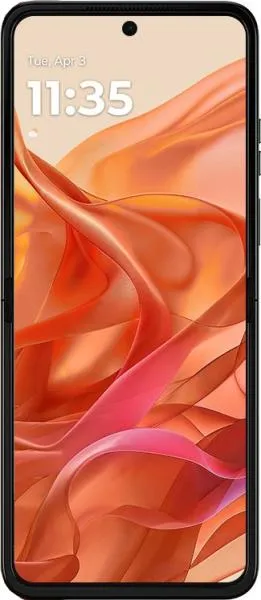
1. Specifications Comparison
| Feature | Xiaomi Redmi Note 13 Pro+ | Motorola Razr 50 | Practical Impact |
|---|---|---|---|
| Design | |||
| Dimensions | 161.4 x 74.2 x 8.9 mm | 171.3 x 74 x 7.3 mm | Razr 50 is taller and thinner, but significantly wider when unfolded. Note 13 Pro+ is more pocketable in traditional sense. |
| Weight | 199g | 188.4g | Razr 50 is slightly lighter despite the folding mechanism. |
| Foldable | No | Yes | Razr 50 offers a compact folded size for portability but introduces a crease on the main display. |
| Display | |||
| Size | 6.67" | 6.9" | Razr 50 offers slightly larger screen real estate when unfolded. |
| Type | AMOLED, 120Hz | Foldable LTPO AMOLED, 120Hz | Both offer smooth scrolling and vibrant colors. Razr's LTPO panel potentially offers better power efficiency. Foldable nature is a key differentiator. |
| Resolution | 1220 x 2712 | 1080 x 2640 | Note 13 Pro+ has a sharper display due to higher pixel density (446 ppi vs 413 ppi). |
| Peak Brightness | 1800 nits | 3000 nits | Razr 50 offers significantly better outdoor visibility. |
| Performance | |||
| Chipset | Mediatek Dimensity 7200 Ultra (4nm) | Mediatek Dimensity 7300X (4 nm) | Both offer similar performance levels, though benchmarks would be needed for definitive comparison. 7300X is newer with potentially better efficiency. |
| CPU | Octa-core (2x2.8 GHz Cortex-A715 & 6x2.0 GHz Cortex-A510) | Octa-core (4x2.5 GHz Cortex-A78 & 4x2.0 GHz Cortex-A55) | Razr 50 likely has a performance advantage due to newer CPU architecture. |
| GPU | Mali-G610 MC4 | Mali-G615 MC2 | Razr 50 likely offers slightly improved graphics performance. Differences likely minimal in everyday usage. |
| RAM/Storage | 8/256GB, 12/256GB, 12/512GB | 12/512GB | Razr 50 comes in a single high-RAM/storage configuration. Note 13 Pro+ offers more options, catering to different budget and storage needs. |
| Battery | |||
| Capacity | 5000 mAh | 4200 mAh | Note 13 Pro+ offers significantly larger battery capacity, likely translating to longer battery life. |
| Camera | |||
| Video Capabilities | 4K@30fps (EIS), up to 1080p@120fps | 4K@30fps (EIS), up to 1080p@60fps | Note 13 Pro+ offers higher slow-motion video recording capability. Detailed camera sensor specifications are missing for comprehensive comparison. |
2. Key Differences Analysis
Xiaomi Redmi Note 13 Pro+ Advantages:
- Sharper display: Higher pixel density leads to clearer text and images.
- Larger battery: Potentially significantly longer battery life.
- More affordable: Offers lower storage/RAM options for budget-conscious users.
- Higher resolution slow-motion video: Captures smoother slow-motion footage.
Motorola Razr 50 Advantages:
- Foldable design: Offers compact portability and a unique form factor.
- Brighter display: Much better visibility in direct sunlight.
- Newer CPU architecture: Likely provides a performance advantage, especially in demanding tasks.
- More recent OS: Starts with Android 14, potentially longer software support timeframe.
Trade-offs:
- Razr 50: Foldable design introduces a crease and potential durability concerns; smaller battery capacity.
- Note 13 Pro+: Larger size, less pocketable; lower peak brightness; older CPU architecture.
3. User Profiles & Recommendations
Xiaomi Redmi Note 13 Pro+: Ideal for users prioritizing battery life, display sharpness, and affordability. Excellent for media consumption, gaming, and everyday tasks.
Motorola Razr 50: Suitable for users valuing portability and a unique, stylish design. The compact folded size makes it ideal for those constantly on the move.
4. Decision Framework
Key Questions:
- How important is portability? Foldable design trumps thinness if pocket space is paramount.
- What is your budget? Note 13 Pro+ likely offers a lower entry price with more storage options.
- What is your primary use case? Media consumption favors Note 13 Pro+'s larger battery and sharper display, while Razr 50 suits those prioritizing portability and style.
Scenario-Based Recommendations:
- Heavy user needing long battery life: Note 13 Pro+
- Style-conscious user prioritizing portability: Razr 50
- Budget-conscious gamer: Note 13 Pro+ (depending on specific gaming needs and benchmark comparisons)
My Choice: Xiaomi Redmi Note 13 Pro+
While the Razr 50's foldable design is intriguing, the Note 13 Pro+'s combination of a sharper display, significantly larger battery, and potentially lower price point makes it a more compelling overall package for me. I prioritize battery life and screen quality, and the Note 13 Pro+ delivers in those areas. The performance differences between the two chipsets are likely to be minimal in my daily usage. The Razr's foldable form factor, while innovative, comes with trade-offs in battery life and durability concerns that I'm not willing to compromise on. I appreciate having the option for larger storage configurations on the Note 13 Pro+ as well.
