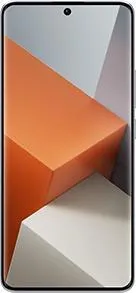
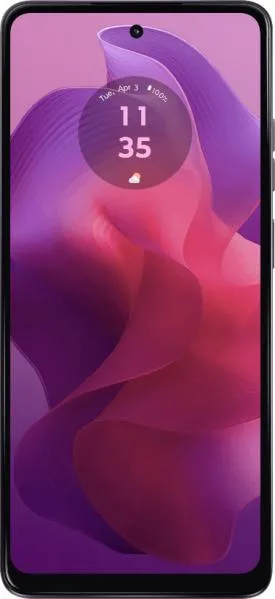
1. Specifications Comparison
| Feature | Xiaomi Redmi Note 13 Pro+ | Motorola Moto G24 | Practical Impact |
|---|---|---|---|
| Design | |||
| Dimensions (mm) | 161.4 x 74.2 x 8.9 | 163.5 x 74.5 x 8.0 | Redmi is slightly shorter and thinner. Negligible difference in daily use. |
| Weight (g) | 199 | 181 | Moto G24 is noticeably lighter, improving one-handed use. |
| Fingerprint Sensor | Under-display | Side-mounted | Preference-based. Under-display is modern, side-mounted can be faster to unlock. |
| Display | |||
| Display Type | AMOLED, 120Hz | IPS LCD, 90Hz | Redmi's AMOLED offers significantly better contrast, blacks, and power efficiency. 120Hz provides smoother scrolling and animations. |
| Resolution | 1220 x 2712 | 720 x 1612 | Redmi's much higher resolution provides sharper text and images. |
| Peak Brightness (nits) | 1800 | 537 | Redmi's display will be far more visible in direct sunlight. |
| Performance | |||
| Chipset | Mediatek Dimensity 7200 Ultra (4 nm) | Mediatek Helio G85 (12 nm) | Redmi's 7200 Ultra is significantly more powerful, enabling smoother multitasking, faster app loading, and better gaming performance. |
| CPU | Octa-core (2x2.8 GHz Cortex-A715 & 6x2.0 GHz Cortex-A510) | Octa-core (2x2.0 GHz Cortex-A75 & 6x1.7 GHz Cortex-A55) | Redmi's CPU boasts faster clock speeds and newer architecture, resulting in a substantial performance advantage. |
| GPU | Mali-G610 MC4 | Mali-G52 MC2 | Redmi's GPU is considerably more powerful, leading to superior gaming and graphics performance. |
| RAM/Storage | 8GB/256GB, 12GB/256GB, 12GB/512GB | 8GB/128GB | Redmi offers more RAM and storage options for greater multitasking capabilities and file storage. |
| Camera | |||
| Video Capabilities | Up to 4K@30fps with EIS | 1080p@30fps | Redmi offers higher resolution video recording and Electronic Image Stabilization (EIS) for smoother footage. Missing detailed camera specs limit a full comparison. |
| Battery | |||
| Capacity (mAh) | 5000 | 5000 | Similar battery capacities. Real-world battery life will depend on usage and optimization. Redmi's more efficient display might provide longer battery life. |
2. Key Differences Analysis
Xiaomi Redmi Note 13 Pro+ Advantages:
- Significantly better display: Higher resolution, AMOLED technology, higher refresh rate, and much brighter.
- Much more powerful performance: Superior chipset, CPU, and GPU for smoother multitasking, gaming, and app usage.
- More RAM and Storage Options: Provides flexibility for users needing more storage or demanding multitasking capabilities.
- Superior Video Recording: Higher resolution and EIS for better quality videos.
Motorola Moto G24 Advantages:
- Lighter weight: More comfortable for extended use and one-handed operation.
- Lower Price: Offers a more budget-friendly option. (Inferred from price range information)
- Newer Android Version: Ships with Android 14, potentially offering newer features and longer software support. However, Redmi Note 13 Pro+ has a longer specified maximum supported Android version.
3. User Profiles & Recommendations
Redmi Note 13 Pro+: Users who prioritize performance, display quality, and versatile camera features. Ideal for gaming, media consumption, and demanding tasks.
Moto G24: Budget-conscious users who prioritize basic functionality, lightweight design, and a clean Android experience. Suitable for everyday tasks like calling, texting, browsing, and light media consumption.
4. Decision Framework
Key Questions for Buyers:
- What is your budget? The Moto G24 is likely a more affordable option.
- What are your performance needs? For demanding tasks and gaming, the Redmi Note 13 Pro+ is significantly better.
- How important is display quality? The Redmi Note 13 Pro+'s AMOLED display is a substantial upgrade.
Scenario-Based Recommendations:
- Heavy gamer: Redmi Note 13 Pro+
- Budget-conscious student: Moto G24
- Photographer/Videographer: Redmi Note 13 Pro+ (assuming better camera specs based on video capabilities)
My Choice: Xiaomi Redmi Note 13 Pro+
The Redmi Note 13 Pro+ offers a significantly better overall experience due to its vastly superior display, performance, and more versatile features. While the Moto G24 is lighter and likely cheaper, the compromises in core areas like display and performance are too significant for me. The Redmi's superior performance and features would provide a more enjoyable and future-proof smartphone experience, justifying the likely higher price. The brighter, higher resolution display alone makes a huge difference in daily use, especially outdoors.
