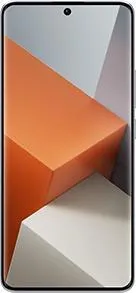
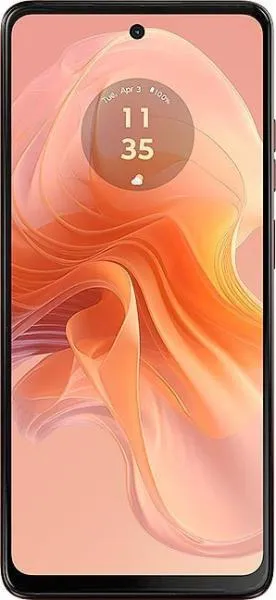
1. Specifications Comparison
| Feature | Xiaomi Redmi Note 13 Pro+ | Motorola Moto G04s | Practical Impact |
|---|---|---|---|
| Design | |||
| Dimensions (mm) | 161.4 x 74.2 x 8.9 | 163.5 x 74.5 x 8.0 | Redmi is slightly shorter and thinner. Negligible difference in daily use. |
| Weight (g) | 199 | 178.8 | Moto G04s is noticeably lighter, improving one-handed use. |
| Build Materials | Not specified | Not specified | Cannot compare build quality and durability. |
| Display | |||
| Display Type | AMOLED, 120Hz | IPS LCD, 90Hz | Redmi offers significantly better contrast, colors, and smoother scrolling due to AMOLED and higher refresh rate. |
| Resolution | 1220 x 2712 | 720 x 1612 | Redmi has much sharper and more detailed visuals. Moto G04s' resolution is low for its size. |
| Peak Brightness | 1800 nits | Not specified | Redmi's superior brightness ensures excellent outdoor visibility. Lack of data for Moto G04s hinders comparison. |
| Performance | |||
| Chipset | Mediatek Dimensity 7200 Ultra (4nm) | Unisoc T606 (12nm) | Redmi will offer significantly faster performance in demanding tasks and games due to a more powerful and efficient chipset. |
| CPU | Octa-core (2x2.8 GHz Cortex-A715 & 6x2.0 GHz Cortex-A510) | Octa-core (2x1.6 GHz Cortex-A75 & 6x1.6 GHz Cortex-A55) | Redmi's CPU offers superior performance, especially in multi-core tasks. |
| GPU | Mali-G610 MC4 | Mali-G57 MP1 | Redmi's GPU provides a smoother gaming and graphics-intensive application experience. |
| RAM/Storage | 8/256GB, 12/256GB, 12/512GB | 4/128GB | Redmi offers more RAM and storage options for better multitasking and larger file storage. Moto G04s' 4GB RAM might lead to performance limitations. |
| Camera | |||
| Rear Camera | Not specified | Not specified | Camera quality cannot be compared due to lack of detailed specifications. |
| Video Recording | Up to 4K@30fps with EIS | 1080p@30fps | Redmi enables higher resolution video recording with electronic image stabilization. |
| Battery | |||
| Capacity | 5000 mAh | 5000 mAh | Similar battery capacity. Real-world battery life will depend on software optimization and usage patterns. |
| Charging Speed | Not specified | Not specified | Cannot compare charging speeds due to missing information. |
2. Key Differences Analysis
Xiaomi Redmi Note 13 Pro+ Advantages:
- Significantly better display: AMOLED with 120Hz refresh rate delivers superior visual quality and smoother user experience.
- Much higher performance: Dimensity 7200 Ultra chipset ensures smooth multitasking and gaming.
- More RAM and storage options: Provides flexibility for users with varying needs.
- Higher resolution video recording: Captures more detailed videos.
Motorola Moto G04s Advantages:
- Lighter weight: More comfortable for extended use and one-handed operation.
- Potentially lower price: While both are in the "medium price" range, the Moto G04s, with its lower specs, might be more affordable.
3. User Profiles & Recommendations
Xiaomi Redmi Note 13 Pro+: Suited for users who prioritize performance, display quality, and future-proofing. Ideal for gaming, media consumption, and demanding tasks.
Motorola Moto G04s: Best for budget-conscious users who prioritize basic functionality and a lightweight design. Suitable for light usage such as calling, texting, and web browsing.
4. Decision Framework
Key Questions for Buyers:
- What is your budget? The Redmi Note 13 Pro+ will likely be more expensive.
- What are your primary use cases? For demanding tasks, the Redmi is superior. For basic use, the Moto G04s might suffice.
- How important is display quality and performance? Redmi significantly outperforms the Moto G04s in these areas.
My Choice: Xiaomi Redmi Note 13 Pro+
While lacking some specifications like charging speed and camera details, the Xiaomi Redmi Note 13 Pro+ is the clear winner for me. The superior display, significantly faster performance, and greater RAM/storage options outweigh the Moto G04s' advantages in weight and potential price difference. The Redmi provides a more future-proof and enjoyable overall user experience, especially for demanding tasks and media consumption. I prioritize a smooth and responsive user experience, and the Redmi's powerful hardware ensures just that. The Moto G04s seems like a decent budget option, but the compromises in display and performance are too significant for my personal preference.
