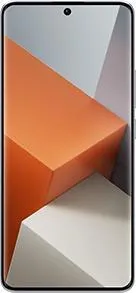

1. Specifications Comparison
| Feature | Category | Xiaomi Redmi Note 13 Pro+ | Google Pixel 9 | Practical Impact |
|---|---|---|---|---|
| Dimensions | Design | 161.4 x 74.2 x 8.9 mm | 152.8 x 72 x 8.5 mm | Pixel 9 is noticeably smaller and slightly thinner, making it potentially more comfortable for one-handed use and pocket portability. |
| Weight | Design | 199g | 198g | Negligible weight difference; both phones are relatively lightweight. |
| Display Size | Display | 6.67 inches | 6.3 inches | Redmi offers a larger screen for more immersive media consumption, while the Pixel's smaller size enhances one-handed usability. |
| Display Type | Display | AMOLED, 120Hz | OLED, 120Hz | Both offer smooth scrolling and animations thanks to the 120Hz refresh rate. AMOLED generally offers more vibrant colors and deeper blacks compared to OLED. Redmi boasts a higher color depth (68B vs. unspecified for Pixel). |
| Resolution | Display | 1220 x 2712 (446 ppi) | 1080 x 2424 (422 ppi) | Redmi has a sharper display due to the higher resolution and pixel density. The difference might be noticeable in text clarity and image sharpness. |
| Peak Brightness | Display | 1800 nits (typical), 2700 nits (HBM Peak) | 2700 nits (peak) | Pixel 9 has a higher peak brightness, ensuring better visibility in direct sunlight. While Redmi also peaks at 1800 nits typically, it's unclear if it utilizes High Brightness Mode (HBM) and what its peak brightness is under that mode. |
| Chipset | Performance | Mediatek Dimensity 7200 Ultra (4nm) | Google Tensor G4 (4nm) | Both chipsets are built on a 4nm process, suggesting comparable power efficiency. Tensor G4 is known for its AI capabilities, while benchmarks are needed to compare raw performance against Dimensity 7200 Ultra. |
| CPU | Performance | Octa-core (2x2.8 GHz Cortex-A715 & 6x2.0 GHz Cortex-A510) | Octa-core (1x3.1 GHz Cortex-X4 & 3x2.6 GHz Cortex-A720 & 4x1.92 GHz Cortex-A520) | Pixel 9's CPU configuration, with a powerful Cortex-X4 core, likely offers better single-core performance, beneficial for demanding tasks. Redmi's CPU might offer better sustained performance due to its core configuration. Real-world performance comparison requires benchmarks. |
| GPU | Performance | Mali-G610 MC4 | Mali-G715 MC7 | Pixel 9 likely has a more powerful GPU, leading to smoother gaming and faster graphics rendering. Real-world gaming performance comparisons are necessary. |
| RAM | Performance | 8GB/12GB | 12GB | Pixel 9 offers more RAM in its base configuration, potentially improving multitasking and app loading times. |
| Battery Capacity | Battery | 5000 mAh | 4700 mAh | Redmi has a larger battery, potentially offering longer battery life. Real-world usage will depend on optimization and individual usage patterns. |
| OS | Software | Android 13, upgradable to 16 | Android 14, upgradable to 21 | Pixel 9 launches with a newer Android version and benefits from longer software support, ensuring security updates and new features for a longer period. |
| Video Capabilities | Camera | Up to 4K@30fps with EIS | Up to 4K@60fps with HDR, OIS, and EIS | Pixel 9 offers superior video recording capabilities with higher resolution, frame rates, HDR, and optical image stabilization (OIS) for smoother, more stable footage. No camera specifics like megapixel count were provided for comparison. |
2. Key Differences Analysis
Xiaomi Redmi Note 13 Pro+ Advantages:
- Larger, sharper display: Provides a more immersive experience for media consumption.
- Larger battery: Potentially longer battery life.
- More storage options: Offers configurations with more storage for users with large media libraries.
Google Pixel 9 Advantages:
- Smaller, more pocketable design: More comfortable for one-handed use.
- More powerful GPU and CPU: Likely offers smoother gaming and faster performance for demanding tasks.
- Longer software support: Guaranteed updates and new features for a longer period.
- Superior video recording capabilities: Higher frame rates, HDR, and OIS. This is a significant advantage for content creators or those who frequently record videos.
3. User Profiles & Recommendations
Xiaomi Redmi Note 13 Pro+: Ideal for users who prioritize media consumption, battery life, and a large display. Suitable for users who prefer a larger screen for gaming, watching videos, and browsing.
Google Pixel 9: Best suited for users who value a compact design, the latest software with long-term updates, top-notch camera performance (especially video), and a smooth user experience powered by a strong CPU and GPU. Excellent choice for power users, photographers, and videographers.
4. Decision Framework
Key Questions for Buyers:
- What screen size do you prefer? Larger screen for immersive media or smaller screen for one-handed usability?
- How important is software update longevity? Prioritize long-term support or immediate features?
- What is your budget and storage needs? Consider the price difference and available storage options.
My Choice: Google Pixel 9
While the Redmi Note 13 Pro+ offers a compelling package with a larger display and battery, I would choose the Google Pixel 9. The deciding factors for me are:
- Superior software experience: The longer software support ensures I'll receive timely security updates and new features for years to come. This is crucial for long-term usability and device security.
- Performance and Camera: The Pixel 9's more powerful CPU and especially GPU, combined with its superior video recording capabilities, cater to my needs for smooth multitasking, occasional gaming, and capturing high-quality videos. The Tensor G4's AI capabilities further enhance the overall user experience.
- Compact form factor: I prefer a smaller phone that's easier to handle and carry in my pocket.
While the Redmi's larger display and battery are tempting, the Pixel 9's advantages in software, performance, and camera outweigh them for my personal preferences and use case. The smaller size aligns better with my preference for one-handed usability. Ultimately, the Pixel 9 offers a more future-proof and premium experience.
