1. Specifications Comparison
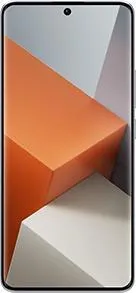
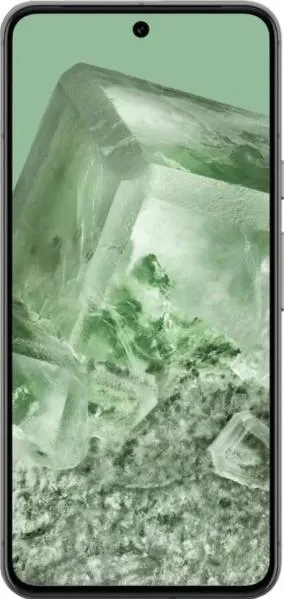
| Feature | Category | Xiaomi Redmi Note 13 Pro+ | Google Pixel 8 | Practical Impact |
|---|---|---|---|---|
| Dimensions | Design | 161.4 x 74.2 x 8.9 mm | 150.5 x 70.8 x 8.9 mm | Pixel 8 is noticeably smaller and potentially easier to handle one-handed. |
| Weight | Design | 199g | 187g | Pixel 8 is lighter, reducing hand fatigue during extended use. |
| Display Type | Display | AMOLED, 68B colors | OLED | Both offer excellent color accuracy and deep blacks, but the Redmi's 68B color support might offer slightly smoother color gradients in some content. |
| Display Size | Display | 6.67" | 6.2" | Redmi provides a larger screen for more immersive media consumption, while Pixel 8 offers better one-handed usability. |
| Resolution | Display | 1220 x 2712 (446 ppi) | 1080 x 2400 (428 ppi) | Redmi boasts a sharper display, but the difference might not be perceptible in everyday use. Pixel 8's lower resolution could contribute to slightly better battery life. |
| Peak Brightness | Display | 1800 nits | 2000 nits | Pixel 8's higher peak brightness ensures better visibility in direct sunlight. |
| Refresh Rate | Display | 120Hz | 120Hz | Both offer smooth scrolling and animations. |
| Chipset | Performance | Mediatek Dimensity 7200 Ultra (4 nm) | Google Tensor G3 (4 nm) | Both are powerful chips, but Tensor G3 is optimized for AI and machine learning tasks, potentially offering a smoother software experience and unique features. |
| CPU | Performance | Octa-core (2x2.8 GHz Cortex-A715 & 6x2.0 GHz Cortex-A510) | Nona-core (1x3.0 GHz Cortex-X3 & 4x2.45 GHz Cortex-A715 & 4x2.15 GHz Cortex-A510) | Tensor G3's architecture with a dedicated high-performance core may offer better burst performance in demanding applications. |
| GPU | Performance | Mali-G610 MC4 | Immortalis-G715s MC10 | Pixel 8 likely has a more powerful GPU, leading to better gaming performance. |
| RAM & Storage | Performance | 8/12GB RAM, up to 512GB storage | 8GB RAM, 256GB storage | Redmi offers more RAM and storage configuration options, catering to users who need ample space and multitasking capabilities. |
| Battery Capacity | Battery | 5000 mAh | 4575 mAh | Redmi's larger battery likely translates to longer battery life. |
| OS & Updates | Software | Android 13, up to Android 16 | Android 14, up to Android 21 | Pixel 8 ships with the latest Android version and benefits from significantly longer software support and faster updates directly from Google. |
| Video Capabilities | Camera | Up to 4K@30fps (EIS) | Up to 4K@60fps (HDR, OIS, EIS) + 1080p@240fps | Pixel 8 offers superior video recording capabilities with higher resolution, frame rates, HDR, and OIS for smoother and more stable footage. Specific camera sensor details are missing for comparison. |
2. Key Differences Analysis
Xiaomi Redmi Note 13 Pro+ Advantages:
- Larger Display: More immersive media experience.
- Higher Resolution: Sharper visuals (though marginally noticeable).
- Larger Battery: Potentially longer battery life.
- More RAM and Storage Options: Caters to power users and those needing ample storage.
Google Pixel 8 Advantages:
- More Compact and Lighter: Easier to handle and carry.
- Brighter Display: Better outdoor visibility.
- More Powerful GPU: Improved gaming performance.
- Longer Software Support: Guaranteed updates and new features for a longer period.
- Superior Video Recording: Higher resolution, frame rate, and stabilization.
- Tensor G3 with AI Optimization: Smoother user experience and unique AI-powered features.
Trade-offs:
- Redmi's larger display and battery come at the cost of size and weight.
- Pixel 8's superior software and performance might come with a higher price tag depending on the region.
3. User Profiles & Recommendations
Redmi Note 13 Pro+ Ideal User:
- Users prioritizing media consumption and battery life.
- Budget-conscious buyers seeking a large, high-resolution display.
- Users who require ample storage and RAM.
Pixel 8 Ideal User:
- Users prioritizing software updates, camera performance, and a smooth user experience.
- Users who prefer a compact and lightweight phone.
- Users who value Google's ecosystem and AI-powered features.
4. Decision Framework
Key Questions:
- How important is software update longevity and camera quality? If crucial, Pixel 8 is the clear winner.
- Do you prioritize a large screen and long battery life or a compact and lightweight design? This determines whether the Redmi's size is an advantage or disadvantage.
- What is your budget and are you sensitive to price differences? While both are mid-range, regional pricing may vary.
Scenario-Based Recommendations:
- Heavy Media Consumer: Redmi Note 13 Pro+
- Photographer/Videographer: Google Pixel 8
- Power User: Depends on specific needs - Redmi for storage and RAM, Pixel 8 for processing power and software.
My Choice: Google Pixel 8
While the Redmi Note 13 Pro+ offers compelling features like a large battery and display, I would choose the Google Pixel 8. The deciding factors for me are: significantly longer software support, superior camera capabilities (especially video), the more powerful GPU fueled by the Tensor G3, and the compact form factor. The cleaner software experience and faster updates directly from Google are highly valuable to me. While I appreciate the Redmi's larger battery, I prioritize the overall user experience and long-term value offered by the Pixel 8. The compact size is also a significant plus for me.
