
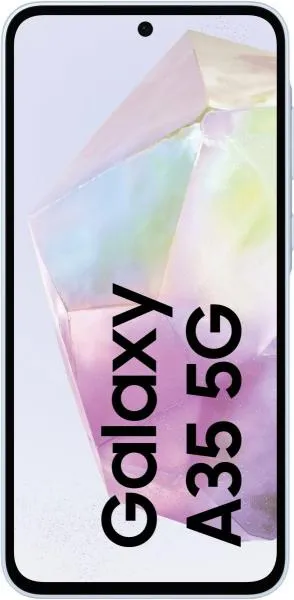
1. Specifications Comparison
| Feature | Xiaomi Redmi Note 12S | Samsung Galaxy A35 | Practical Impact |
|---|---|---|---|
| Design | |||
| Dimensions (mm) | 159.9 x 73.9 x 8.1 | 161.7 x 78 x 8.2 | A35 slightly larger; negligible difference in daily use. |
| Weight (g) | 176 | 209 | Redmi Note 12S noticeably lighter, more comfortable for extended use. |
| Build | Unspecified | Unspecified | Material differences could impact durability and premium feel; information lacking. |
| Display | |||
| Display Type | AMOLED, 90Hz | Super AMOLED, 120Hz | A35's 120Hz offers smoother scrolling and animations. Both AMOLED types generally provide vibrant colors and deep blacks. |
| Size (inches) | 6.43 | 6.6 | A35 has a slightly larger screen for more immersive content consumption. |
| Resolution | 1080 x 2400 | 1080 x 2340 | Virtually identical sharpness; negligible real-world difference. |
| Peak Brightness (nits) | 1000 | Unspecified | Redmi Note 12S's known peak brightness ensures better visibility in sunlight. A35's unspecified value makes comparison impossible. |
| Performance | |||
| Chipset | Mediatek Helio G96 (12 nm) | Exynos 1380 (5 nm) | A35's 5nm Exynos chip should offer significantly better performance and power efficiency. |
| CPU | Octa-core (2x2.05 GHz Cortex-A76 & 6x2.0 GHz Cortex-A55) | Octa-core (4x2.4 GHz Cortex-A78 & 4x2.0 GHz Cortex-A55) | A35 boasts more powerful cores (Cortex-A78) for demanding tasks and multitasking. |
| GPU | Mali-G57 MC2 | Mali-G68 MP5 | A35's GPU should provide a smoother gaming experience and handle graphics-intensive tasks better. |
| RAM | 6GB/8GB | 6GB/8GB | Both offer ample RAM for everyday tasks, but specific configurations need consideration. |
| Camera | |||
| Main Camera | 108MP | 50MP | Redmi Note 12S has higher resolution; A35 uses pixel binning for potentially better low-light performance. Real-world image quality depends on processing. |
| Video Recording | 1080p@30fps | 4K@30fps | A35 capable of recording higher resolution video. |
| Optical Image Stabilization | No | Yes | A35's OIS will result in significantly more stable videos and potentially sharper low-light photos. |
| Battery | |||
| Capacity (mAh) | 5000 | 5000 | Identical battery capacity; actual battery life depends on software and hardware optimization. |
| Other | |||
| OS | Android 13 | Android 14 | A35 comes with a newer Android version, offering potential feature and security advantages. |
| 5G | No | Yes | A35 offers 5G connectivity for faster data speeds where available. |
2. Key Differences Analysis
Xiaomi Redmi Note 12S Advantages:
- Lighter: More comfortable for one-handed use and extended periods.
- Higher Resolution Main Camera: Potentially more detail in well-lit conditions.
- Potentially Lower Price: Depending on specific configuration and retailer.
Samsung Galaxy A35 Advantages:
- Significantly Better Performance: Smoother gaming, multitasking, and overall responsiveness due to a more powerful and efficient chipset.
- Higher Refresh Rate Display: More fluid and responsive user experience.
- Newer Android Version: Access to newer features and longer software support.
- 5G Connectivity: Future-proofed for faster data speeds.
- Optical Image Stabilization: Superior video stability and improved low-light photography.
- 4K video recording: Enables capturing higher quality video content.
3. User Profiles & Recommendations
Xiaomi Redmi Note 12S: Budget-conscious users prioritizing a lightweight phone for basic tasks like calling, texting, social media, and casual photography in good lighting.
Samsung Galaxy A35: Users who value performance, a smooth display, future-proof features (5G), and better camera quality, particularly in video recording and low light. Suitable for mobile gaming, demanding applications, and content creation.
4. Decision Framework
Key Questions for Buyers:
- What is your budget? The Redmi Note 12S likely offers a lower price point.
- What are your primary phone usage patterns? Basic tasks vs. demanding applications and gaming.
- How important are camera quality and future-proof features like 5G?
Scenario-Based Recommendations:
- Limited Budget, Basic Usage: Redmi Note 12S
- Balanced Budget, Moderate Usage: Redmi Note 12S (if camera resolution is a priority) or A35 (if overall performance and longevity are prioritized).
- Performance and Future-Proofing Focused: Samsung Galaxy A35
My Choice: Samsung Galaxy A35
While the Redmi Note 12S might offer a lower price and slightly higher resolution main camera, the Galaxy A35 provides a significantly superior overall package. The performance difference due to the Exynos 1380, coupled with the 120Hz display, will result in a dramatically smoother and more responsive user experience. The inclusion of 5G, optical image stabilization, and a newer Android version makes the A35 a more future-proof choice. The slightly higher weight is a minor trade-off for the substantial performance and feature gains. Even if the A35 is slightly more expensive, the long-term value proposition makes it the better option for me.
