1. Specifications Comparison
| Feature | Xiaomi Redmi Note 12S | Motorola Moto G34 | Practical Impact |
|---|---|---|---|
| Design | |||
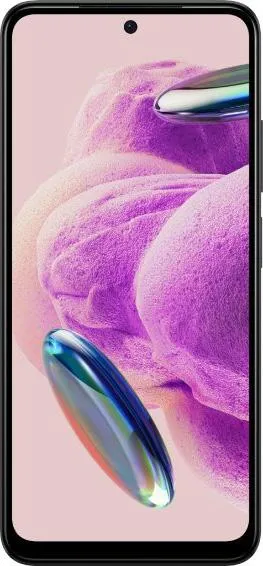
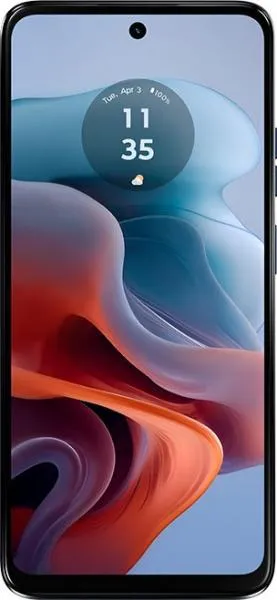
| Dimensions (mm) | 159.9 x 73.9 x 8.1 | 162.7 x 74.6 x 8.0 | Redmi Note 12S is slightly smaller and may feel more comfortable in hand. |
| Weight (g) | 176 | 179 | Negligible weight difference. |
| Display | |||
| Display Type | AMOLED, 90Hz | IPS LCD, 120Hz | Redmi Note 12S offers deeper blacks and more vibrant colors due to AMOLED. Moto G34 boasts a smoother experience thanks to the 120Hz refresh rate. |
| Resolution | 1080 x 2400 | 720 x 1600 | Redmi Note 12S provides significantly sharper image quality. |
| Peak Brightness (nits) | 1000 | Not specified | Redmi Note 12S's higher peak brightness ensures better visibility outdoors. Moto G34's unspecified peak brightness makes outdoor visibility comparison difficult. |
| Performance | |||
| Chipset | Mediatek Helio G96 (12nm) | Qualcomm Snapdragon 695 5G (6nm) | Snapdragon 695 generally offers better performance and power efficiency due to its more advanced manufacturing process and architecture. Also, it has 5G connectivity. |
| CPU | Octa-core (2x2.05 GHz Cortex-A76 & 6x2.0 GHz Cortex-A55) | Octa-core (2x2.2 GHz Kryo 660 Gold & 6x1.7 GHz Kryo 660 Silver) | Snapdragon 695 likely provides better CPU performance. |
| GPU | Mali-G57 MC2 | Adreno 619 | Adreno 619 generally offers better gaming performance. |
| RAM | 6/8 GB | 4/8 GB | Both offer RAM options for different needs, more RAM generally allows for smoother multitasking. |
| Camera | |||
| Main Camera | 108MP, f/1.8 | 50MP, f/1.8 | Redmi Note 12S has a higher resolution sensor, potentially capturing more detail. However, sensor size and other factors also contribute to image quality which are not fully specified for both phones. |
| Ultrawide | 8MP, f/2.2 | Not specified | Redmi Note 12S offers an ultrawide lens for wider shots, Moto G34 ultrawide capability is not clearly specified. |
| Battery | |||
| Capacity | 5000 mAh | 5000 mAh | Similar battery capacity suggests comparable battery life, although real-world usage will depend on other factors like the display and chipset. |
2. Key Differences Analysis
Xiaomi Redmi Note 12S Advantages:
- Superior Display: AMOLED offers richer colors and deeper blacks, making media consumption more enjoyable. Higher resolution leads to a sharper image.
- Higher Resolution Main Camera: Potentially captures more detail in photos.
Motorola Moto G34 Advantages:
- Smoother Performance: 120Hz refresh rate provides a more fluid user experience, especially noticeable in scrolling and gaming.
- More Efficient Processor: Snapdragon 695 5G built on a smaller node likely consumes less power and offers better overall performance.
- 5G Connectivity: Future-proofs the device for faster mobile internet.
3. User Profiles & Recommendations
Xiaomi Redmi Note 12S: Users prioritizing display quality for media consumption, and those who value a high-resolution camera.
Motorola Moto G34: Users prioritizing smooth performance, longer battery life (potentially due to the efficient processor), and future-proof 5G connectivity. Good for users who prioritize overall value and performance over specific features like a high-resolution display.
4. Decision Framework
Key Questions for Buyers:
- Is display quality or refresh rate more important? Choose Redmi Note 12S for vibrant colors and sharp details, Moto G34 for smooth scrolling and animations.
- Is having 5G connectivity essential? Moto G34 offers 5G, Redmi Note 12S does not.
- What is your budget and what features are you willing to prioritize? Consider the overall value proposition of each phone.
My Choice: Motorola Moto G34
Reasoning: While the Redmi Note 12S has a visually appealing AMOLED display and high-resolution camera, I prioritize overall performance and future-proofing. The Moto G34's Snapdragon 695 5G chipset, along with its 120Hz refresh rate, provides a smoother and more efficient user experience. The inclusion of 5G connectivity ensures the device remains relevant for longer. Although the display resolution is lower, the performance benefits and 5G capability outweigh this trade-off for me. I also value the likely more efficient battery use provided by the 6nm chipset in the Moto G34.
