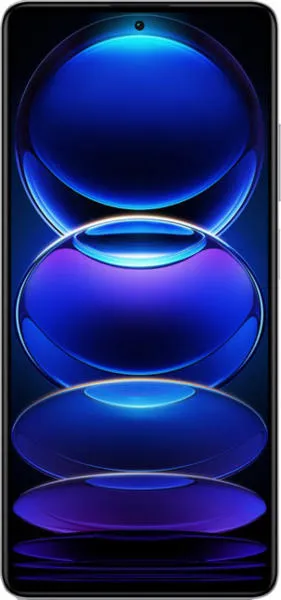
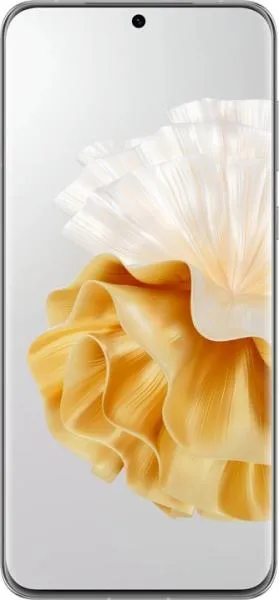
Xiaomi Redmi Note 12 Pro+ vs. Huawei P60 Pro: A Deep Dive
Let's dissect the Xiaomi Redmi Note 12 Pro+ and the Huawei P60 Pro, two compelling smartphones with distinct strengths. We'll go beyond the spec sheet to understand what these differences really mean for you.
1. Specifications Breakdown
| Feature | Xiaomi Redmi Note 12 Pro+ | Huawei P60 Pro | Real-World Implications |
|---|---|---|---|
| Design | |||
| Dimensions (mm) | 162.9 x 76 x 8.9 | 161 x 74.5 x 8.3 | P60 Pro slightly more compact |
| Weight (g) | 208.4 | 200 | P60 Pro feels lighter in hand |
| Display | |||
| Type | OLED | LTPO OLED | P60 Pro offers potentially better battery life and smoother scrolling with variable refresh rate |
| Size (inches) | 6.67 | 6.67 | Identical screen real estate |
| Resolution (px) | 1080 x 2400 | 1220 x 2700 | P60 Pro sharper, more detailed visuals |
| Refresh Rate (Hz) | 120 | 120 | Both offer smooth animations and scrolling |
| Performance | |||
| Chipset | Mediatek Dimensity 1080 | Snapdragon 8+ Gen 1 | P60 Pro significantly faster and more powerful |
| CPU | Octa-core (2x2.6 GHz A78 & 6x2.0 GHz A55) | Octa-core (1x3.19 GHz X2 & 3x2.75 GHz A710 & 4x2.0 GHz A510) | P60 Pro superior multi-tasking and demanding applications |
| RAM (GB) | 8 | 8 | Sufficient for most users; both offer 12GB variants |
| Camera | |||
| Main Camera (MP) | 200 | 48 | Redmi boasts higher megapixels, P60 Pro likely better low-light performance due to larger sensor and variable aperture |
| DxOMark Score | 113 | 156 | P60 Pro vastly superior camera quality overall according to DxOMark |
| Battery Life | |||
| Capacity (mAh) | 5000 | 4815 | Redmi slightly larger battery; P60 Pro's LTPO display might offset this difference |
| Charging | 120W Fast Charging | proprietary fast charging | Redmi likely charges faster |
| Price | Medium | High | Significant price difference |
2. Key Insights
- Performance: The P60 Pro, with its Snapdragon 8+ Gen 1, dramatically outperforms the Redmi Note 12 Pro+. This translates to smoother gaming, faster app loading, and better multitasking.
- Camera: While the Redmi boasts a 200MP sensor, megapixels aren't everything. The P60 Pro's advanced camera system, variable aperture, and superior DxOMark score point to significantly better image quality, especially in challenging lighting conditions.
- Display: Both phones have 120Hz OLED displays, but the P60 Pro's LTPO panel allows for a variable refresh rate, dynamically adjusting to conserve battery. Its higher resolution also provides a noticeable sharpness advantage.
- Price: The Redmi Note 12 Pro+ sits in the mid-range price segment, making it significantly more affordable than the flagship-priced P60 Pro.
3. User Profiles and Recommendations
- Redmi Note 12 Pro+: Ideal for budget-conscious users who prioritize fast charging and a large battery. Suitable for everyday tasks, social media, and casual gaming.
- Huawei P60 Pro: Perfect for demanding users who value top-tier performance, a superb camera system, and a premium display. Ideal for mobile photography enthusiasts, gamers, and power users.
4. Buying Decision Framework
- What's your budget? If price is a major constraint, the Redmi Note 12 Pro+ offers excellent value.
- What are your primary use cases? For demanding tasks and photography, the P60 Pro is the clear winner. For casual use, the Redmi is more than sufficient.
- Which features matter most? Prioritize battery life and charging speed? Lean towards the Redmi. Prioritize performance and camera quality? Choose the P60 Pro.
My Choice: The Huawei P60 Pro
If I were choosing between these two phones, I'd go for the Huawei P60 Pro. While the price is significantly higher, the superior performance, exceptional camera system, and the more advanced display technology are decisive factors for me. I value a smooth, lag-free experience, and the P60 Pro's Snapdragon 8+ Gen 1 delivers that in spades. Furthermore, as someone who appreciates high-quality mobile photography, the P60 Pro's camera capabilities, validated by its impressive DxOMark score, are incredibly appealing. While the Redmi Note 12 Pro+ is a solid device for its price, the P60 Pro represents a significant step up in overall user experience. The lack of Google Mobile Services on the Huawei device might be a concern for some, but for me, the performance and camera gains outweigh this drawback.
