
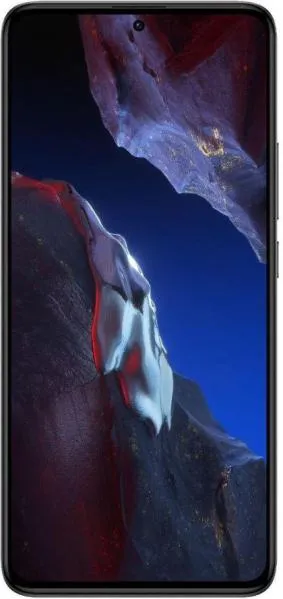
1. Specifications Comparison
| Feature | Xiaomi Redmi Note 12 Pro 4G | Xiaomi Poco F5 Pro | Practical Impact |
|---|---|---|---|
| Design | |||
| Dimensions (mm) | 164.2 x 76.1 x 8.1 | 162.8 x 75.4 x 8.6 | Poco F5 Pro is slightly shorter and narrower, but thicker. Negligible difference in daily use. |
| Weight (g) | 201.8 | 204 | Virtually identical weight. |
| Display | |||
| Size (inches) | 6.67 | 6.67 | Same screen size. |
| Resolution (pixels) | 1080 x 2400 | 1440 x 3200 | Poco F5 Pro has a significantly sharper display (526 ppi vs 395 ppi), resulting in crisper text and images. |
| Display Type | AMOLED, 120Hz | AMOLED, 120Hz | Both offer smooth scrolling and vibrant colors thanks to AMOLED and 120Hz refresh rate. |
| Peak Brightness (nits) | 1100 | 1400 | Poco F5 Pro has a brighter display, improving outdoor visibility. |
| Color Depth | Not specified | 68B | Poco F5 Pro supports a wider color gamut, leading to more accurate and vibrant color reproduction. |
| HDR | Dolby Vision | Dolby Vision, HDR10+ | Poco F5 Pro supports both Dolby Vision and HDR10+, providing better HDR performance across more content. |
| Performance | |||
| Chipset | Snapdragon 732G (8 nm) | Snapdragon 8+ Gen 1 (4 nm) | Poco F5 Pro boasts a vastly more powerful chipset, enabling significantly faster performance in demanding tasks like gaming and multitasking. |
| CPU | Octa-core (2x2.2 GHz Kryo 470 Gold & 6x1.8 GHz Kryo 470 Silver) | Octa-core (1x3.0 GHz Cortex-X2 & 3x2.5 GHz Cortex-A710 & 4x1.80 GHz Cortex-A510) | The Poco F5 Pro's CPU architecture is more modern and powerful, providing a substantial performance advantage. |
| GPU | Adreno 618 | Adreno 730 | Poco F5 Pro's GPU is much more capable for gaming and graphically intensive applications. |
| RAM | 8GB | 8/12GB | Poco F5 Pro offers a 12GB RAM option, further enhancing multitasking capabilities. |
| Camera | |||
| Main Camera (MP) | 108 | 64 | Redmi Note 12 Pro has a higher megapixel count, but sensor size and other factors are more critical for image quality. Poco F5 Pro has OIS for steadier shots and videos. |
| Video Recording | 4K@30fps | 8K@24fps | Poco F5 Pro supports higher resolution video recording. |
| Battery | |||
| Capacity (mAh) | 5000 | 5160 | Marginally larger battery in the Poco F5 Pro, but real-world battery life depends on many factors. |
2. Key Differences Analysis
Xiaomi Redmi Note 12 Pro 4G Advantages:
- Potentially lower price: Likely more affordable given the mid-range specifications.
Xiaomi Poco F5 Pro Advantages:
- Significantly faster performance: The Snapdragon 8+ Gen 1 provides a major leap in processing power for demanding tasks and gaming.
- Sharper and brighter display: Higher resolution and peak brightness result in a more enjoyable viewing experience.
- Superior Camera Features: Optical Image Stabilization (OIS) on the Poco F5 Pro allows for steadier photos and videos, especially in low-light conditions.
- More future-proof: Newer, more powerful hardware will ensure better performance and longer software support lifespan.
Trade-offs:
- Price: The Poco F5 Pro is significantly more expensive.
3. User Profiles & Recommendations
Redmi Note 12 Pro 4G:
- Ideal User: Budget-conscious users prioritizing basic smartphone functions like social media, web browsing, and casual photography.
- Use Cases: Everyday tasks, light gaming, casual photography.
Poco F5 Pro:
- Ideal User: Power users, mobile gamers, photography enthusiasts, and those seeking top-tier performance and a premium display.
- Use Cases: Demanding games, professional photo/video editing, multitasking, content creation.
4. Decision Framework
Key Questions:
- What is your budget? The Poco F5 Pro commands a significantly higher price.
- What are your primary smartphone usage patterns? For basic tasks, the Redmi Note 12 Pro might suffice. For demanding applications, the Poco F5 Pro is necessary.
- How important are display quality and camera performance? The Poco F5 Pro excels in both areas.
Scenario-Based Recommendations:
- Limited Budget: Redmi Note 12 Pro 4G
- Prioritizing Performance and Future-proofing: Poco F5 Pro
- Balanced Approach: Consider other options within the price range of the Redmi Note 12 Pro that offer a slight performance bump, like phones with Snapdragon 778G+ or Dimensity 920 processors.
My Choice: Xiaomi Poco F5 Pro
While significantly more expensive, the Poco F5 Pro offers a substantial upgrade in performance, display quality, and camera capabilities. The Snapdragon 8+ Gen 1 ensures a smooth and responsive experience for years to come, making it a more future-proof investment. The significantly sharper and brighter display, along with the inclusion of OIS for the camera, further solidifies its position as the superior device. While the Redmi Note 12 Pro is a decent phone for its price, the performance difference is substantial enough to justify the higher cost of the Poco F5 Pro for my needs. I prioritize a smooth and lag-free experience, which the Poco F5 Pro guarantees.
