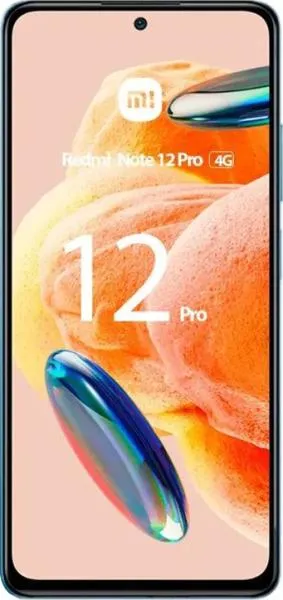
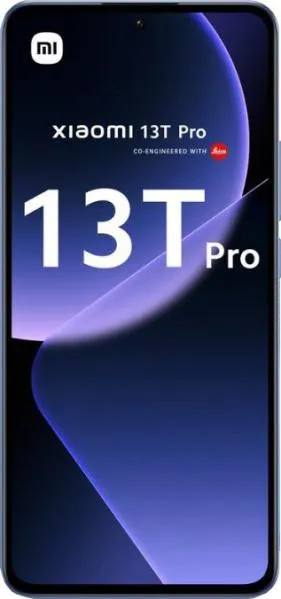
1. Specifications Comparison
| Feature | Xiaomi Redmi Note 12 Pro 4G | Xiaomi 13T Pro | Practical Impact |
|---|---|---|---|
| Design | |||
| Dimensions (mm) | 164.2 x 76.1 x 8.1 | 162.2 x 75.7 x 8.5 | 13T Pro is slightly shorter and narrower, but a bit thicker. Negligible difference in hand feel. |
| Weight (g) | 201.8 | 200 | Virtually identical weight. |
| Display | |||
| Size (inches) | 6.67 | 6.67 | Same screen size. |
| Resolution (px) | 1080 x 2400 | 1220 x 2712 | 13T Pro has a sharper, more detailed display due to higher resolution. Noticeable in everyday use, especially for text and images. |
| Refresh Rate (Hz) | 120 | 144 | 13T Pro offers smoother scrolling and animations due to higher refresh rate. Discernible for gamers and users sensitive to motion smoothness. |
| Display Type | AMOLED | AMOLED | Both offer vibrant colors and deep blacks. |
| Peak Brightness (nits) | 1100 | 2600 | 13T Pro's significantly higher peak brightness ensures excellent outdoor visibility even in direct sunlight. |
| HDR | Dolby Vision | Dolby Vision, HDR10+ | 13T Pro supports wider HDR formats, resulting in better dynamic range and color accuracy in compatible content. |
| Performance | |||
| Chipset | Snapdragon 732G (8 nm) | Dimensity 9200+ (4 nm) | 13T Pro boasts significantly faster CPU and GPU performance due to a more powerful and efficient chipset. Noticeable in demanding tasks like gaming and multitasking. |
| CPU | Octa-core (2x2.2 GHz Kryo 470 Gold & 6x1.8 GHz Kryo 470 Silver) | Octa-core (1x3.35 GHz Cortex-X3 & 3x3.0 GHz Cortex-A715 & 4x2.0 GHz Cortex-A510) | 13T Pro's CPU architecture is more modern and powerful, leading to faster processing speeds. |
| GPU | Adreno 618 | Immortalis-G715 MC11 | 13T Pro offers a substantial leap in graphics performance, enabling smoother gaming and faster rendering. |
| RAM (GB) | 8 | 12 | More RAM on the 13T Pro allows for smoother multitasking and less frequent app reloading. |
| Camera | |||
| Main Camera (MP) | 108 | 50 | While the Redmi Note 12 Pro has a higher megapixel count, the 13T Pro utilizes a larger sensor (Sony IMX707) known for better low-light performance and dynamic range. Megapixels alone don't determine image quality. |
| Telephoto | No | Yes (50MP) | 13T Pro offers optical zoom capabilities for better quality zoomed-in shots, a clear advantage. |
| Video Recording | 4K@30fps | 8K@24fps | 13T Pro can record videos at a much higher resolution. |
| Battery | |||
| Capacity (mAh) | 5000 | 5000 | Identical battery capacity. Real-world battery life will depend on usage and software optimization, though the 13T Pro's more efficient chipset could potentially offer longer battery life. |
2. Key Differences Analysis
Xiaomi 13T Pro Advantages:
- Significantly faster performance: Due to the Dimensity 9200+ chipset, the 13T Pro handles demanding tasks and gaming much better.
- Sharper and brighter display: Higher resolution and peak brightness lead to a superior visual experience, especially outdoors.
- Smoother user experience: The 144Hz refresh rate provides smoother scrolling and animations.
- Superior camera system: The 13T Pro's larger sensor, telephoto lens, and 8K video recording offer significant advantages.
- More future-proof: Newer OS, longer software support commitment (up to Android 17).
Xiaomi Redmi Note 12 Pro 4G Advantages:
- Potentially lower price: Depending on the specific configuration and market, the Redmi Note 12 Pro 4G is generally more affordable.
3. User Profiles & Recommendations
Xiaomi 13T Pro: Ideal for users who prioritize performance, a high-quality display, a versatile camera system, and future-proof software. Excellent for mobile gamers, photographers/videographers, and power users.
Xiaomi Redmi Note 12 Pro 4G: Suitable for budget-conscious users who primarily use their phones for everyday tasks like social media, browsing, and casual photography. Good for users who don't need the absolute latest hardware.
4. Decision Framework
Key Questions for Buyers:
- What is your budget? The 13T Pro commands a higher price.
- What are your primary phone usage patterns? Demanding tasks require the 13T Pro's power.
- How important are camera quality and display quality to you? The 13T Pro offers a clear advantage in both areas.
My Choice: Xiaomi 13T Pro
The Xiaomi 13T Pro is the clear winner for me. While the Redmi Note 12 Pro 4G is a decent phone for its price, the 13T Pro's superior performance, display, camera system, and future-proofing make it a much more compelling device. The significantly faster and more efficient chipset, coupled with the higher refresh rate display, will provide a noticeably smoother and more enjoyable user experience. The improved camera system, especially the inclusion of a telephoto lens and 8K video recording, is a major plus for anyone who values photography and videography. While it comes at a higher price, the 13T Pro offers a significant upgrade in almost every aspect, making it a worthwhile investment for a long-lasting and satisfying smartphone experience.
