1. Specifications Comparison
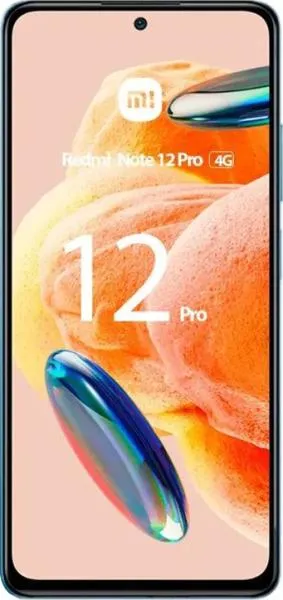
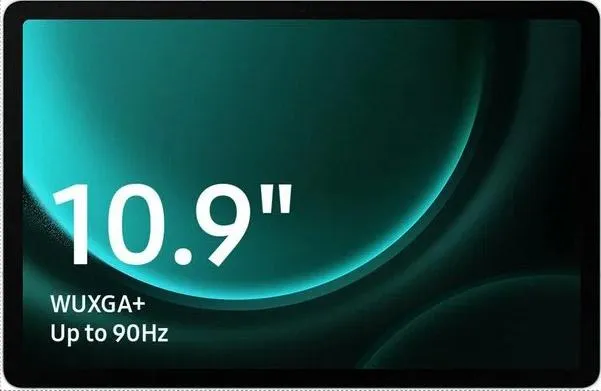
| Feature | Xiaomi Redmi Note 12 Pro 4G | Samsung Galaxy Tab S9 FE | Practical Impact |
|---|---|---|---|
| Design | |||
| Dimensions (mm) | 164.2 x 76.1 x 8.1 | 254.3 x 165.8 x 6.5 | Redmi is a typical smartphone size; Tab S9 FE is a much larger tablet. Portability significantly differs. |
| Weight (g) | 201.8 | 523 | Redmi is much lighter and easier to hold for extended periods. Tab S9 FE is suited for desk/lap use. |
| Build Material | Missing | Missing | Material affects durability and premium feel; cannot compare without data. |
| Display | |||
| Size (inches) | 6.67 | 10.9 | Larger display on Tab S9 FE offers more immersive content consumption but reduced portability. |
| Resolution | 1080 x 2400 | 1440 x 2304 | Similar pixel density (~400 ppi) indicates comparable sharpness despite size difference. |
| Type | AMOLED, 120Hz | IPS LCD, 90Hz | Redmi's AMOLED offers better contrast, deeper blacks, and potentially brighter colors. 120Hz provides smoother animations than Tab S9 FE's 90Hz. |
| Performance | |||
| Chipset | Snapdragon 732G (8nm) | Exynos 1380 (5nm) | Exynos 1380 is newer and likely more powerful/efficient due to smaller process node. |
| CPU | Octa-core (2x2.2 GHz Kryo 470 Gold & 6x1.8 GHz Kryo 470 Silver) | Octa-core (4x2.4 GHz Cortex-A78 & 4x2.0 GHz Cortex-A55) | Exynos 1380 likely offers better multi-core performance due to faster cores. Direct comparison difficult without benchmark data. |
| RAM | 8GB | 6/8GB (Variant Dependent) | 8GB RAM on both high-end variants ensures smooth multitasking. |
| Camera | |||
| Rear Camera | 108MP Main, 8MP Wide, 2MP Depth, 5MP Macro | 12MP Main | Redmi offers a more versatile camera system with higher resolution main sensor and additional lenses. Tab S9 FE's camera is basic. |
| Front Camera | 16MP | 8MP | Redmi likely produces better selfies with higher resolution. |
| Battery | |||
| Capacity (mAh) | 5000 | 8000 | Tab S9 FE offers significantly longer battery life due to larger capacity and potentially lower power consumption from the larger display technology. |
2. Key Differences Analysis
Xiaomi Redmi Note 12 Pro 4G Advantages:
- More Portable: Smaller size and weight make it ideal for one-handed use and pocket portability.
- Superior Display: AMOLED with 120Hz offers richer visuals and smoother scrolling.
- More Versatile Camera: Quad-camera setup with higher resolution main sensor.
Samsung Galaxy Tab S9 FE Advantages:
- Larger Display: Immersive experience for media consumption and multitasking.
- Longer Battery Life: Significantly larger battery capacity for extended usage.
- More Powerful Processor: Exynos 1380 likely provides better performance for demanding tasks. Newer Android OS with longer support window.
Trade-offs:
- Redmi sacrifices screen size and battery life for portability and a better display.
- Tab S9 FE sacrifices portability and camera quality for a larger display, longer battery life, and potentially more processing power.
3. User Profiles & Recommendations
Xiaomi Redmi Note 12 Pro 4G:
- Ideal User: Individuals prioritizing portability, a great display, and a versatile camera for everyday use.
- Use Cases: Social media, web browsing, gaming, photography, on-the-go entertainment.
Samsung Galaxy Tab S9 FE:
- Ideal User: Users needing a large screen for productivity, media consumption, and creative tasks, prioritizing battery life over portability.
- Use Cases: Note-taking, drawing, watching movies, reading, web browsing, light gaming.
4. Decision Framework
Key Questions:
- What is your primary use case? (e.g., media consumption, productivity, communication, gaming)
- How important is portability? (e.g., pocket-sized vs. bag-carried)
- What is your budget?
Scenario-Based Recommendations:
- Student needing a device for note-taking and entertainment: Tab S9 FE.
- Photographer wanting a portable camera phone: Redmi Note 12 Pro 4G.
- Commuter needing a phone for entertainment and communication: Redmi Note 12 Pro 4G.
My Choice: Xiaomi Redmi Note 12 Pro 4G
While the Samsung Galaxy Tab S9 FE offers enticing features like a large display and long battery life, I prioritize portability and a superior visual experience in a smartphone. The Redmi Note 12 Pro 4G's AMOLED display with a 120Hz refresh rate, combined with its manageable size and weight, makes it a more appealing option for my daily needs. The versatile camera system is a bonus. The Tab S9 FE excels as a tablet for productivity and media consumption, but it's not a device I'd comfortably carry in my pocket every day. The Redmi strikes a better balance for my personal preferences and usage patterns.
