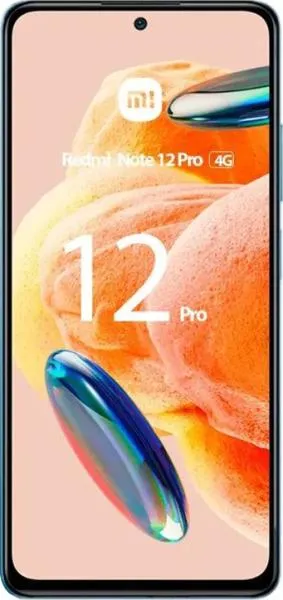

1. Specifications Comparison
| Feature | Xiaomi Redmi Note 12 Pro 4G | Samsung Galaxy M35 | Practical Impact |
|---|---|---|---|
| Design | |||
| Dimensions (mm) | 164.2 x 76.1 x 8.1 | 162.3 x 78.6 x 9.1 | The Redmi is slightly taller and narrower, but thinner than the Galaxy. Difference in hand feel will be minimal. |
| Weight (g) | 201.8 | 222 | The Redmi is noticeably lighter, making it more comfortable for extended use. |
| Display | |||
| Display Type | AMOLED, 120Hz | Super AMOLED, 120Hz | Both offer smooth scrolling and animations thanks to the 120Hz refresh rate. Super AMOLED generally offers slightly better contrast and outdoor visibility. |
| Display Size (inches) | 6.67 | 6.6 | Negligible difference in screen real estate. |
| Resolution | 1080 x 2400 | 1080 x 2340 | Virtually identical sharpness. |
| Dolby Vision | Yes | No | Redmi offers better HDR video playback quality thanks to Dolby Vision support. |
| Peak Brightness (nits) | 1100 (peak), 700 typical | 1000 typical, peak unknown | The Redmi likely offers a brighter display, especially in direct sunlight, though we lack peak brightness data for the M35. |
| Performance | |||
| Chipset | Snapdragon 732G (8nm) | Exynos 1380 (5nm) | The Exynos 1380 in the Galaxy M35 is significantly more powerful and power-efficient due to its smaller 5nm process. Expect smoother multitasking and better gaming performance. |
| CPU | Octa-core (2x2.2 GHz Kryo 470 Gold & 6x1.8 GHz Kryo 470 Silver) | Octa-core (4x2.4 GHz Cortex-A78 & 4x2.0 GHz Cortex-A55) | The Galaxy M35 has a more modern and powerful CPU architecture, resulting in better performance. |
| GPU | Adreno 618 | Mali-G68 MP5 | The Mali-G68 MP5 in the M35 offers better graphics performance compared to the Adreno 618. |
| RAM | 8GB | 8GB | Both phones have ample RAM for multitasking. |
| OS | Android 11 | Android 14 | The Galaxy M35 ships with a much newer Android version, offering longer software support and newer features. |
| Camera | |||
| Main Camera | 108MP | 50MP | The Redmi boasts a higher resolution main sensor, potentially capturing more detail. However, sensor size and processing play a crucial role in image quality, which is not fully detailed here. |
| Video Recording | 4K@30fps | 4K@30fps with EIS | Both can record 4K video, but the Galaxy M35 offers Electronic Image Stabilization (EIS) for smoother footage. |
| Slow Motion | 960fps | 480fps (720P), but with EIS. | Redmi offers higher frame rate slow-motion but the Galaxy M35 will deliver more usable, stabilized slow motion. |
| Battery | |||
| Capacity | 5000 mAh | 6000 mAh | The Galaxy M35 has a larger battery capacity, translating to potentially longer battery life. |
2. Key Differences Analysis
Xiaomi Redmi Note 12 Pro 4G Advantages:
- Dolby Vision: Enhanced HDR video playback quality.
- Potentially Brighter Display: Better visibility outdoors.
- Higher Resolution Main Camera: Potentially more detail in photos.
Samsung Galaxy M35 Advantages:
- Significantly More Powerful Processor: Smoother performance for demanding tasks and gaming.
- Newer Android Version: Longer software updates and latest features.
- Larger Battery: Potentially longer battery life.
- Electronic Image Stabilization (EIS): Smoother video recording.
- 5G Connectivity: Faster data speeds in areas with 5G coverage.
3. User Profiles & Recommendations
Xiaomi Redmi Note 12 Pro 4G: Users prioritizing media consumption (especially HDR video) on a budget. Best for casual users who don't require top-tier performance.
Samsung Galaxy M35: Users who value performance, longevity (software updates), and a newer operating system. Ideal for power users, gamers, and those wanting a future-proof device.
4. Decision Framework
Key Questions:
- What is your budget? The Redmi is generally more affordable.
- Is top-tier performance crucial? The M35 significantly outperforms the Redmi.
- How important are software updates and future-proofing? The M35's newer Android version offers a longer support lifespan.
My Choice: Samsung Galaxy M35
While the Redmi Note 12 Pro 4G offers a compelling price and features like Dolby Vision, the Samsung Galaxy M35's superior performance, newer Android version (14 vs 11), larger battery (6000mAh vs 5000mAh), and 5G connectivity make it the better overall choice for long-term use. The Exynos 1380 provides a significant performance advantage over the Snapdragon 732G, leading to a smoother and more responsive user experience. The longer software support ensures the phone remains secure and up-to-date for a longer period. While the Redmi may be sufficient for casual users, the M35 offers better value in the long run due to its future-proof features and superior performance. Having stabilized video recording at 4K and better slow motion (albeit at a lower frame rate) is a practical advantage over simply having a higher resolution main camera or faster frame rate for slow-mo.
