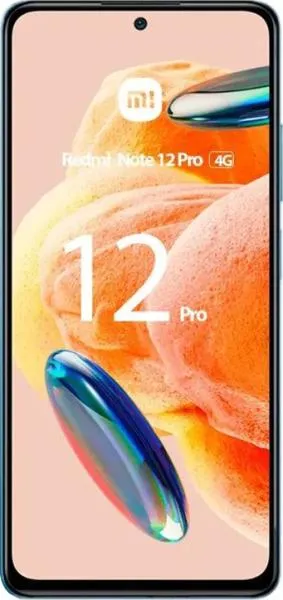
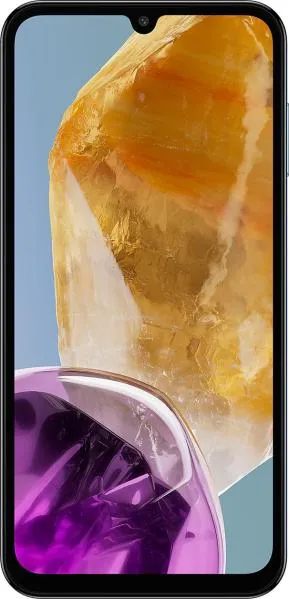
1. Specifications Comparison
| Feature | Xiaomi Redmi Note 12 Pro 4G | Samsung Galaxy M15 | Practical Impact |
|---|---|---|---|
| Design | |||
| Dimensions (mm) | 164.2 x 76.1 x 8.1 | 160.1 x 76.8 x 9.3 | The Redmi is slightly taller and narrower, but noticeably thinner than the Galaxy M15. The Galaxy M15 might feel bulkier in hand. |
| Weight (g) | 201.8 | 217 | The Redmi is lighter, potentially more comfortable for extended use. |
| Display | |||
| Display Type | AMOLED, 120Hz | Super AMOLED, 90Hz | Both offer vibrant colors and deep blacks thanks to AMOLED technology. The Redmi's 120Hz refresh rate provides smoother animations and scrolling compared to the Galaxy's 90Hz. |
| Display Size (inches) | 6.67 | 6.5 | Negligible difference in screen real estate. |
| Resolution | 1080 x 2400 | 1080 x 2340 | Virtually identical sharpness. |
| Peak Brightness (nits) | 1100 | 800 | The Redmi's higher peak brightness ensures better visibility in direct sunlight. |
| Dolby Vision | Yes | No | The Redmi supports Dolby Vision for enhanced HDR video playback with richer colors and contrast. |
| Performance | |||
| Chipset | Snapdragon 732G (8nm) | Dimensity 6100+ (6nm) | The Dimensity 6100+ is newer and built on a more efficient process, likely resulting in better performance and battery life. The Snapdragon 732G is still a capable mid-range chipset. |
| CPU | Octa-core (2x2.2 GHz Kryo 470 Gold & 6x1.8 GHz Kryo 470 Silver) | Octa-core (2x2.2 GHz Cortex-A76 & 6x2.0 GHz Cortex-A55) | The Dimensity 6100+ should offer better CPU performance due to its newer architecture. |
| GPU | Adreno 618 | Mali-G57 MC2 | While specific benchmarks are needed for definitive comparison, the Mali-G57 MC2 in the Galaxy M15 generally provides competitive graphics performance for its class. |
| RAM | 8GB | 6GB | More RAM in the Redmi allows for better multitasking and app switching. The 6GB in the Galaxy M15 is still sufficient for most users. |
| Camera | |||
| Main Camera | 108MP | 50MP | The Redmi boasts a higher resolution main sensor, potentially capturing more detail. Image quality depends on factors beyond resolution, like sensor size and processing. |
| Video Recording | 4K@30fps | 1080p@30fps | Redmi offers higher resolution video recording. |
| Battery | |||
| Capacity | 5000 mAh | 6000 mAh | The Galaxy M15 has a significantly larger battery, likely translating to longer usage time. |
| OS | Android 11 | Android 14 | The Galaxy M15 ships with a much newer Android version, offering the latest features, security updates, and performance optimizations. |
2. Key Differences Analysis
Xiaomi Redmi Note 12 Pro 4G Advantages:
- Smoother Display: 120Hz refresh rate.
- Brighter Display: Better outdoor visibility.
- Dolby Vision: Enhanced HDR video playback.
- Higher Resolution Main Camera: Potentially more detailed photos.
- Higher Resolution Video Recording: 4K@30fps.
Samsung Galaxy M15 Advantages:
- Longer Battery Life: Larger 6000mAh battery.
- More Efficient Chipset: Dimensity 6100+ built on a 6nm process.
- Newer OS: Android 14 with longer software support.
- 5G Connectivity: Offers faster data speeds in areas with 5G coverage.
3. User Profiles & Recommendations
Xiaomi Redmi Note 12 Pro 4G: Users prioritizing a smooth and vibrant display, along with a high-resolution camera, might prefer the Redmi. Ideal for multimedia consumption, mobile gaming (to an extent), and social media.
Samsung Galaxy M15: Users valuing long battery life, a more future-proof OS with longer updates, and 5G connectivity would likely prefer the Galaxy M15. Suitable for users who heavily rely on their phone throughout the day and need a device that will last.
4. Decision Framework
Key Questions for Buyers:
- How important is display smoothness and brightness? A 120Hz display and higher brightness are noticeable improvements for visual experience.
- Is battery life a primary concern? The Galaxy M15 offers a substantial advantage in this area.
- Do you need 5G connectivity? This is crucial for future-proofing and faster data speeds where available.
My Choice: Samsung Galaxy M15
While the Redmi Note 12 Pro 4G offers a superior display and camera on paper, the Samsung Galaxy M15's significantly longer battery life, newer and more efficient chipset, and the much more recent Android 14 OS make it the better overall choice for me. The inclusion of 5G connectivity also future-proofs the device. The trade-off of a slightly lower refresh rate display is acceptable considering the gains in other crucial areas. Android 14's longevity in terms of software updates and security is a significant factor in long-term usability and peace of mind. The Dimensity 6100+ offers a good balance of performance and power efficiency which is crucial for day to day usage. A longer lasting phone with the latest features trumps marginal gains in camera resolution or display refresh rate in my personal use case.
