
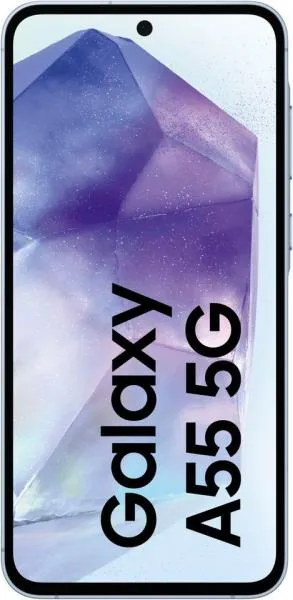
1. Specifications Comparison
| Feature | Xiaomi Redmi Note 12 Pro 4G | Samsung Galaxy A55 | Practical Impact |
|---|---|---|---|
| Design | |||
| Dimensions (mm) | 164.2 x 76.1 x 8.1 | 161.1 x 77.4 x 8.2 | A55 slightly shorter and wider, negligible difference in thickness. |
| Weight (g) | 201.8 | 213 | A55 slightly heavier, but the difference is minimal in practical use. |
| Display | |||
| Size (inches) | 6.67 | 6.6 | Negligible difference in screen real estate. |
| Resolution | 1080 x 2400 | 1080 x 2340 | Virtually identical sharpness. |
| Type | AMOLED, 120Hz | Super AMOLED, 120Hz | Both offer smooth scrolling and vibrant colors, though Super AMOLED generally has better contrast. A55 having HDR10+ offers a wider range of colors and brightness in supported content compared to Dolby Vision on the Redmi. |
| Performance | |||
| Chipset | Snapdragon 732G (8nm) | Exynos 1480 (4nm) | A55's newer and smaller node size chip likely offers significantly better performance and efficiency. |
| CPU | Octa-core (2x2.2 GHz Kryo 470 Gold & 6x1.8 GHz Kryo 470 Silver) | Octa-core (4x2.75 GHz Cortex-A78 & 4x2.0 GHz Cortex-A55) | A55's CPU configuration suggests a notable performance advantage in demanding tasks. |
| GPU | Adreno 618 | Xclipse 530 | A55 likely has a more powerful GPU, leading to smoother gaming and faster graphics rendering. |
| RAM | 8GB | 8GB/12GB | A55 offers a 12GB RAM option for even more demanding multitasking. |
| OS | Android 11 | Android 14 | A55 comes with a much newer OS version, offering feature updates, security patches, and potentially better optimization. A55 also has guaranteed updates to Android 18. |
| Camera | |||
| Main Camera | 108MP | 50MP | Redmi has higher resolution, but A55 uses a newer Sony sensor known for good low-light performance, image quality is more than just megapixel count. |
| Ultrawide | 8MP | 13MP | A55 has a higher resolution ultrawide, potentially capturing more detail. |
| Selfie | 16MP | 32MP | A55 has a higher resolution selfie camera. |
| Video | 4K@30fps | 4K@30fps with EIS | A55 features Electronic Image Stabilization (EIS) for smoother video recording. |
| Battery | |||
| Capacity | 5000 mAh | 5000 mAh | Similar battery capacity suggests comparable battery life, though real-world usage will vary due to chipset efficiency. |
2. Key Differences Analysis
Xiaomi Redmi Note 12 Pro 4G Advantages:
- Higher resolution main camera: Potentially more detail in well-lit conditions.
Samsung Galaxy A55 Advantages:
- Significantly more powerful and efficient processor: Resulting in smoother performance, better multitasking, and potentially longer battery life.
- Newer OS with longer support: More features, better security, and guaranteed updates for several years.
- Better camera features: OIS for video stabilization and a potentially superior main sensor for overall image quality. A55 also has a higher resolution ultrawide camera.
- 5G Connectivity: Access to faster mobile data speeds where available.
3. User Profiles & Recommendations
Xiaomi Redmi Note 12 Pro 4G: Budget-conscious users who prioritize a high-resolution main camera and don't require the latest performance or software. Best for casual use, social media, and light gaming.
Samsung Galaxy A55: Users who value performance, longevity, a well-rounded camera system, and the latest software features. Ideal for demanding tasks, mobile gaming, and those seeking a future-proof device.
4. Decision Framework
Key Questions for Buyers:
- What is your budget? The Redmi is generally more affordable.
- How important is performance and future software updates? The A55 significantly outperforms the Redmi in this area.
- What are your primary camera needs? While the Redmi boasts a higher megapixel count, the A55 offers better features and potentially superior overall image quality.
Scenario-Based Recommendations:
- Limited budget, basic usage: Redmi Note 12 Pro 4G.
- Performance and longevity are priorities: Samsung Galaxy A55.
My Choice: Samsung Galaxy A55
While the Redmi Note 12 Pro 4G offers a higher resolution main camera, the Samsung Galaxy A55 provides a far superior overall package. The newer and more powerful processor, longer software support, 5G connectivity, and camera features like OIS make it a much more compelling device for the long term. The performance difference alone would greatly enhance daily use, and the longer software update commitment ensures the phone remains secure and relevant for years to come. The slightly higher price is justified by the significant advantages the A55 offers.
