
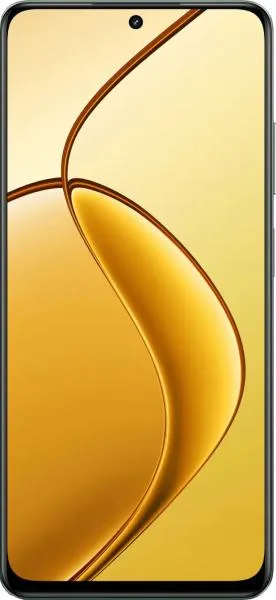
1. Specifications Comparison
| Feature | Xiaomi Redmi Note 12 Pro 4G | Realme 12x | Practical Impact |
|---|---|---|---|
| Design | |||
| Dimensions (mm) | 164.2 x 76.1 x 8.1 | 165.6 x 76.1 x 7.9 | Realme 12x is slightly taller and thinner. Negligible difference in daily use. |
| Weight (g) | 201.8 | 190 | Realme 12x is noticeably lighter, improving one-handed use. |
| Display | |||
| Display Type | AMOLED, 120Hz | IPS LCD, 120Hz | Redmi Note 12 Pro offers deeper blacks, more vibrant colors, and better power efficiency due to AMOLED. |
| Resolution | 1080 x 2400 | 720 x 1604 | Significantly sharper and more detailed visuals on the Redmi Note 12 Pro. Realme 12x's lower resolution will be noticeable. |
| PPI | 395 | 264 | Text and images will appear sharper on Redmi Note 12 Pro. |
| Peak Brightness (nits) | 1100 (peak) | 625 (HBM) | Redmi Note 12 Pro will be significantly more visible in direct sunlight. |
| Performance | |||
| Chipset | Snapdragon 732G (8nm) | Dimensity 6100+ (6nm) | Dimensity 6100+ is newer and more power-efficient due to smaller process node. Performance differences likely minimal for average users, but benchmarks needed for accurate comparison. |
| CPU | Octa-core (2x2.2 GHz Kryo 470 Gold & 6x1.8 GHz Kryo 470 Silver) | Octa-core (2x2.2 GHz Cortex-A76 & 6x2.0 GHz Cortex-A55) | Similar CPU configurations, but architectural differences may lead to performance variations. Real-world impact depends on specific tasks and optimization. |
| GPU | Adreno 618 | Mali-G57 MC2 | Gaming performance might be slightly better on the Redmi Note 12 Pro, but further testing is required. |
| RAM | 8GB | 12GB | Realme 12x offers more RAM, potentially improving multitasking and app switching performance. |
| Camera | |||
| Main Camera | 108MP | 50MP | Redmi Note 12 Pro has a higher resolution sensor, potentially capturing more detail. Image quality depends on sensor size, processing, and other factors. |
| Other Cameras | Ultrawide, Macro, Depth | Depth | Redmi offers more versatile camera options. |
| Battery | |||
| Capacity | 5000 mAh | 5000 mAh | Similar battery capacities, but actual battery life depends on factors like display, processor efficiency, and software optimization. |
2. Key Differences Analysis
Redmi Note 12 Pro 4G Advantages:
- Superior Display: AMOLED technology provides richer colors, deeper blacks, and better power efficiency. Higher resolution leads to sharper visuals.
- More Versatile Camera System: Includes ultrawide and macro lenses for wider shots and close-up photography.
- Potentially Better Gaming Performance: Adreno 618 GPU generally offers slightly better performance compared to Mali-G57 MC2.
Realme 12x Advantages:
- Lighter and Slimmer: More comfortable for one-handed use.
- More RAM: 12GB RAM allows for smoother multitasking and better performance with memory-intensive applications.
- More Recent OS: Android 14 out of the box, potentially offering newer features and longer software support.
- 5G Connectivity: Offers faster download and upload speeds in areas with 5G coverage.
Trade-offs:
- Realme 12x: Lower resolution display sacrifices sharpness and detail for a lower price point.
3. User Profiles & Recommendations
Redmi Note 12 Pro 4G: Ideal for users who prioritize display quality, camera versatility, and potentially better gaming performance. Suits users who consume a lot of media, play mobile games, or take photos frequently.
Realme 12x: Best for users who value a lightweight phone, smoother multitasking due to higher RAM, future-proof 5G connectivity, and a lower price point. Suitable for users focused on productivity, communication, and general usage. Less ideal for mobile gamers or media consumption due to lower resolution display.
4. Decision Framework
Key Questions:
- How important is display quality? If vibrant colors and sharp details are crucial, the Redmi Note 12 Pro is the better choice.
- What is your budget? The Realme 12x generally offers a lower price point for its features.
- Do you need 5G connectivity? Realme 12x is future-proofed with 5G, while the Redmi Note 12 Pro is limited to 4G.
My Choice: Xiaomi Redmi Note 12 Pro 4G
While the Realme 12x offers more RAM and a newer OS along with 5G, the significantly better display of the Redmi Note 12 Pro is the deciding factor for me. I prioritize screen quality for media consumption and everyday use, and the AMOLED display with higher resolution is a substantial upgrade. The more versatile camera system is also a plus. I am willing to compromise on the slightly heavier weight and older OS for the superior visual experience. The lack of 5G is not a major concern for me currently, as 4G speeds are sufficient for my needs.
