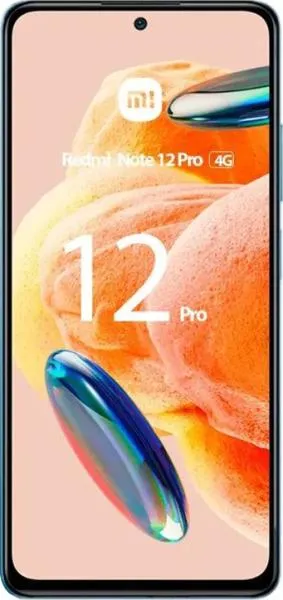
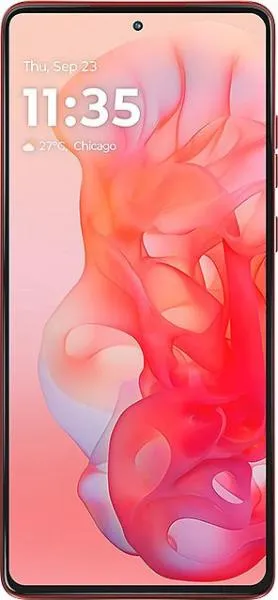
1. Specifications Comparison
| Feature | Xiaomi Redmi Note 12 Pro 4G | Motorola Moto G Stylus 5G (2024) | Practical Impact |
|---|---|---|---|
| Design | |||
| Dimensions (mm) | 164.2 x 76.1 x 8.1 | 162.6 x 74.8 x 8.3 | Moto is slightly smaller and lighter. Negligible difference in everyday use. |
| Weight (g) | 201.8 | 190 | Moto is slightly lighter, improving one-handed use. |
| Fingerprint Sensor | Side-mounted | Under-display | Personal preference. Under-display is often perceived as more modern. |
| Stylus | No | Yes | Significant advantage for note-taking, sketching, and precise screen interaction. |
| Display | |||
| Display Type | AMOLED | P-OLED | Both offer excellent contrast and vibrant colors. P-OLED might offer slight power efficiency benefits. |
| Refresh Rate (Hz) | 120 | 120 | Both offer smooth scrolling and animations. |
| Peak Brightness (nits) | 1100 (typical), 1200 (peak) | 1200 (peak) | Moto may be slightly more readable in direct sunlight; info on typical brightness is missing for it though. |
| Color Depth | Not specified | 1B | Moto supports a wider color gamut, resulting in more accurate and nuanced colors. Missing info for Redmi makes comparison difficult. |
| Performance | |||
| Chipset | Snapdragon 732G (8nm) | Snapdragon 6 Gen 1 (4nm) | Moto's newer, more efficient chip should provide better performance and battery life. |
| CPU | Octa-core (2x2.2 GHz Kryo 470 Gold & 6x1.8 GHz Kryo 470 Silver) | Octa-core (4x2.2 GHz Cortex-A78 & 4x1.8 GHz Cortex-A55) | Moto has a more modern CPU architecture, likely resulting in better performance, particularly in demanding tasks. |
| GPU | Adreno 618 | Adreno 710 | Moto's GPU should offer significantly better graphics performance for gaming and media consumption. |
| RAM (GB) | 8 | 8 | Equal RAM capacity. |
| OS | Android 11 | Android 14 | Moto has a much newer Android version with newer features, security updates, and longer support. |
| Camera | |||
| Main Camera (MP) | 108 | 50 | Redmi boasts higher resolution, potentially capturing more detail. However, sensor size and other factors also influence image quality. |
| Front Camera (MP) | 16 | 32 | Moto has a higher resolution front camera for better selfies. |
| Video Recording | 4K@30fps | 4K@30fps, 1080p@120fps | Both offer 4K recording. Moto offers slow-motion video at 120fps in 1080p. |
| Optical Image Stabilization | No | Yes | Significant advantage for Moto, resulting in smoother videos and sharper images in low light. |
| Battery | |||
| Capacity (mAh) | 5000 | 5000 | Equal battery capacity. However, real-world battery life depends on various factors including chipset efficiency and software optimization. |
2. Key Differences Analysis
Xiaomi Redmi Note 12 Pro 4G Advantages:
- Higher resolution main camera: Potentially captures more detail in photos.
- Potentially Lower Price: Depending on the specific retailer and deals available.
Motorola Moto G Stylus 5G (2024) Advantages:
- Significantly more powerful and efficient processor: Leading to better performance and battery life.
- Stylus Support: Enables note-taking, sketching, and precise on-screen interaction.
- More recent Android version: Ensures access to the latest features and security updates.
- 5G Connectivity: Offers faster data speeds and lower latency in areas with 5G coverage.
- Optical Image Stabilization: Results in smoother videos and sharper low-light photos.
- Higher resolution front-facing camera: Better for selfies and video calls.
3. User Profiles & Recommendations
Xiaomi Redmi Note 12 Pro 4G: Users on a tight budget who prioritize a high-resolution main camera and don't need the latest features or 5G.
Motorola Moto G Stylus 5G (2024): Users who value performance, future-proofing with OS updates, 5G connectivity, a stylus for productivity or creativity, and better overall camera quality including OIS. Best for students, artists, or anyone who benefits from a stylus.
4. Decision Framework
Key Questions for Buyers:
- What is your budget? The Redmi is likely cheaper.
- Do you need 5G connectivity and a stylus? These are key differentiating features of the Moto.
- How important is long-term software support and performance? The Moto with Android 14 and a newer processor will provide a better experience in the long run.
My Choice: Motorola Moto G Stylus 5G (2024)
While the Redmi Note 12 Pro 4G might seem appealing due to its high-resolution main camera, the Moto G Stylus 5G (2024) offers a significantly better overall package. The newer processor, longer software support, 5G connectivity, stylus functionality, OIS for the camera and superior front-facing camera outweigh the Redmi's advantages. The Moto represents a better long-term investment due to its superior performance and up-to-date software, offering a smoother and more feature-rich user experience.
