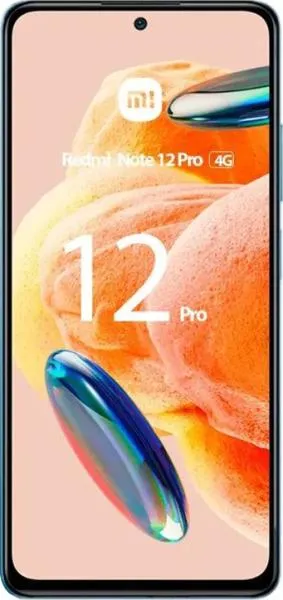
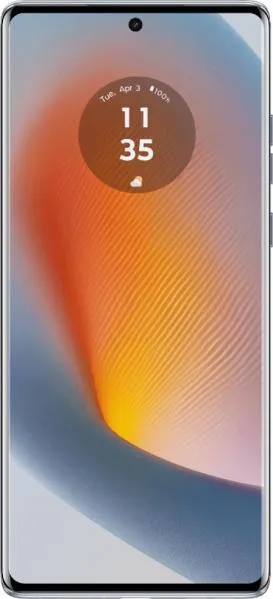
1. Specifications Comparison
| Feature | Xiaomi Redmi Note 12 Pro 4G | Motorola Edge 50 Fusion | Practical Impact |
|---|---|---|---|
| Design | |||
| Dimensions (mm) | 164.2 x 76.1 x 8.1 | 161.9 x 73.1 x 7.9 | Motorola is slightly smaller and might feel better in hand for some. |
| Weight (g) | 201.8 | 174.9 | Motorola is noticeably lighter, reducing hand fatigue during extended use. |
| Build Materials | Not specified | Not specified | Cannot compare without more information. |
| Display | |||
| Display Type | AMOLED | pOLED | Both offer vibrant colors and deep blacks. pOLED can be more power efficient. |
| Refresh Rate (Hz) | 120 | 144 (INT), 120 (LATAM) | Motorola's international version offers a smoother scrolling and gaming experience with its higher refresh rate. |
| Peak Brightness (nits) | 1100 | 1600 | Motorola's display is significantly brighter, improving outdoor visibility. |
| Color Depth | Not specified | 1B | Motorola supports a wider color gamut, offering more nuanced color reproduction. |
| Performance | |||
| Chipset | Snapdragon 732G (8 nm) | Snapdragon 7s Gen 2 (4 nm) | Motorola's newer and more efficient chip offers significantly better performance in demanding tasks and gaming. |
| CPU | Octa-core (2x2.2 GHz Kryo 470 Gold & 6x1.8 GHz Kryo 470 Silver) | Octa-core (4x2.40 GHz Cortex-A78 & 4x1.95 GHz Cortex-A55) | Motorola's CPU architecture and higher clock speeds translate to a more responsive user experience. |
| GPU | Adreno 618 | Adreno 710 | Motorola's GPU provides a substantial improvement in graphics performance for gaming and visually intensive applications. |
| RAM (GB) | 8 | 8 | Both offer ample RAM for multitasking. |
| OS | Android 11 | Android 14 | Motorola comes with a much newer Android version, offering more features, security updates, and potentially longer software support. |
| Camera | |||
| Main Camera (MP) | 108 | 50 | Xiaomi has a higher resolution sensor. However, megapixels alone don't determine image quality. Sensor size and other factors play a crucial role. |
| Ultrawide (MP) | 8 | 13 | Motorola offers a slightly higher resolution ultrawide camera. |
| Selfie Camera (MP) | 16 | 32 | Motorola offers a significantly higher resolution selfie camera. |
| Video Recording | 4K@30fps | 4K@30fps with EIS | Both offer 4K recording, but Motorola features Electronic Image Stabilization (EIS) for smoother videos. |
| Battery | |||
| Capacity (mAh) | 5000 | 5000 | Both phones have the same battery capacity. Actual battery life depends on usage and optimization. |
| Charging Speed | Not specified | Not specified | Cannot compare without more information. |
2. Key Differences Analysis
Motorola Edge 50 Fusion Advantages:
- Significantly better performance: The Snapdragon 7s Gen 2 chip and Adreno 710 GPU provide a substantial boost in processing power and graphics capabilities.
- More recent software: Android 14 offers more features, better security, and potentially longer software support compared to Android 11.
- Brighter display with (potentially) higher refresh rate: Improves outdoor visibility and smoothness.
- Lighter and more compact: Offers better handling and portability.
- Electronic Image Stabilization (EIS) for video recording: Results in smoother videos.
Xiaomi Redmi Note 12 Pro 4G Advantages:
- Higher resolution main camera: Potentially better detail capture, but image quality depends on other factors not specified.
3. User Profiles & Recommendations
Motorola Edge 50 Fusion: Ideal for users who prioritize performance, gaming, a smooth user experience, the latest software, and a bright display. Suitable for demanding tasks, content creation, and mobile gaming.
Xiaomi Redmi Note 12 Pro 4G: Might appeal to users on a tighter budget who prioritize a high-resolution main camera. However, the performance and software limitations are significant trade-offs.
4. Decision Framework
Key Questions for Buyers:
- What is your budget? The Motorola is generally more expensive.
- What are your primary use cases? (e.g., gaming, photography, social media)
- How important are software updates and longevity?
Scenario-Based Recommendations:
- For a gamer: Motorola Edge 50 Fusion due to its superior performance and higher refresh rate display.
- For a photographer: Insufficient information to recommend confidently. Megapixel count doesn't tell the whole story. More details about camera sensor size and features are needed.
- For a casual user: Motorola Edge 50 Fusion for its better overall experience and longer software support.
My Choice: Motorola Edge 50 Fusion
The Motorola Edge 50 Fusion is the clear winner for me. While the Xiaomi Redmi Note 12 Pro 4G might boast a higher resolution main camera, the Motorola offers significant advantages in crucial areas like performance, software, display, and overall user experience. The newer chipset, updated Android version, brighter display, and lighter design make it a more future-proof and enjoyable device to use. The inclusion of EIS for video recording is another significant plus. While price might be a factor, the Motorola's advantages justify the likely price difference for most users. The Xiaomi's older hardware and software would be a significant compromise in the long run.
