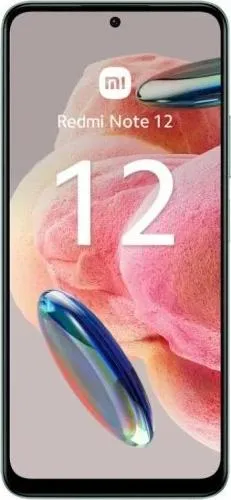
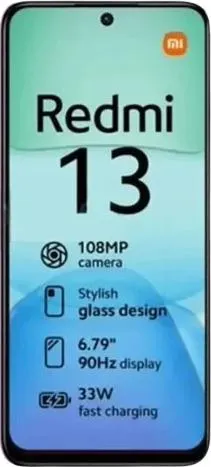
1. Specifications Comparison
| Feature | Xiaomi Redmi Note 12 4G | Xiaomi Redmi 13 | Practical Impact |
|---|---|---|---|
| Design | |||
| Dimensions (mm) | 165.7 x 76 x 7.9 | 168.6 x 76.3 x 8.3 | Redmi 13 slightly larger and thicker. |
| Weight (g) | 183.5 | 205 | Redmi 13 noticeably heavier (might impact one-handed use). |
| Display | |||
| Type | AMOLED, 120Hz | IPS LCD, 90Hz | Redmi Note 12 offers deeper blacks, more vibrant colors, and smoother scrolling thanks to AMOLED and 120Hz. Redmi 13's IPS LCD might be more visible in direct sunlight. |
| Size (inches) | 6.67 | 6.79 | Redmi 13 has a slightly larger screen. Negligible difference in real-world usage. |
| Resolution | 1080 x 2400 | 1080 x 2460 | Virtually identical sharpness. |
| Peak Brightness (nits) | 1200 | Not specified | Redmi Note 12's higher peak brightness ensures better visibility outdoors. We can't compare without Redmi 13's peak brightness. |
| Performance | |||
| Chipset | Snapdragon 685 (6nm) | Helio G91 Ultra (12nm) | While benchmarks would provide a clearer picture, the 6nm process of the Snapdragon 685 generally suggests better power efficiency than the 12nm Helio G91. "Ultra" designation on the Helio G91 is unclear and requires further investigation. |
| CPU | Octa-core (4x2.8 GHz Cortex-A73 & 4x1.9 GHz Cortex-A53) | Octa-core (2x2.0 GHz Cortex-A75 & 6x1.8 GHz Cortex-A55) | Different core configurations make direct comparison difficult without benchmarks. Cortex-A73 cores in the Redmi Note 12 are generally older but potentially faster than A75 cores depending on the specific implementation. |
| GPU | Adreno 610 | Mali-G52 MC2 | Performance difference unclear without benchmarks. Both are capable GPUs for mid-range phones. |
| RAM | 4GB (tested), up to 8GB available | 6/8GB | More RAM in Redmi 13, especially the 8GB variant, enables better multitasking and smoother performance with demanding apps. |
| Camera | |||
| Main Camera | 50MP | 108MP | Redmi 13 boasts higher resolution, but megapixels alone don't guarantee better image quality. Sensor size, aperture, and processing play crucial roles. |
| Video Recording | 1080p@30fps | 1080p@30fps, Slow-mo @120fps | Identical primary video recording capabilities. Redmi 13 offers slow-motion recording. |
| Battery | |||
| Capacity (mAh) | 5000 | 5030 | Negligible difference in battery capacity. |
| Fast Charging | 33W | 33W | Identical fast charging speeds. |
2. Key Differences Analysis
Redmi Note 12 4G Advantages:
- Superior Display: AMOLED with 120Hz refresh rate provides a significantly better visual experience with vibrant colors, deeper blacks, and smoother scrolling.
- Potentially More Power Efficient: The 6nm chipset suggests better battery life compared to the 12nm chipset in the Redmi 13.
Redmi 13 Advantages:
- Higher Resolution Main Camera: 108MP sensor potentially captures more detail, although real-world performance depends on other factors.
- More RAM: Offers 6GB or 8GB RAM options, providing smoother multitasking and better performance with demanding applications.
- Newer Bluetooth Standard: Bluetooth 5.3 offers improved connectivity and efficiency over Bluetooth 5.0.
- Slow-motion Video: Offers 120fps slow-motion video recording.
3. User Profiles & Recommendations
Redmi Note 12 4G: Ideal for users prioritizing display quality and media consumption. Suits users sensitive to vibrant colors and smooth scrolling.
Redmi 13: Suitable for users who value a larger display, higher resolution camera, and ample RAM for multitasking and demanding applications. Good for budget-conscious buyers who prioritize performance over display quality.
4. Decision Framework
Key Questions for Buyers:
- Is display quality a top priority? If yes, the Redmi Note 12's AMOLED display is a clear winner.
- What is your budget? Redmi 13 generally offers better value in terms of performance per dollar.
- Do you require a high-resolution camera or slow-motion video? If yes, Redmi 13 is the better choice.
My Choice: Xiaomi Redmi Note 12 4G
While the Redmi 13 offers a compelling package for the price, I would choose the Redmi Note 12 4G primarily due to the superior AMOLED display with a 120Hz refresh rate. For me, the daily experience of using a phone with a vibrant, smooth display outweighs the benefits of a slightly higher resolution camera or more RAM. The potential for better battery life due to the more efficient chipset also contributes to my decision. Ultimately, this is a subjective choice based on my personal priorities, and users who prioritize performance and value over display quality might prefer the Redmi 13.
