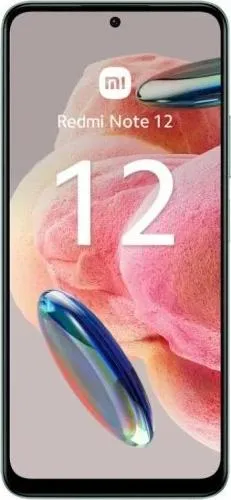
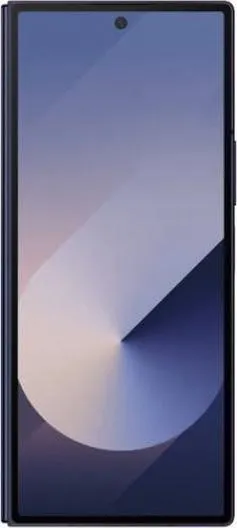
1. Specifications Comparison
| Feature | Xiaomi Redmi Note 12 4G | Samsung Galaxy Z Fold6 | Practical Impact |
|---|---|---|---|
| Design | |||
| Dimensions (mm) | 165.7 x 76 x 7.9 | 153.5 x 132.6 x 5.6 (folded) | Fold6 is significantly wider when unfolded, offering more screen real estate but compromising one-handed usability. Redmi Note 12 is thinner and lighter for easier portability. |
| Weight (g) | 183.5 | 239 | Redmi Note 12 is noticeably lighter, reducing hand fatigue during extended use. |
| Foldable | No | Yes | Fold6's folding design allows for a larger screen in a pocketable form factor, while the Redmi Note 12 offers a traditional smartphone experience. |
| Display | |||
| Display Size (inches) | 6.67 | 7.6 (main); 6.3 (cover) | Fold6 boasts a significantly larger main display for immersive content consumption and multitasking. Redmi Note 12's display is still ample for everyday use. |
| Resolution (pixels) | 1080 x 2400 | 1856 x 2160 (main); 968 x 2376 (cover) | Fold6's main display offers slightly higher resolution but with a lower pixel density due to the larger size. Visual clarity will be comparable on both devices. |
| Refresh Rate (Hz) | 120 | 120 | Both offer smooth scrolling and animations thanks to the 120Hz refresh rate. |
| Display Type | AMOLED | Foldable Dynamic AMOLED 2X | Fold6's display utilizes more advanced AMOLED technology with potentially better color accuracy and brightness. Redmi Note 12's AMOLED display still offers vibrant colors and deep blacks. |
| Performance | |||
| Chipset | Snapdragon 685 (6nm) | Snapdragon 8 Gen 3 (4nm) | Fold6's flagship Snapdragon 8 Gen 3 vastly outperforms the Redmi Note 12's mid-range Snapdragon 685. This translates to significantly faster performance in demanding tasks, gaming, and multitasking. |
| CPU | Octa-core (4x2.8 GHz Cortex-A73 & 4x1.9 GHz Cortex-A53) | Octa-core (1x3.39GHz Cortex-X4 & 3x3.1GHz Cortex-A720 & 2x2.9GHz Cortex-A720 & 2x2.2GHz Cortex-A520) | Fold6's CPU offers superior core architecture and clock speeds for significantly faster processing power. |
| RAM | 4/6/8 GB | 12 GB | Fold6's significantly larger RAM allows for seamless multitasking and app switching. Redmi Note 12 might experience slowdowns with heavy usage. |
| Camera | |||
| Rear Camera | 50MP main, 8MP ultrawide, 2MP macro | 50MP main, 12MP ultrawide, 10MP telephoto | Both offer versatile camera systems. Fold6 features a telephoto lens for optical zoom, while Redmi Note 12 includes a dedicated macro lens. Image quality likely favors Fold6 due to its superior processing power. |
| Video Recording | 1080p@30fps | Up to 8K@30fps | Fold6 offers significantly higher resolution video recording capabilities. |
| Battery | |||
| Capacity (mAh) | 5000 | 4400 | Redmi Note 12 has a larger battery capacity, potentially offering longer battery life. However, Fold6's larger display and powerful processor will consume more power. Actual battery life will depend on usage patterns. |
| Fast Charging | 33W | 25W | Redmi Note 12 supports faster wired charging. Fold6 supports faster wireless charging at 15W (vs no wireless charging on Redmi Note 12). |
2. Key Differences Analysis
Xiaomi Redmi Note 12 4G Advantages:
- Lower Price: Significantly more affordable.
- Lighter and Thinner: Easier to handle and carry.
- Larger Battery: Potentially longer battery life.
- Faster Wired Charging: Quicker top-ups.
Samsung Galaxy Z Fold6 Advantages:
- Foldable Display: Offers a larger screen in a compact form factor.
- Significantly Faster Performance: Handles demanding tasks and gaming with ease.
- More RAM: Enables seamless multitasking.
- Higher Resolution Video Recording: Captures more detailed videos.
- Superior Camera System: Likely produces better image quality and offers optical zoom.
3. User Profiles & Recommendations
Xiaomi Redmi Note 12 4G: Ideal for budget-conscious users who prioritize basic smartphone functionality, long battery life, and a lightweight design. Best for everyday tasks like browsing, social media, and casual photography.
Samsung Galaxy Z Fold6: Ideal for power users and early adopters who demand top-tier performance, a large and innovative display for multitasking and multimedia consumption, and cutting-edge camera technology. Best for demanding tasks, gaming, content creation, and those who value a unique form factor.
4. Decision Framework
Key Questions for Buyers:
- What is your budget? The Fold6 is significantly more expensive.
- What is your primary use case? Basic tasks vs. demanding applications and multitasking.
- Do you value portability and battery life or screen size and performance?
Scenario-Based Recommendations:
- Limited Budget, Basic Needs: Redmi Note 12 4G
- Power User, Multitasking Focus: Samsung Galaxy Z Fold6
- Innovation Seeker, Large Screen Enthusiast: Samsung Galaxy Z Fold6
My Choice: Samsung Galaxy Z Fold6
While the Redmi Note 12 offers great value for its price, I would choose the Samsung Galaxy Z Fold6. The foldable form factor, combined with the significantly more powerful processor and ample RAM, offers a unique and highly productive mobile experience. While the price is premium, the innovative technology and performance capabilities justify the investment for my needs. I prioritize performance, a large screen for multitasking, and cutting-edge features, and am willing to compromise on battery capacity and slightly increased weight for the benefits the Fold6 offers. The superior camera system and future-proofed OS (with longer update support) further solidify my choice.
