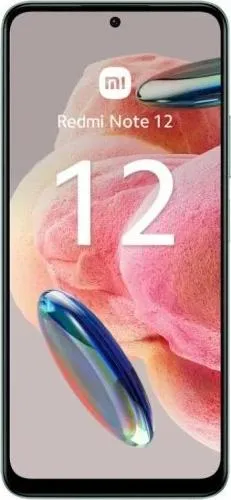
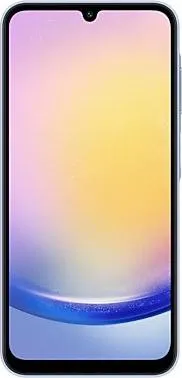
1. Specifications Comparison
| Feature | Xiaomi Redmi Note 12 4G | Samsung Galaxy A25 | Practical Impact |
|---|---|---|---|
| Design | |||
| Dimensions (mm) | 165.7 x 76 x 7.9 | 161 x 76.5 x 8.3 | Redmi is slightly taller and thinner, minimal difference in hand feel. |
| Weight (g) | 183.5 | 197 | Redmi is noticeably lighter, reducing hand fatigue during extended use. |
| Display | |||
| Display Type | AMOLED, 120Hz | Super AMOLED, 120Hz | Both offer vibrant colors and smooth scrolling. Samsung's might have slightly better outdoor visibility due to the claimed 1000 nits peak brightness (vs. Redmi's 700 typical, 1200 peak), but real-world difference may be negligible. Data is insufficient to definitively compare color accuracy and HDR performance. |
| Display Size (inches) | 6.67 | 6.5 | Redmi offers a slightly larger screen for more immersive media consumption. |
| Resolution | 1080 x 2400 | 1080 x 2340 | Virtually identical pixel density, sharpness will be indistinguishable. |
| Performance | |||
| Chipset | Snapdragon 685 (6nm) | Exynos 1280 (5nm) | Exynos 1280 generally offers better performance and efficiency due to its 5nm architecture and more powerful CPU cores. This translates to smoother multitasking, faster app loading, and potentially better gaming performance. |
| CPU | Octa-core (4x2.8 GHz Cortex-A73 & 4x1.9 GHz Cortex-A53) | Octa-core (2x2.4 GHz Cortex-A78 & 6x2.0 GHz Cortex-A55) | A25's CPU utilizes newer Cortex architecture, resulting in significantly improved performance and efficiency. |
| GPU | Adreno 610 | Mali-G68 | Mali-G68 offers superior graphics performance compared to Adreno 610, beneficial for gaming and graphically demanding tasks. |
| RAM | 4/6/8GB | 6/8GB | More RAM options on Redmi, but 6GB+ should be sufficient for most users on both devices. |
| OS Updates | Up to Android 14 | Up to Android 18 | Samsung commits to significantly longer software support, providing security and feature updates for a longer period. |
| Camera | |||
| Rear Camera | 50MP Main, 8MP Wide, 2MP Macro | 50MP Main, 8MP Wide, 2MP Depth | Similar primary and wide-angle setups. Redmi has a dedicated macro lens, while Samsung offers a depth sensor for portrait mode. |
| Video Recording | 1080p@30fps | 4K@30fps with EIS, 1080p@30fps with EIS | A25 significantly outperforms in video recording capabilities with 4K resolution and Electronic Image Stabilization (EIS) for smoother footage. |
| DxOMark Score | 63 | 92 | A25 has a substantially higher DxOMark score, indicating significantly better overall camera performance. |
| Battery | |||
| Capacity | 5000 mAh | 5000 mAh | Similar battery capacity, expected to provide all-day battery life for average usage on both phones. |
| Fast Charging | 33W | 25W | Redmi supports faster charging, reducing downtime. |
2. Key Differences Analysis
Xiaomi Redmi Note 12 4G Advantages:
- Lighter and slightly thinner: More comfortable for extended use.
- Slightly larger display: More immersive for media consumption.
- Faster charging: Less downtime.
- More RAM options: Potentially more future-proof, but 6GB should be sufficient for most users.
Samsung Galaxy A25 Advantages:
- Significantly better performance: Smoother multitasking, better gaming.
- Much better camera: Superior image quality and video recording capabilities.
- Longer software support: Receive security and feature updates for a longer period.
- 5G Connectivity: Future-proofs the device for faster network speeds (important consideration).
3. User Profiles & Recommendations
Xiaomi Redmi Note 12 4G: Budget-conscious users who prioritize battery life, a large display, and fast charging. Suitable for light to moderate usage including social media, web browsing, and casual gaming.
Samsung Galaxy A25: Users who value performance, camera quality, and longer software support. Ideal for demanding tasks like gaming, photography/videography, and multitasking.
4. Decision Framework
Key Questions for Buyers:
- What is your budget? Redmi Note 12 is generally more affordable.
- What are your primary use cases? Gaming and photography/videography would heavily favor the A25.
- How important is long-term software support? Samsung offers much longer support.
Scenario-Based Recommendations:
- Limited Budget, Light Usage: Redmi Note 12 4G
- Balanced Needs, Value for Money: Samsung Galaxy A25 (if budget allows)
- Performance and Camera Focused: Samsung Galaxy A25
My Choice: Samsung Galaxy A25
While the Redmi Note 12 offers a lighter build and faster charging, the Samsung Galaxy A25 provides a significant advantage in crucial areas like performance, camera quality, and software updates. The Exynos 1280's superior processing power, coupled with longer software support and noticeably better camera capabilities, makes the A25 a more compelling choice for long-term use. The future-proof nature of 5G connectivity also significantly influences my decision. Even though it's slightly heavier and more expensive, the overall value proposition of the A25 outweighs the Redmi Note 12 for my needs. I prioritize a smooth, responsive user experience and a high-quality camera, making the A25 the clear winner.
